
Legends of the polish transavantgarde
They called themselves the "first Polish wild ones" and were true stars of the 1980s art scene. They presented their works together in the most important alternative galleries, as well as in the Zachęta Gallery and the National Museum in Warsaw. We are talking about representatives of the Transavantgarde movement, also known as precursors of the New Expression – Zbigniew Maciej Dowgiałło, Wojciech Tracewski, and Anna Gruszczyńska.
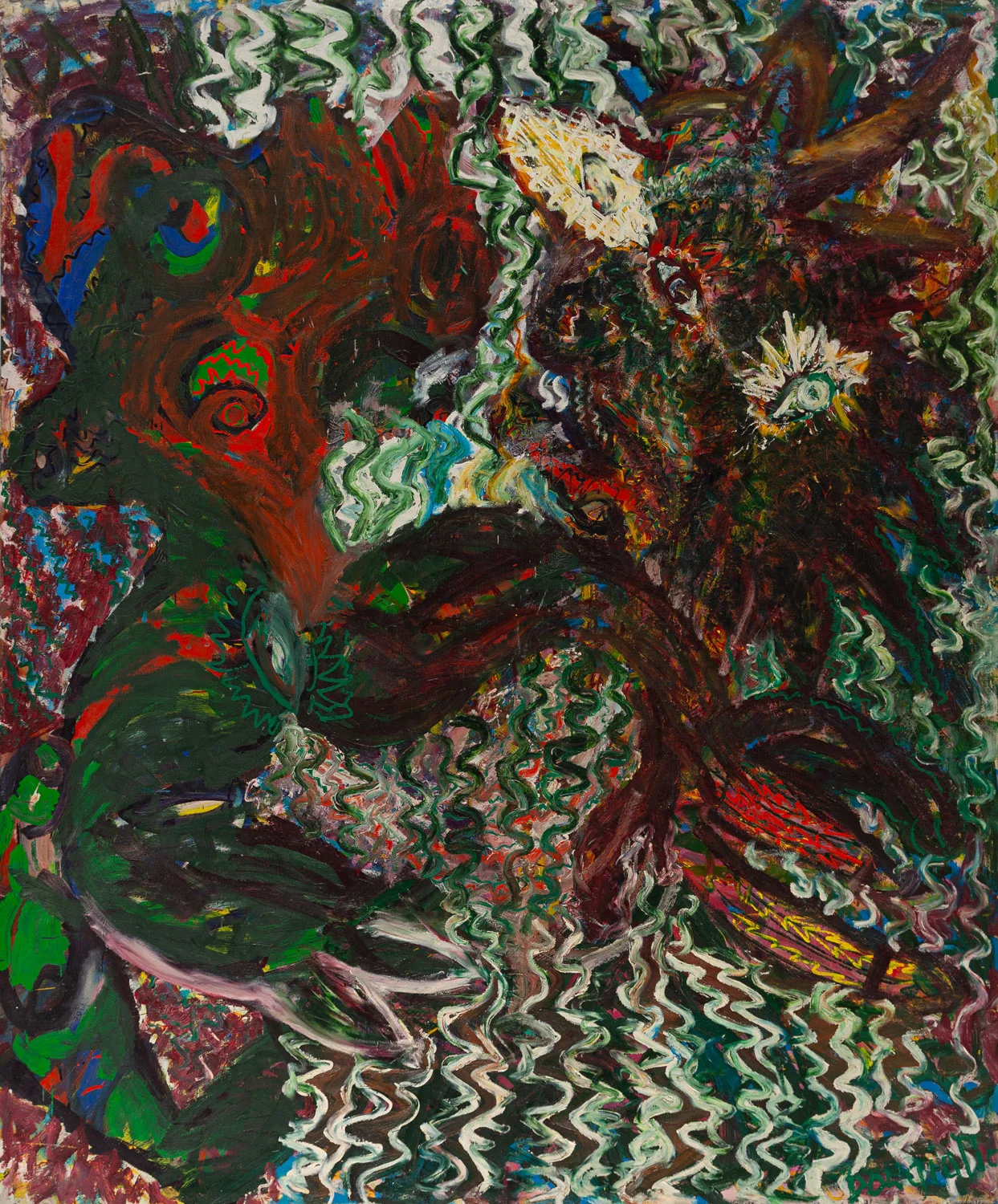
Zbigniew Maciej Dowgiałło was the most active, the loudest, and at the same time the most controversial. Often called the "enfant terrible" of young art, he always remained independent, anarchic, and free. In 1980, he began studying at the State Higher School of Fine Arts in Gdańsk, and then moved to the Interior Architecture Department of the Warsaw Academy of Fine Arts, where he met Wojciech Tracewski. The first exhibition of their works outside the studio took place in the corridors of the Painting Department in 1983. As Dowgiałło himself recalls: "Some of the paintings were already very large and wild. No one had seen anything like it before. It caused a huge shock and extreme reactions. At the Academy of Fine Arts, everyone thought it was our diploma, but we were only in our second year" (Zbigniew Maciej Dowgiałło in conversation with Krzysztof Stanisławski [in:] Nowa ekspresja. 20 lat Vol. 2, ed. Krzysztof Stanisławski, Galeria Sztuki Współczesnej BWA w Olsztynie, 2006, p. 11). Both artists shared an extraordinary creative energy, which they compared to a fire destroying traditional notions of painting form and the contemporary modernist principles. They had a similar sense of humor, lots of paint, batches of controversial ideas, as well as a considerable dose of madness and playfulness.
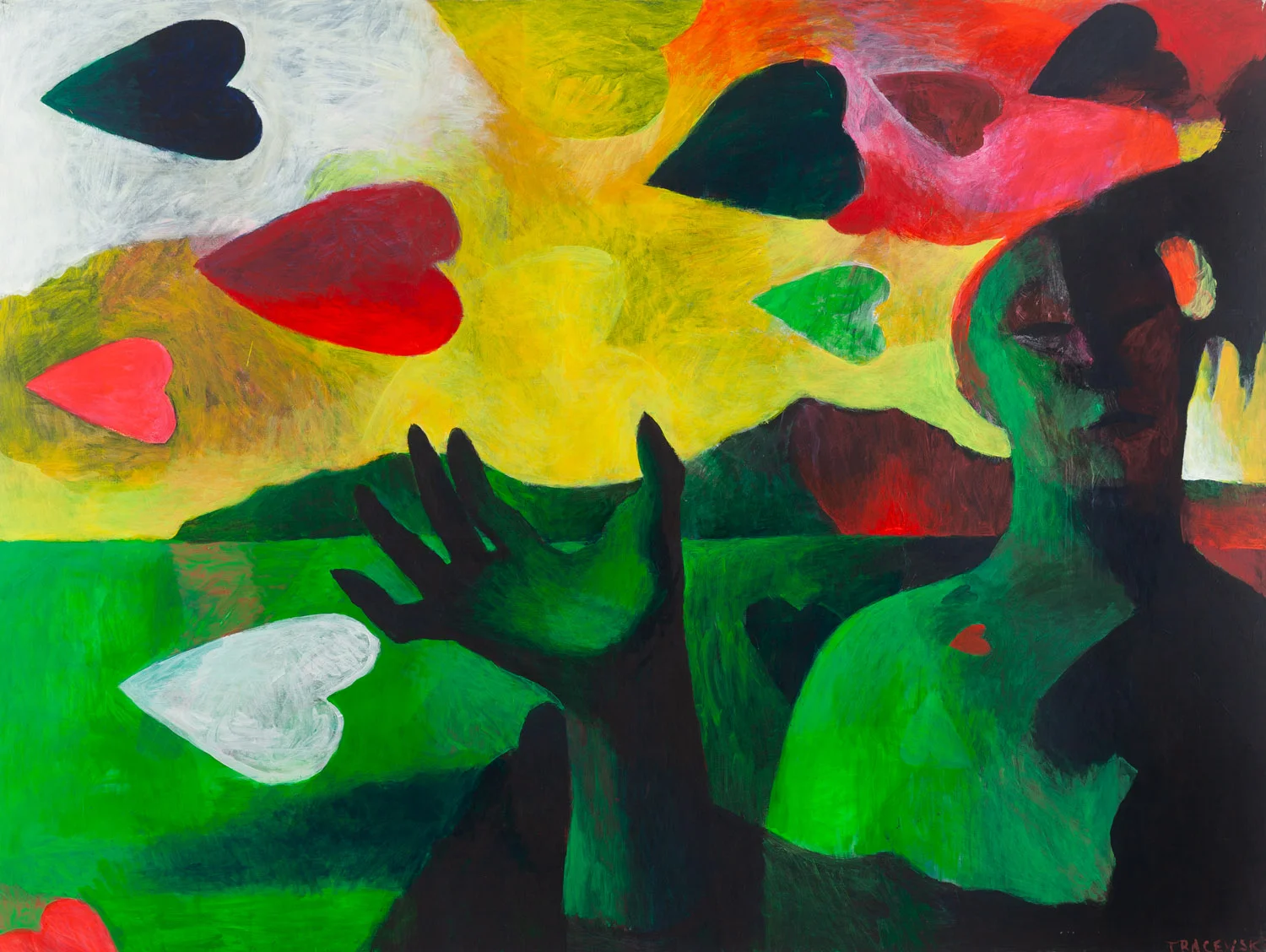
For Wojciech Tracewski, freedom was the most important aspect of the creative process, freedom of expression, building his own world, even if unreal. In his memories, the joint exhibition at the Warsaw SARP (Association of Polish Architects) – the first presentation of 1980s art curated by Andrzej Bonarski – left the strongest impression:
"Of course, before the vernissage, the censor lady appeared. She had to be invited; her decision determined whether the exhibition could be opened at all and in what final form. The lady saw a huge, very colorful exposition, containing all those things she had no right to allow into public circulation. These were blasphemous, obscene works, almost every one of them featuring a penis. Watching one painting after another, the censor seemed increasingly tired, reluctant, and sad. (…) At some point, she reached the end of the exhibition. There was a huge painting hanging there – on a canvas two or three meters high, against a green background, a black penis glowed. The lady stood in front of it and leaned over to read the title, which simply said: 'Dick.' When she read it, she just gave up and started laughing. She said, 'Give me the papers, guys.' (…) And luckily, we opened the exhibition"
(Wojciech Tracewski in conversation with Krzysztof Stanisławski [in:] Nowa ekspresja. 20 lat Vol. 2, ed. Krzysztof Stanisławski, Galeria Sztuki Współczesnej BWA w Olsztynie, 2006, p. 44).
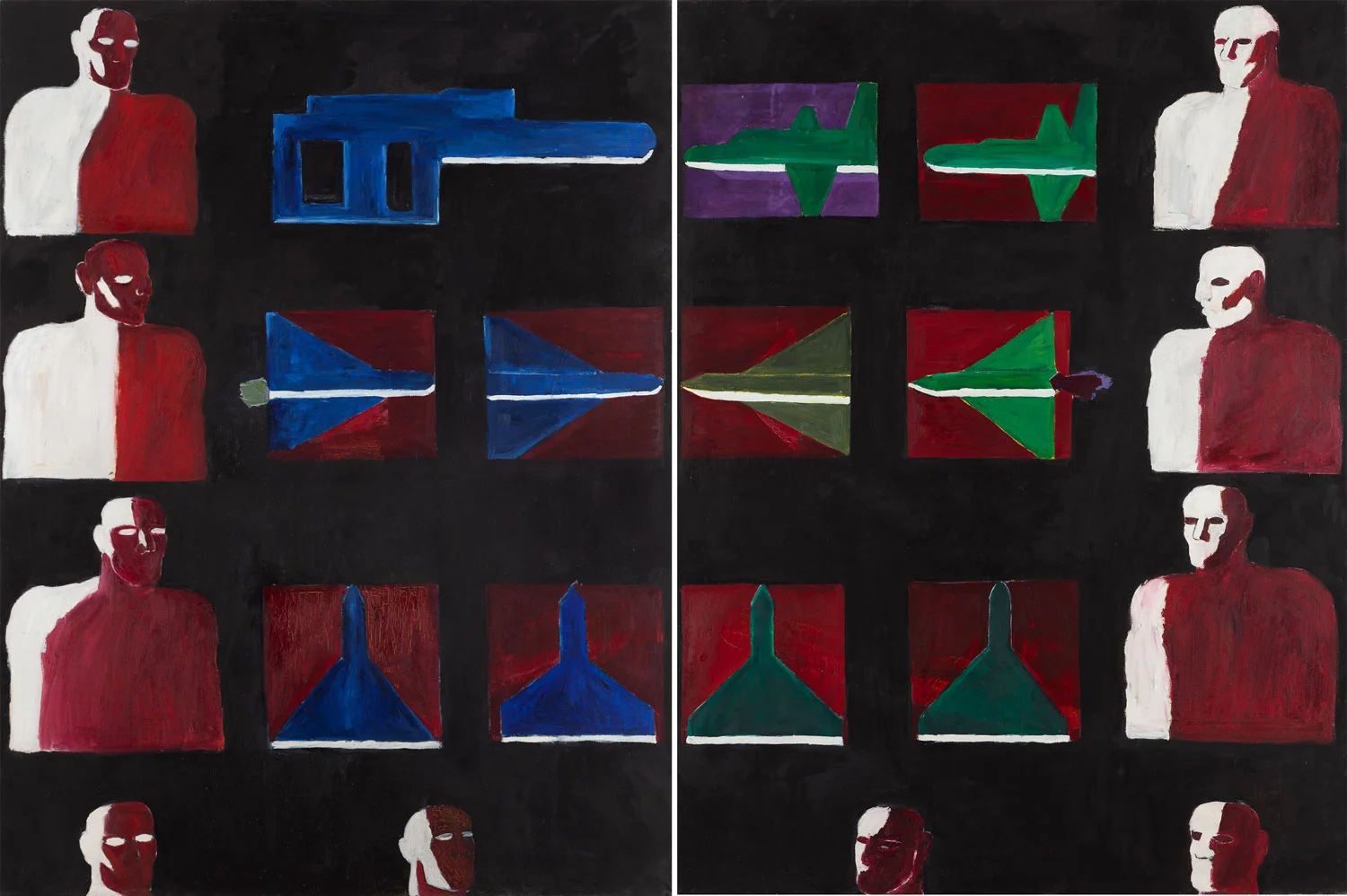
Right behind them, forging her own path, Anna Gruszczyńska shaped her artistic attitude – Dowgiałło's wife, with whom he collaborated from 1986 to 2000, creating pioneering visions of future art and projects for the Architecture of the Cosmic Era. Both desired contact with the world art scene, so in 1988, they moved to the United States for two years, where they studied and worked in the American art trend in New York City. During this period, Gruszczyńska created a series of paintings referencing the work of Władysław Strzemiński and developing the concept of plant cosmic architecture. Upon their return to Poland, along with Dowgiałło, she was invited to the "Szyk Polski" ("Polish Chic") exhibition at the Zachęta Gallery in Warsaw, where she presented one of her most important paintings titled "Futuro Barok" – a summary of her American creative period. The cosmos, being the main theme in the poetics of her later works, appeared in the artist's paintings as early as 1986. They were presented at the legendary "Co słychać?" ("What's Up?") exhibition at the former Norblin Factories in Warsaw in 1987.