
"ITALIAM! ITALIAM!” CYPRIAN KAMIL NORWID IN ROME
In Italy, Norwid spent about four and a half years – he had two stays, from March 1843 to August/September 1845, and then from 6 February 1847, to January 1849. After leaving Rome in January 1949, the artist never returned to sunny Italy. Although it was not a long period in the artist's biography, compared to the thirty years spent in Paris, it was a remarkably formative and intense time for the young artist. It was during the stay in Italy that the first masterpieces were created, e.g. "In Verona" ("W Weronie"), "White Marble" ("Marmur-biały"), "Italiam! Italiam!", as well as first poems, e.g. "Wedding" ("Wesele"), "Pompeii", a drama "Wanda", and numerous works from the field of visual arts. In Italy, Norwid fell in love with Maria Kalergis and began a long-standing relationship with Maria Trebicka.
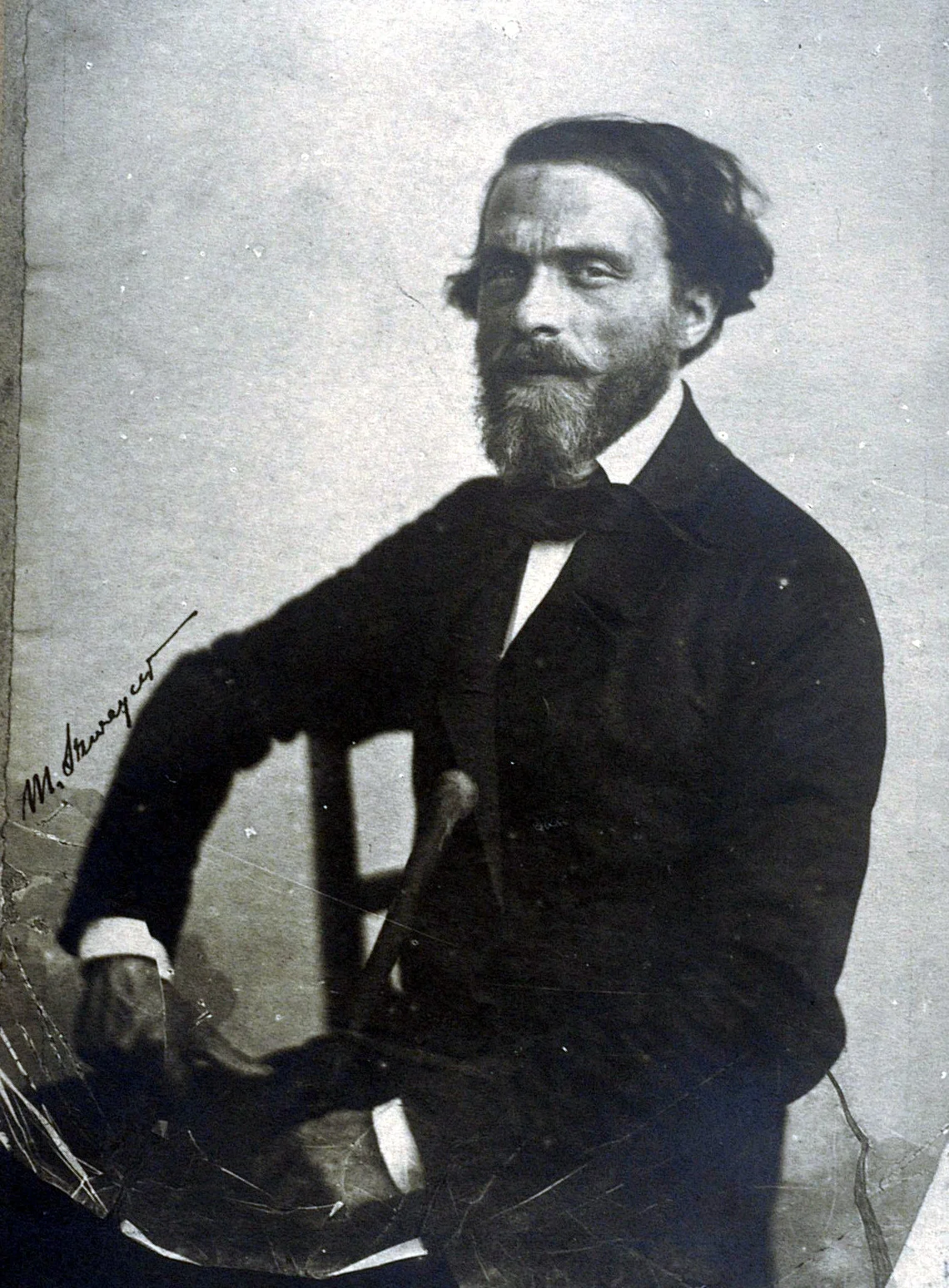
Norwid devoted his stay in Italy to studying sculpting and Italian masters, traveling, and visiting the key cities for the Latin civilization: Rome, Florence, Pompeii, Herkulanum. He went to the most important artistic and cultural sites. The artist saw all the museum masterpieces. He did not document his stay, Norwid absorbed knowledge, art, and culture. The creator would process it. Although he did not enroll to any of the Italian art academies, the artist attended the classes conducted by the classical painter Giuseppe Bezzuolli as an audit student, thanks to which he received letters of recommendation to the Florentine sculpture studio of Luigi Pampaloni.
For Norwid, the year 1845 starts with a visit to Rome. During his stay, the artist created the so-called Italian album. It included, among others, a portrait of Kalergis. We do not know exactly where it is kept now. Rome, being the center of the Christian world, the cradle of European culture, remained with the artist for good even after leaving the "Eternal City", as evidenced by numerous "Italian" poems, novels, works of art and the epic poem "Quidam". Norwid was interested in Italian art encompassing the centuries-old artistic and cultural heritage of the Apennine Peninsula, both in the literal and general sense. He was fascinated not only by the art of Renaissance but also by the art of the Etruscan civilization, Antiquity, and the Middle Ages. According to the artist's correspondence with Michalina Dziekońska and the information she gave to Zenon Przesmycki, around 1850 Norwid intended to write a guide to the monuments of ancient Rome. In 1845, the artist wrote an article for "Biblioteka Warszawska" magazine titled "On Florentine Sculptors (Living Today)", which suggested approaching Italian art through the prism of the then contemporary art, although his perspective was not completely free from the idealization of the past.
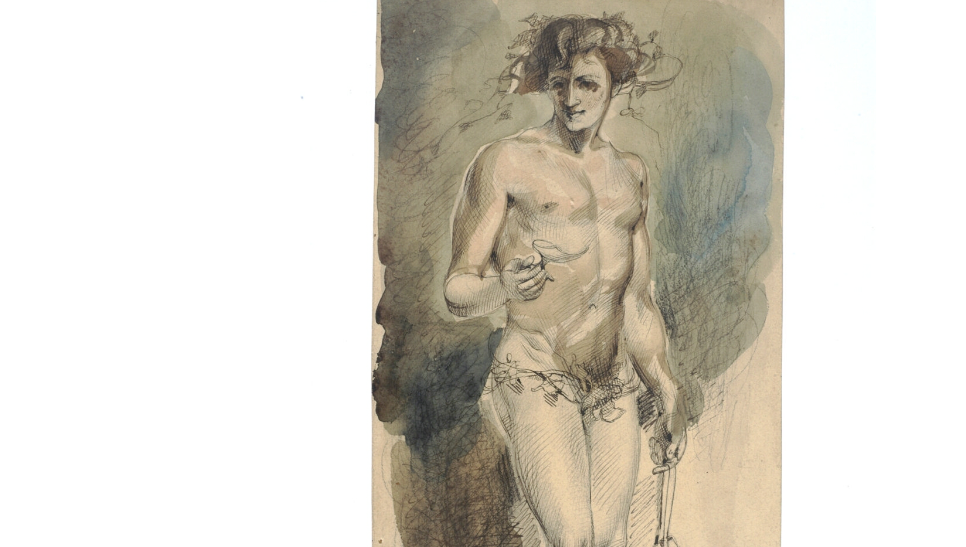
For Norwid, the embodiment of art was the art of Giotto, Ghiberti, Donatello, or Michelangelo. As it was widely acknowledged, it is the art of Renaissance that, quoting the famous words of Jacob Burckhardt, "discovered human"'. Renaissance was human-centered and Norwid found this culture an inexhaustible source of inspiration. In his poetic and artistic work, Norwid was interested in the human world, with all its magnificence, problems, and experiences. Heroes of Norwid's works, like in Renaissance, are spiritual beings. The artist was interested in the works of Renaissance masters, combining the world of pagan antiquity with the ideas and Christian values that formed a common, harmonious whole. Meeting Renaissance art was of great importance to Norwid. In a letter to Marian Sokołowski, he wrote:
"Michelangelo, defending Florence, as he returned from the ramparts of the city, took the chisel in his hand and sculpted the colossi that lay in the Medici Chapel. Now people know that only these forces are the (decisive) forces."
[see: two letters of the beginning of March 1961: CW XI, 478, 479].
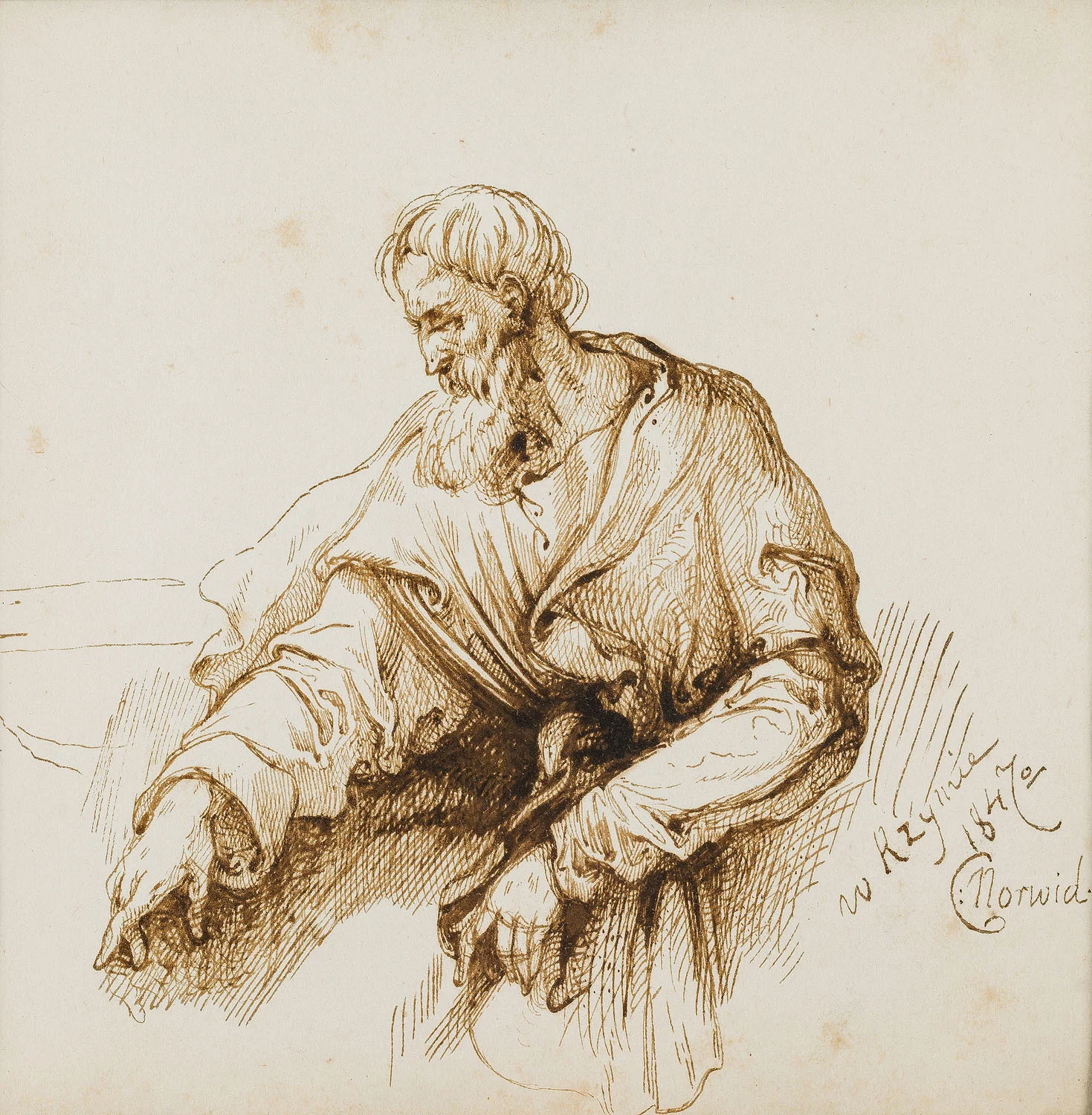
The drawing, presented in the auction offer, features an extensive inscription located in the lower right corner ("w Rzymie / 1847o / C: Norwid"). The indicated location (Rome) is in line with the artist's biography – Norwid spent the years 1847-1848 in the Eternal City, from where he went on sightseeing tours around the area only from time to time. The author of the work "Solo" encapsulates his characteristic artistic style in this particular drawing. In addition to the sketchy and fragmented character of the work, the main and, in fact, the only theme of the depiction is human. The artist was not artistically interested in what surrounded humans and this is why his oeuvre does not feature landscapes and architecture. Furthermore, even the figurative depictions are presented against highly reduced backgrounds. In the case of the discussed drawing, it seems that we are dealing not so much with a portrait of a specific figure, but rather with an imagination. The idealization of facial features and a peculiar dignification of the model speak in favor of such interpretation. These characteristics make the work fit into Norwid's extensive drawing oeuvre, which encompasses the images of people dressed in antique costumes, with majestic poses and noble faces, often surrounded by ruins or other elements of "ancient" landscape. Most often, the protagonists of these works were noble, long-bearded old men, resembling the figures of prophets, wise men or apostles, as well as young idealized women.
The drawing by Cyprian Kamil Norwid, available for purchase at DESA Unicum, is an important event and a lucky strike for the collectors, especially when taking into account the accessibility of Norwid's works on the art market. Norwid's authentic plastic works are extremely rare on the antiquarian market - in the last several years only a few items, unquestionably attributed to the artist, were offered for sale in Poland and abroad.