Illustration, not just for children
The years 1950–1980 are considered to be a special period for Polish book illustration. It was then that illustration advanced to a very high artistic level and became a distinctive feature of Polish art. The creators were appreciated and awarded on numerous occasions, and their works were exhibited at international exhibitions. The phenomenon started to be referred to as the Polish School of Illustration. It was acknowledged for its broad artistic freedom, variety, vividness, the individuality of the artists, sense of humor, rich form, and innovative approach to illustrating books.
Professor Filutek was brought to life by Zbigniew Lengren. The character of a petite old man with a characteristic bowler hat and a cane by his side entertained generations of the "Przekrój" magazine readers for more than half of the century.
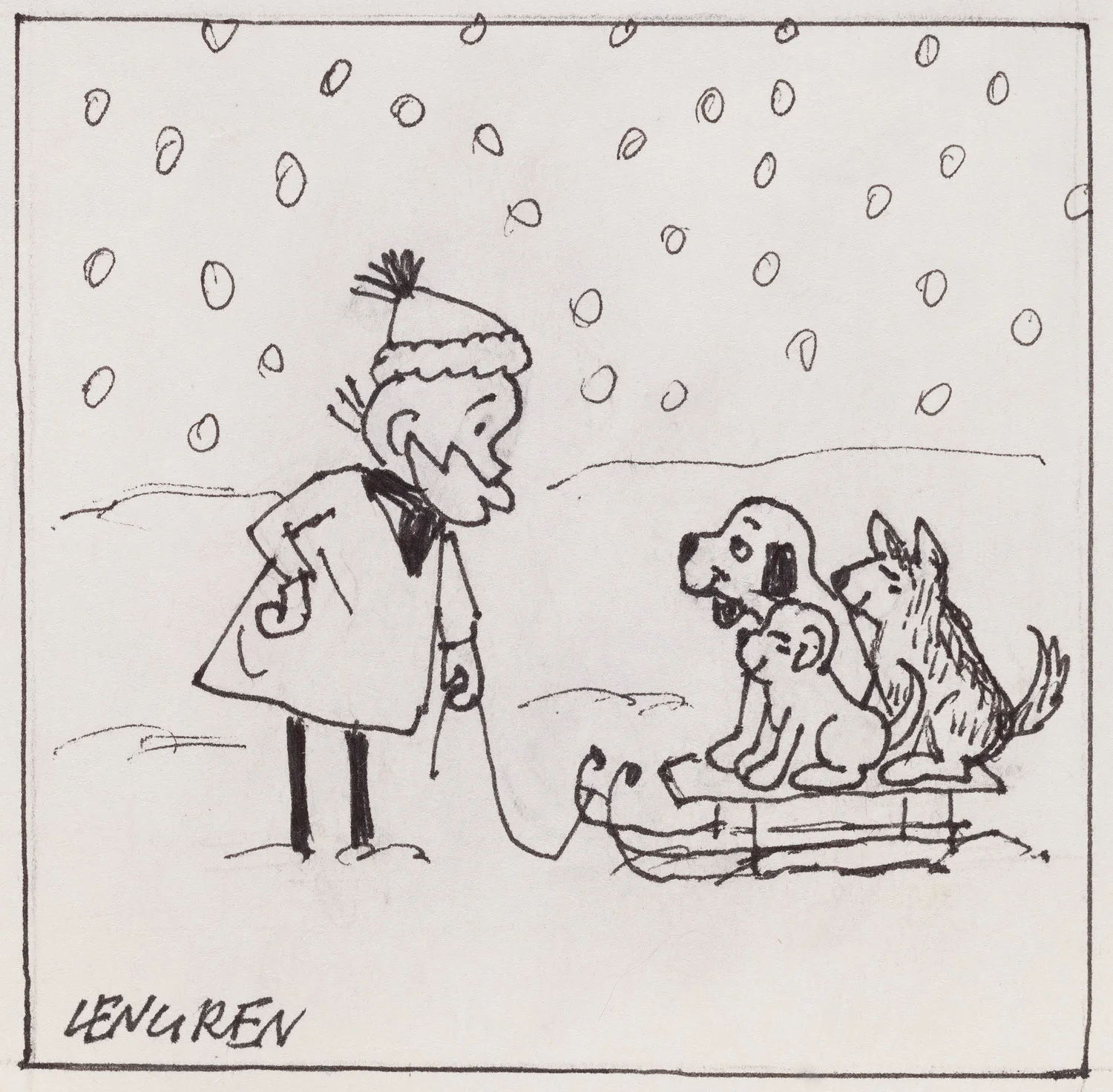
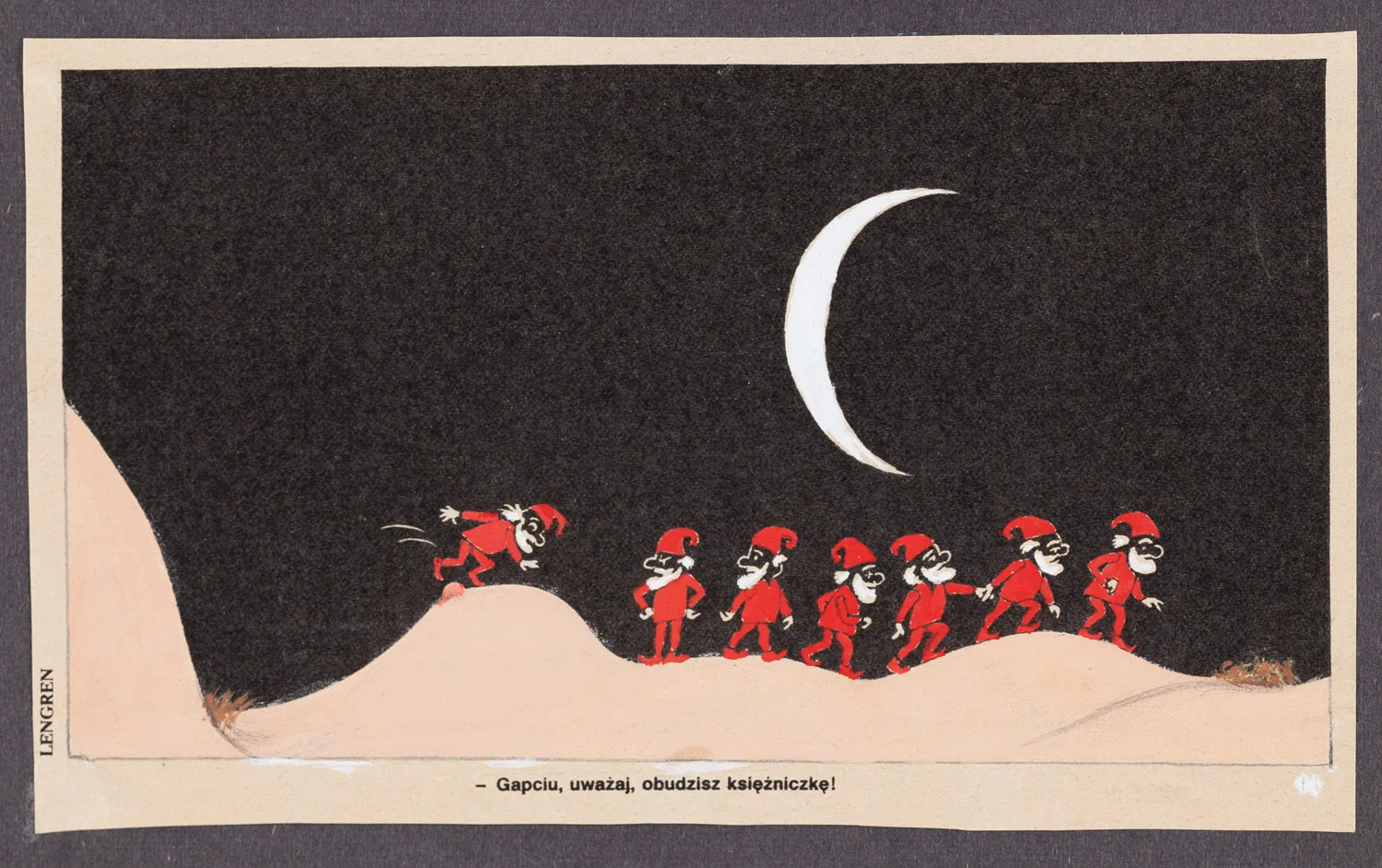
Lengren graduated from the Kopernik Middle School in Toruń in 1938 and then applied to the Faculty of Architecture of the Warsaw University of Technology. However, the outbreak of World War II prevented him from starting his studies. He was drafted into the Polish Army and defended the country during the September invasion of Poland when he was captured by the Germans. He spent the rest of the war in German POW camps and prisons. After the end of the war, in December 1945, he returned to Toruń where he started his painting studies at the Faculty of Fine Art of the Mikołaj Kopernik University. He combined his artistic achievements with professional work and obtained his diploma in 1951. He made his debut as a caricature artist in the magazine "Stańczyk" in 1944. From 1946, the artist cooperated with the weekly "Przekrój," in which he published a drawing series with Professor Filutek and the dog Filus; the first episode appeared in the 147th issue of the magazine in February 1948. He also collaborated with other magazines, such as "Szpilki," "Świat," "Trybuna Robotnicza," and "Playboy." In addition, the artist illustrated books, created film posters, and wrote satirical works.
Zdzisław Witwicki was born in 1921. He authored illustrations for more than 70 books for children, including the widely recognized and popular in Poland "O Wróbelku Elemelku" ("About Elemelek the Sparrow") by Hanna Łochocka, "Z przygód Krasnala Hałabały" ("Adventures of Dwarf Hałabała") by Lucyna Krzemieniecka.
Moreover, he created several hundred illustrations and designed covers for magazines for children and youth, such as "Miś," "Świerszczyk," and "Płomyczek". He presented his works at more than 250 solo and collective exhibitions in Poland and abroad. For many years, he was the artistic and graphic editor at the "Nasza Księgarnia" Publishing Institute.
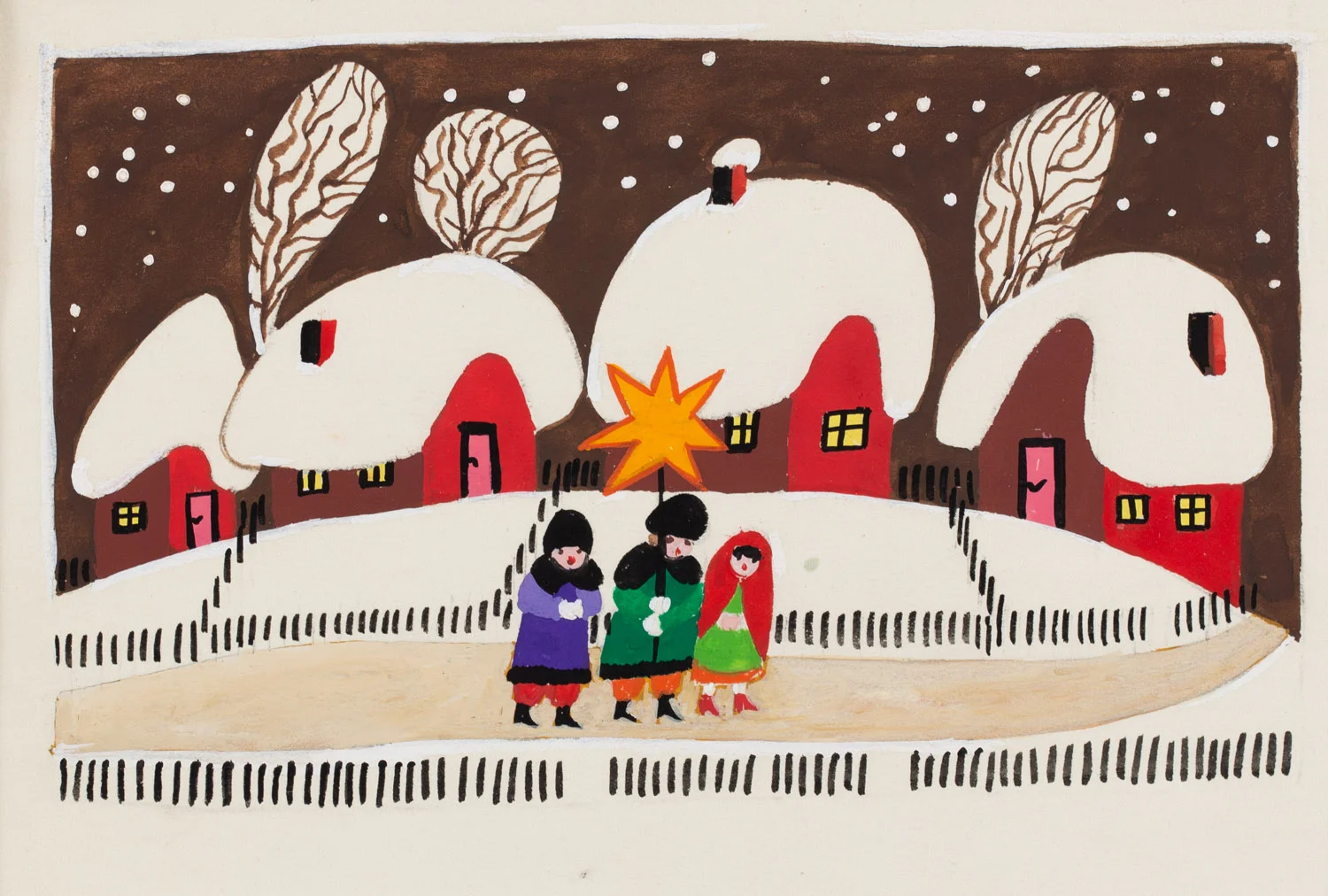
Hanna Czajkowska-Kroczewska was born in Warsaw in 1917. She was a graphic artist, illustrator, and painter. The creator quickly began cooperating with publishing houses specializing in children's literature. For years, she was associated with the "Nasza Księgarnia" publishing house. She dealt with children's books her entire professional life, illustrating more than a hundred of them. In her art, the author used pure, pronounced color, strived for generalization, and employed linear drawing. Hanna Czajkowska also made oil paintings, often depicting landscapes and flowers, but only for her nearest and dearest. The artist's works were exhibited many times in Poland and abroad.
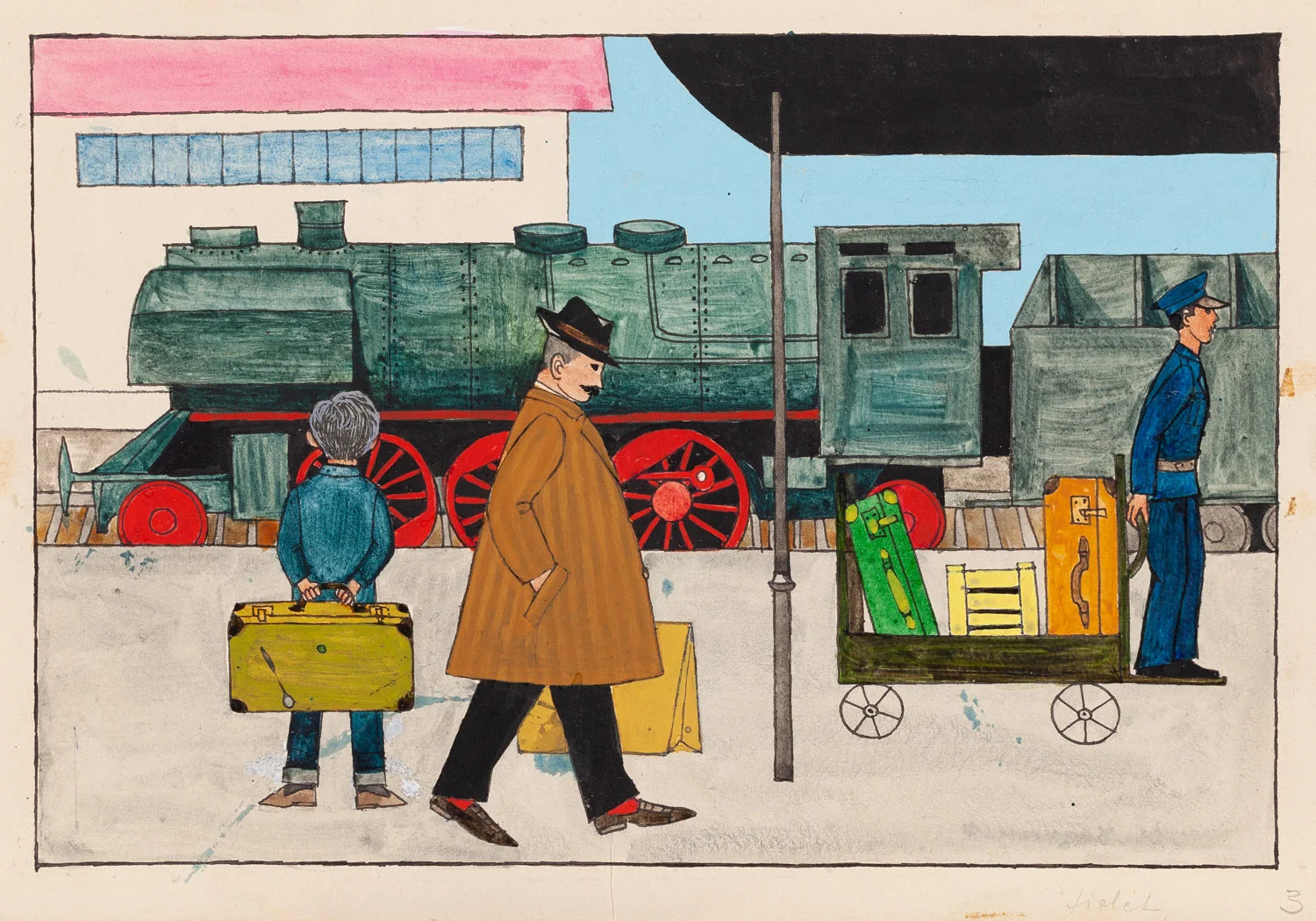
Maria Ekier grew up in a family that was strongly associated with culture. Ekier's mother was Danuta Szaflarska - a film and theater actress, while the artist's father was Jan Ekier, a well-known pianist, composer, and publisher. In 1966, Ekier began her studies at the Academy of Fine Arts in Warsaw. In 1971, she received a diploma with distinction in the studio of Prof. Jan Marcin Szancer and Prof. Julian Pałka at the Faculty of Graphics. She specialized in book graphics and worked on designing book covers and posters. Her main inspiration were the works of experienced illustrators. She considered the works of Stasys Eidrigevičius and Józef Wilkon to be the example to follow.
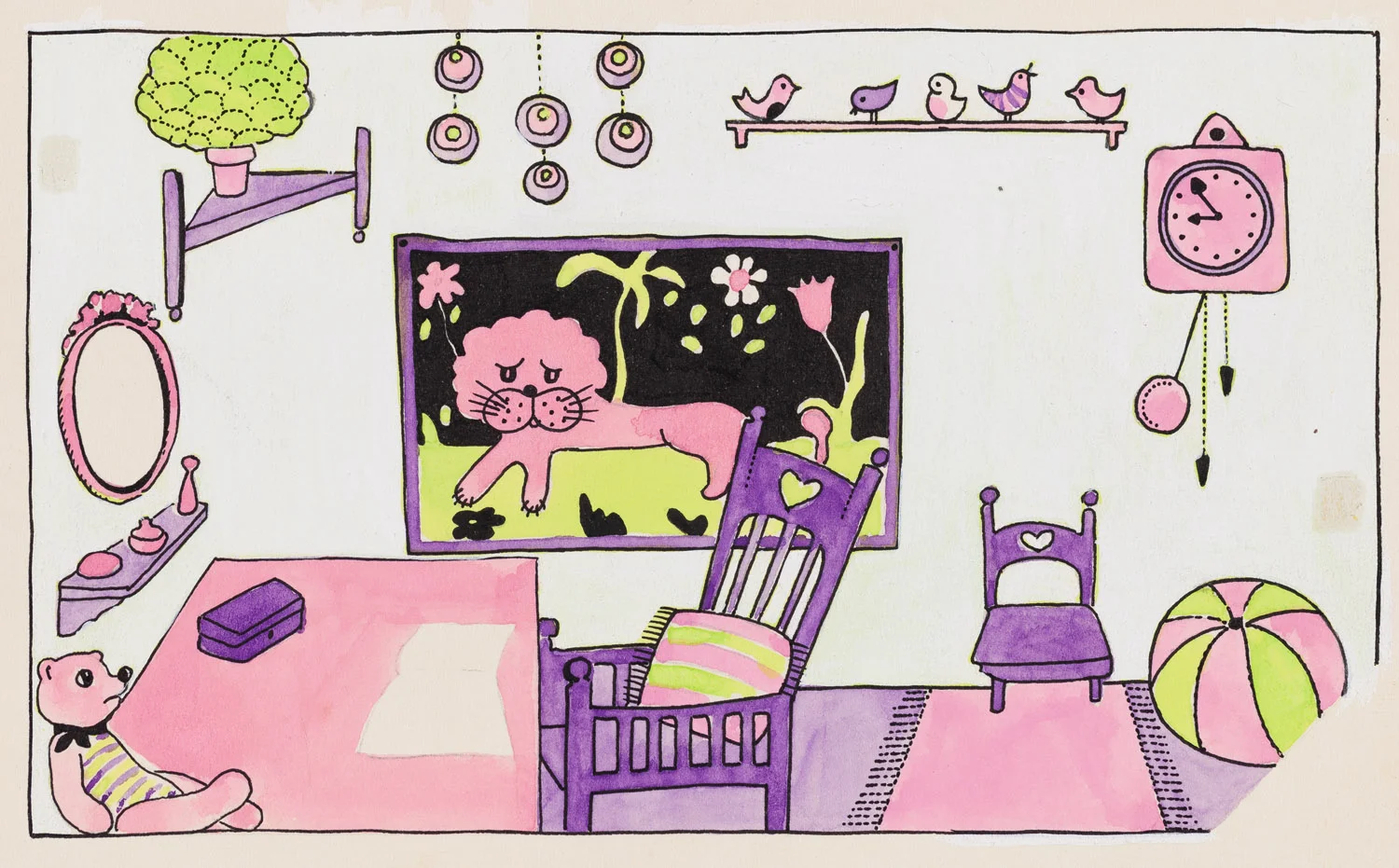
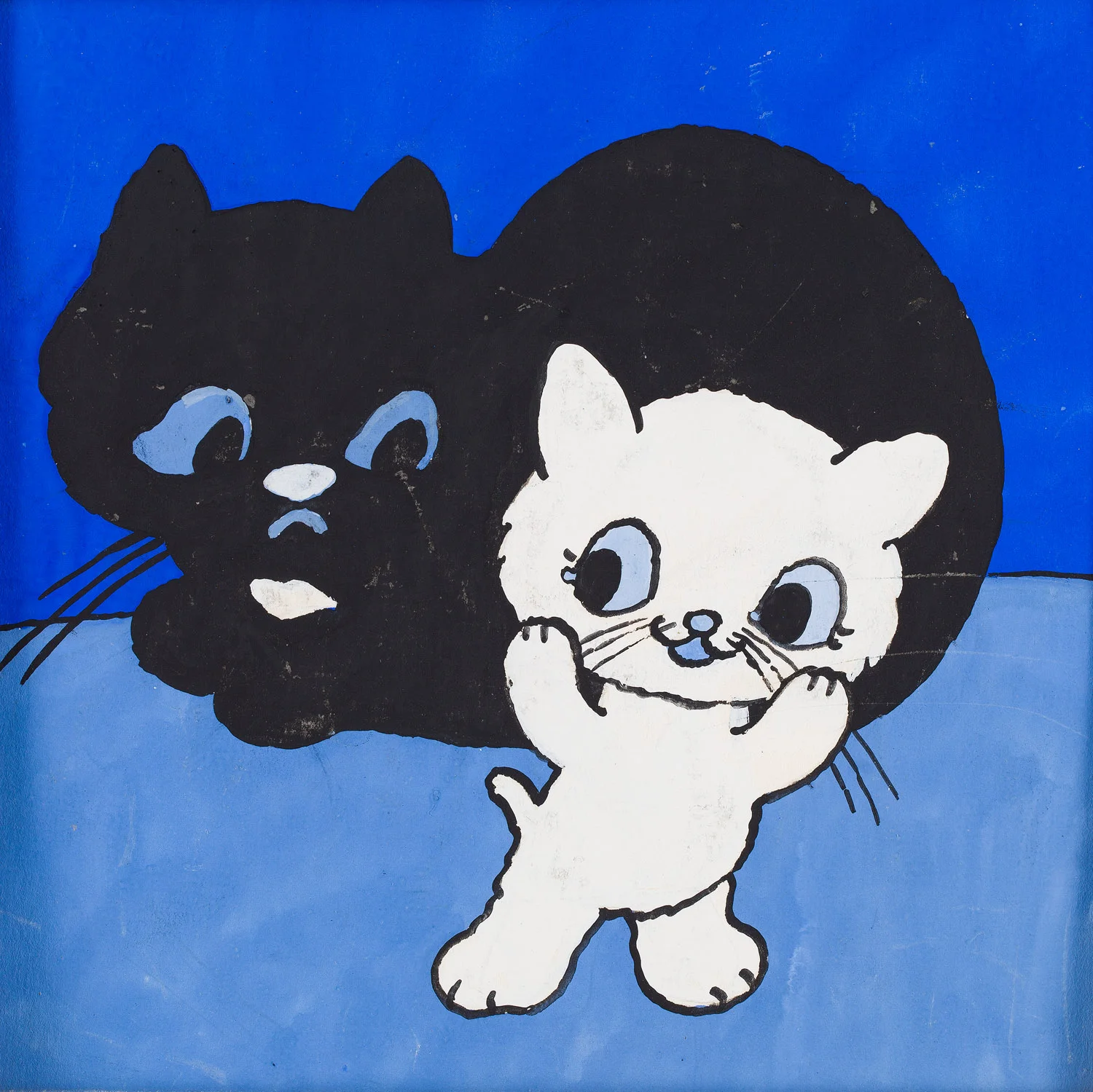
Drawings by Julitta Karwowska-Wnuczak are characterized by strong color saturation and a cheerful atmosphere. The drawings of animals, including cats Filemon i Bonifacy, but also other animals, are particularly recognizable for her work. The artist graduated in painting from the Academy of Fine Arts in Warsaw in 1960. She obtained her diploma under Prof.Eugeniusz Eibisch. From 1961, she was associated with the "Ruch" Publishing Office as a postcard designer and illustrator. She made her debut by making illustrations for the book by Ewa Szelburg-Zarembina, "Dziwne przygody Ignasia" ("Strange Adventures of Ignaś").
In 1962, she established long-term cooperation with the "Nasza Księgarnia" Publishing Institute, for which she illustrated many books for children and youth, including "Tales of Ancient India" by Shanta Rameshwara Rao, "Povestea Porcului" by Ion Creanga, "Księżniczka głogu" ("Hawk Princess") by Władysław Ludwik Anczyc, "The Sky Was Blue" by Charlotte Zołotow, "Lokomotywa" ("Locomotive"), "Rzepka" ("Turnip"), and "Ptasie radio" ("Bird's Radio") by Jan Brzechwa.
The artist's works were exhibited in Italy, Czechoslovakia, East Germany, the Federal Republic of Germany, the USSR, Japan, and Denmark; they were also displayed at the Biennale in Bratislava and Bologna.