
Horses, riders and carts
From the end of the 18th century until the first decade of the 20th century, horses were one of the most common themes and heroes in paintings by Polish authors. This phenomenon was largely related to the role that horses played in the culture of the landed gentry and the tradition of chivalry. Horses served men both in times of peace and during wartime campaigns. They were used for organizing hunts, sleigh rides, races, and rides, which were adored by the landowners. The animals assisted with plowing fields and transporting crops to the barns. Soldiers rode them to the battlefield: the Hussar heavy cavalry, the Uhlan light cavalry, lancers, chasseurs, and chevau-légers.
The most famous Polish horse painters include Piotr Michałowski, January Suchodolski, Józef Brandt, Maksymilian Gierymski, Józef Chełmoński, Alfred Wierusz-Kowalski, and members of the Kossak family. Horses also occupied an important place in the paintings by artists such as Józef and Tadeusz Brodowscy, Tadeusz Ajdukiewicz, Wacław Pawliszak, Ludwik Gędłek, Włodzimierz Łoś, and Zygmunt Rozwadowski.
These artists developed various and rich themes related to horses. In addition to popular battle and chivalry scenes, genre scenes enjoyed great popularity, for example, weddings, fairs, sleds, hunting, and rides. There were also artists who passionately created "portraits" of the very animals.
Jean Pierre Norblin de la Gourdain, a painter of French ancestry active in Poland between the years 1774 and 1804, was the first artist in the history of Polish painting to render a more detailed representation of a horse, recreating its anatomy and depicting its movement. While traveling through Polish villages and towns, he captured both the beautiful and dignified horses of the Polish borderlands as well as the malnourished peasant horses. His student was Aleksander Orłowski, a talented horse painter whose works, despite being rooted in eighteenth-century ideas, sought realism in his compositions presenting majestic animal silhouettes.
Piotr Michałowski was the real pioneer in horse painting. He flawlessly reproduced their movement and dynamics as well as their race and temperament. Michałowski's highly individual painting language didn't quickly resonate or find followers on the Polish painting scene. The works by artists such as Juliusz Kossak, Józef Brodowski, and Jan Suchodolski, who were active during a similar period, followed a completely different convention. Their depictions of horses were unquestionably closer to the academic models known from the works by authors like Horace Vernet.
Horses were also one of the main motifs in paintings by Józef Brandt, who was the leader of the Polish artistic colony in Munich. He presented horses in genre scenes depicting the lives of soldiers, reconnaissance, horse scouting, rides through villages, fair and market scenes, and entertainment. Similar to the paintings by other representatives of the Munich colony, the horses on his canvases were remarkably beautiful and graceful, depicted in an abrupt motion and from a foreshortened perspective. Józef Chełmoński also presented horses in a very abrupt movement. Harnessed in threes or fours, the galloping animals with muscular bodies stirred admiration and seemed to blow apart the surface of the paintings, creating the illusion of unstoppable, ongoing movement.
Session II of the "Old Masters, 19th Century & Modern Art" auction, which takes place in our headquarters at Piękna 1A in Warsaw on 15 December, offers you a unique collection of works, with horses being its main motif or being inseparably connected with the theme of the compositions.
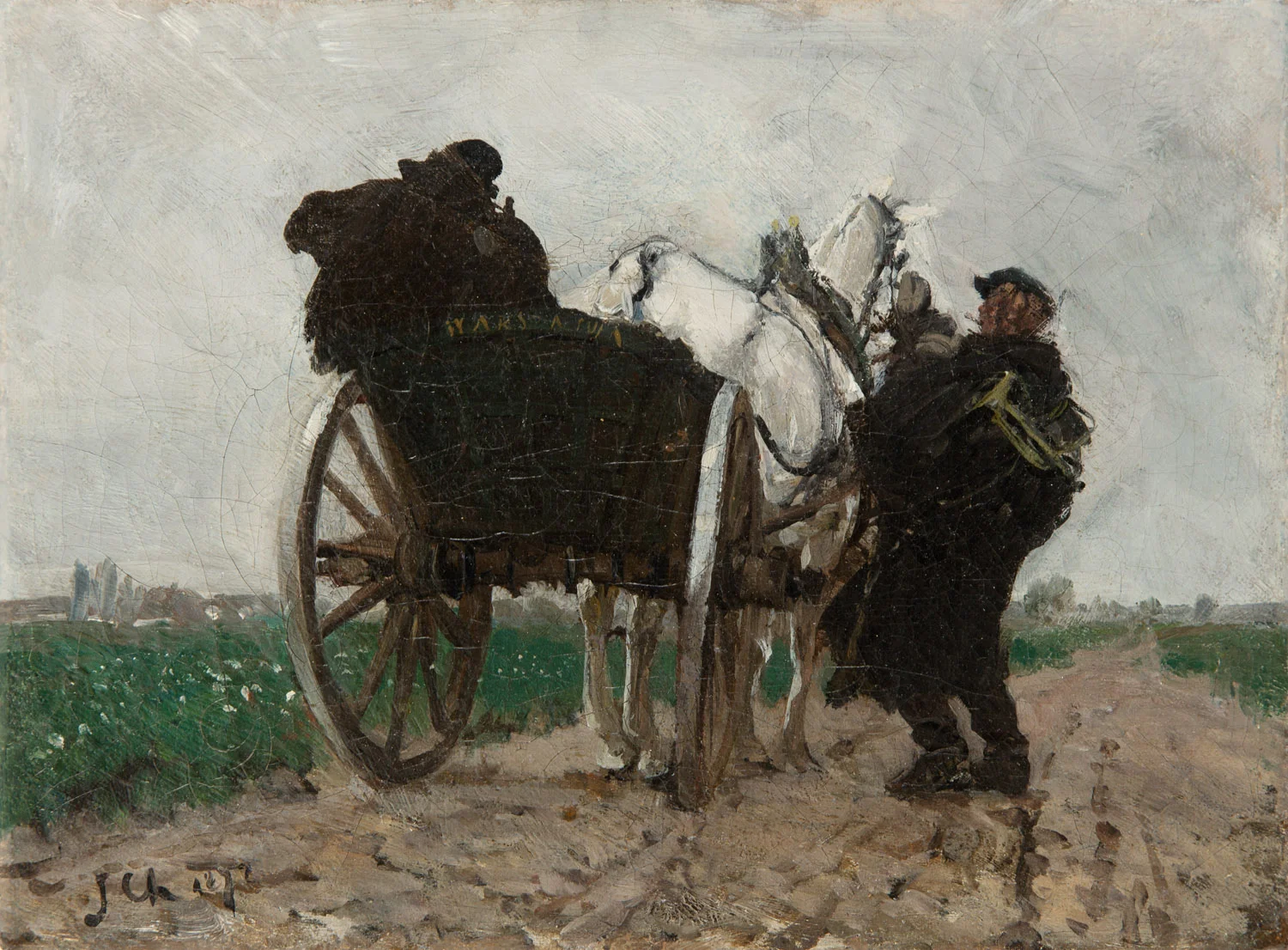
Józef Chełmoński's "Country Postman" is a remarkable painting from a collector's point of view. In the foreground of the composition, we see a two-wheeled cart with a seated figure and another standing by it. The work is quite sentimental, which was characteristic of Chełmoński's painting. The inscription "Warsaw" on the back of the cart expressly places the stage against the background of the Mazovian landscape. The wide and unrestrained composition is presumably one of the earliest paintings made by the artist during his stay in Munich. The strongly foreshortened silhouette of a gray horse, visible from the back, was painted with the proficiency and mastery typical of the artist's skills.
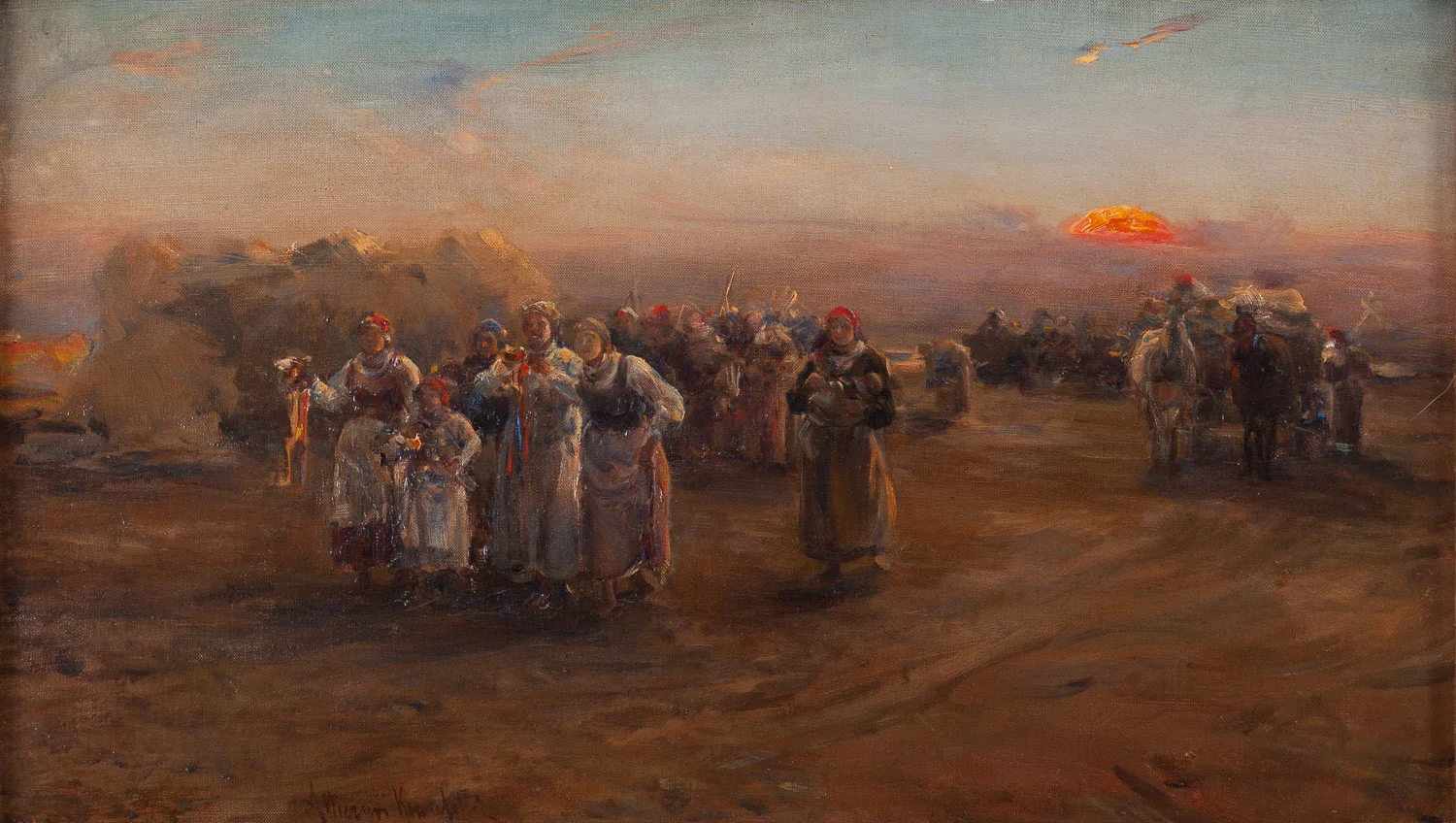
Alfred Wierusz-Kowalski's "Dozhynki" is a great example of a painting and themes undertaken by Poles from the Munich colony. The composition is just one of the numerous examples of the author's works idolizing Polish folklore. The artist presented the harvest festival, which crowns the growing season and epitomized the harvest time. Horse silhouettes, a crucial component of Polish country life and ceremonies, appear to be a natural part of the atmospheric landscape, being the natural scenery on the canvas.
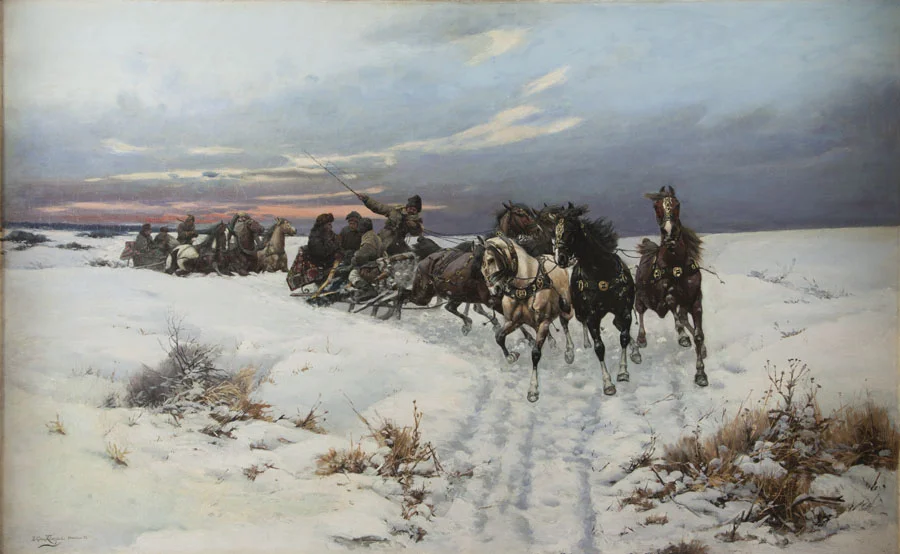
Another excellent and bold example of the Munich colony's painting is "Sledging" by Bohdan Kleczyński. The presented composition was painted during the Munich period of the artist's creative career and was created a year before his comeback to Poland. The work strikes the viewer with the swirl of movement caused by the madly galloping horses in the foreground.
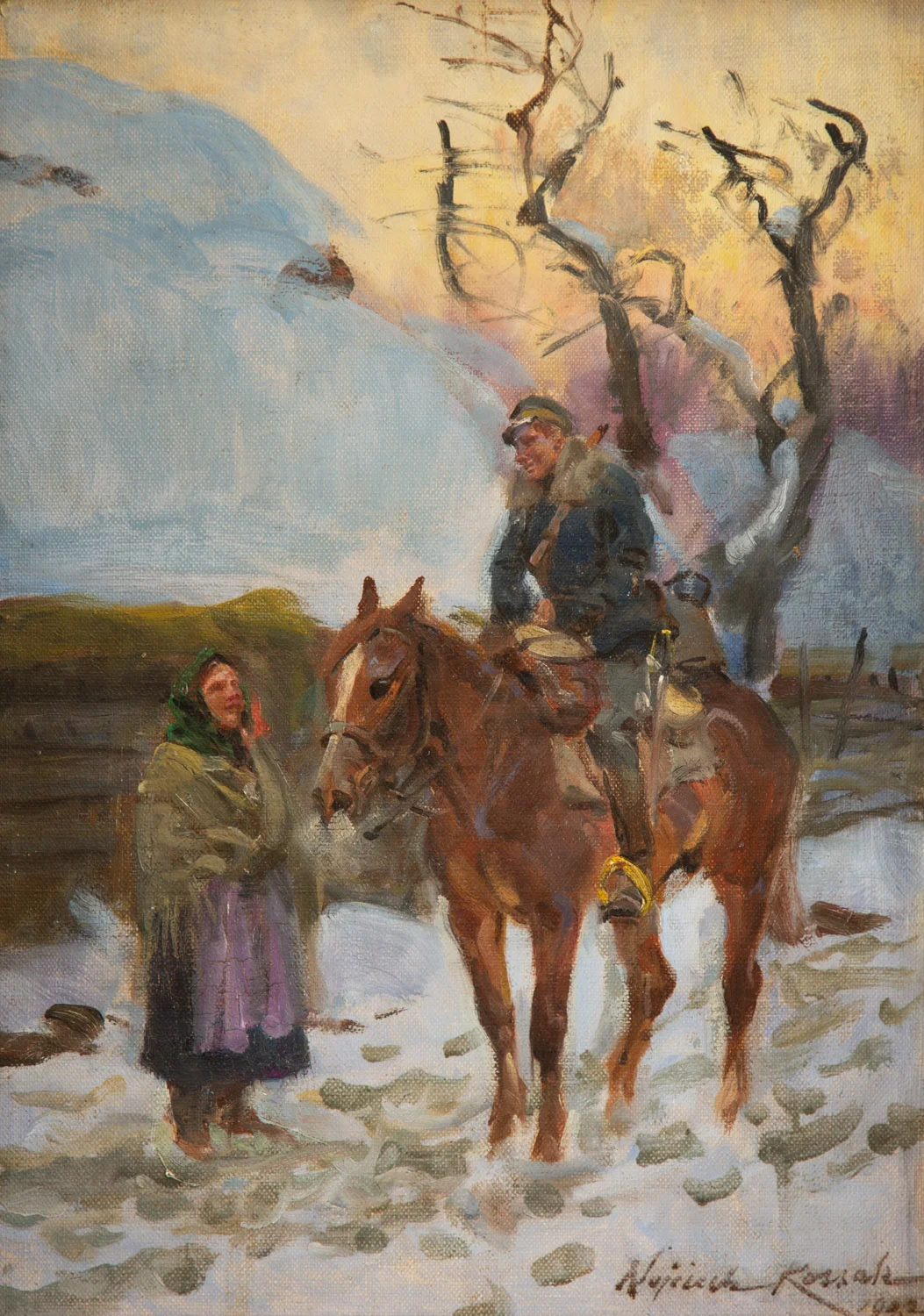
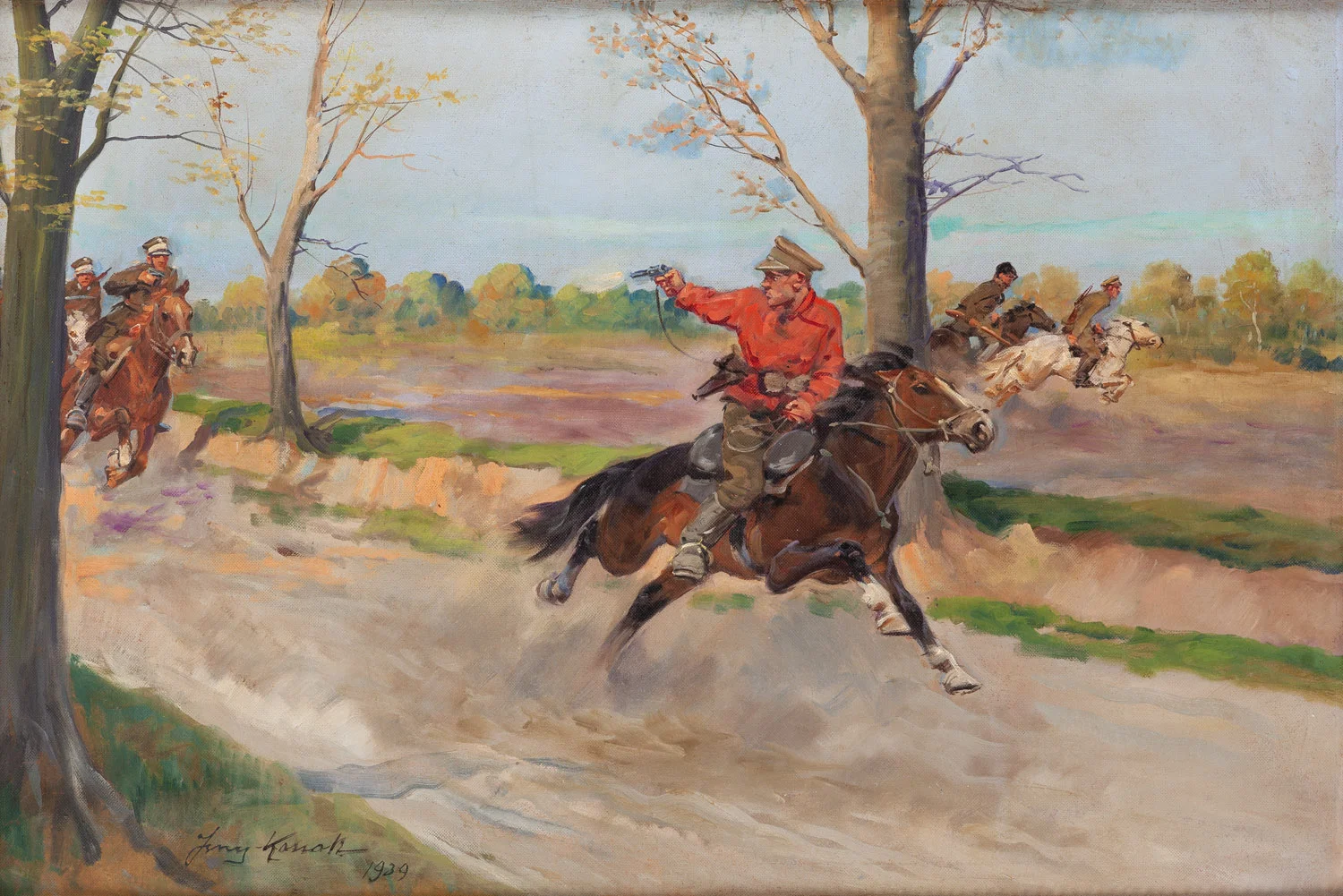
Our selection also includes canvases by the Kossak family. The painting "Ułan i dziewczyna" ("Uhlan and Girl") presents one of Wojciech Kossak's favorite motifs, a meeting of a soldier and a rural girl. Of course, the soldier's horse, always positioned in the center of the composition, was an essential component of the painting. We also present you a selection of works by Jerzy Kossak, in which soldiers and horses also play the main roles.