
Hidden stories of unearthed objects
In her work, Agnieszka Apoznańska immortalizes things with an unconventional origin. Her paintings are narratives where the story is crafted by ceramic figurines, cloth dolls with porcelain heads, and objects found at antique markets that seem to lack history and a past. The artist sees the ambiguity as a challenge to breathe new life into these items, give them a sense of identity from the past, and a pretext for uncovering answers to whether they were witnesses to happy moments or tragedies.
In each of her memories, Apoznańska finds connections to our personalities:
"Every event, meeting, and object has an impact on who we are at any given moment. By painting objects, I seek to connect with their past, trying to understand the roles they played in it. In my recent works, I painted objects from flea markets and online auctions. These were items whose past was completely unknown to me. Gazing at them, I interpreted their stories through the prism of my associations and personal sensitivity."
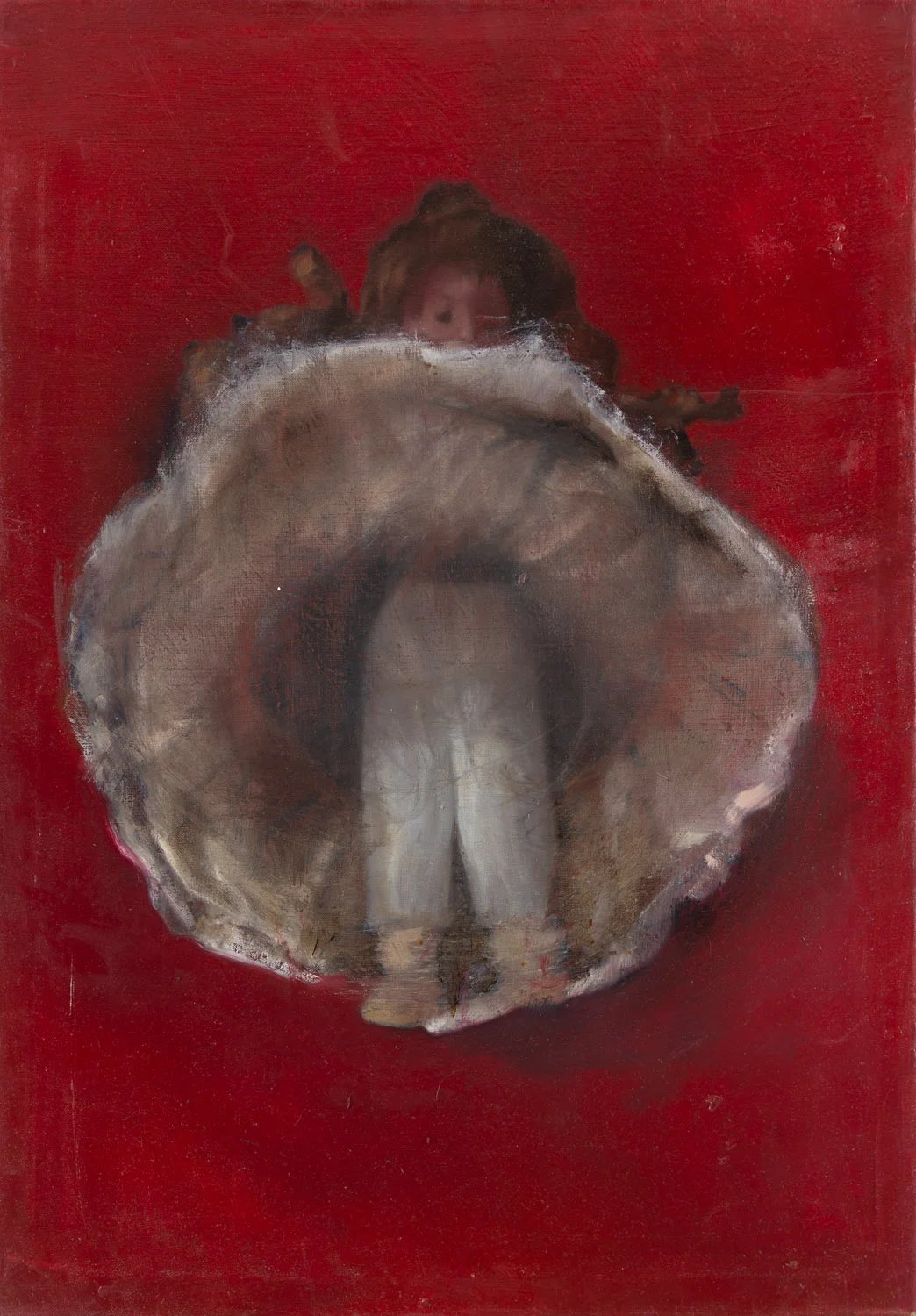
"What interests me is how people establish a bond with the objects that surround them. Seemingly unnecessary things can have a powerful influence, almost shaping our sense of the world. Recalling childhood memories, I tried to determine the value of a doll given to me by my mother. This object was made of porcelain, so I couldn't even touch it. I admired it from a distance, looking at its painted face and beautiful, ornate dress. The doll had a padded bust and red-painted lips. It was the most beautiful object in our home. Reaching into these memories, I paint the doll up close, from various perspectives, as if I could finally uncover all its secrets. Undoubtedly, it influenced my sense of aesthetics and suggested a standard of beauty to which I, as a growing girl, should aspire."
- Agnieszka Apoznańska
At the same time, specific motifs and themes in Apoznańska's works provide her with a broad field for experimenting with color, composition, and new formal solutions. The greatest influence on her work and her perfectly developed painting technique comes from old masters such as Diego Velazquez, Jusepe de Ribera, Francisco de Goya, and Francisco de Zurbaran. A turning point in Apoznańska's artistic journey was her year-long stay in the Basque Country of Spain during her fourth year of studies, which she recalls as follows:
"A strong infusion of a new culture, a lot of time spent in places like the Guggenheim Museum and the Prado, resulted in a greater focus on painting techniques and honing my skills. It was a very inspiring time for me, and the paintings of Spanish masters remain one of my greatest inspirations."
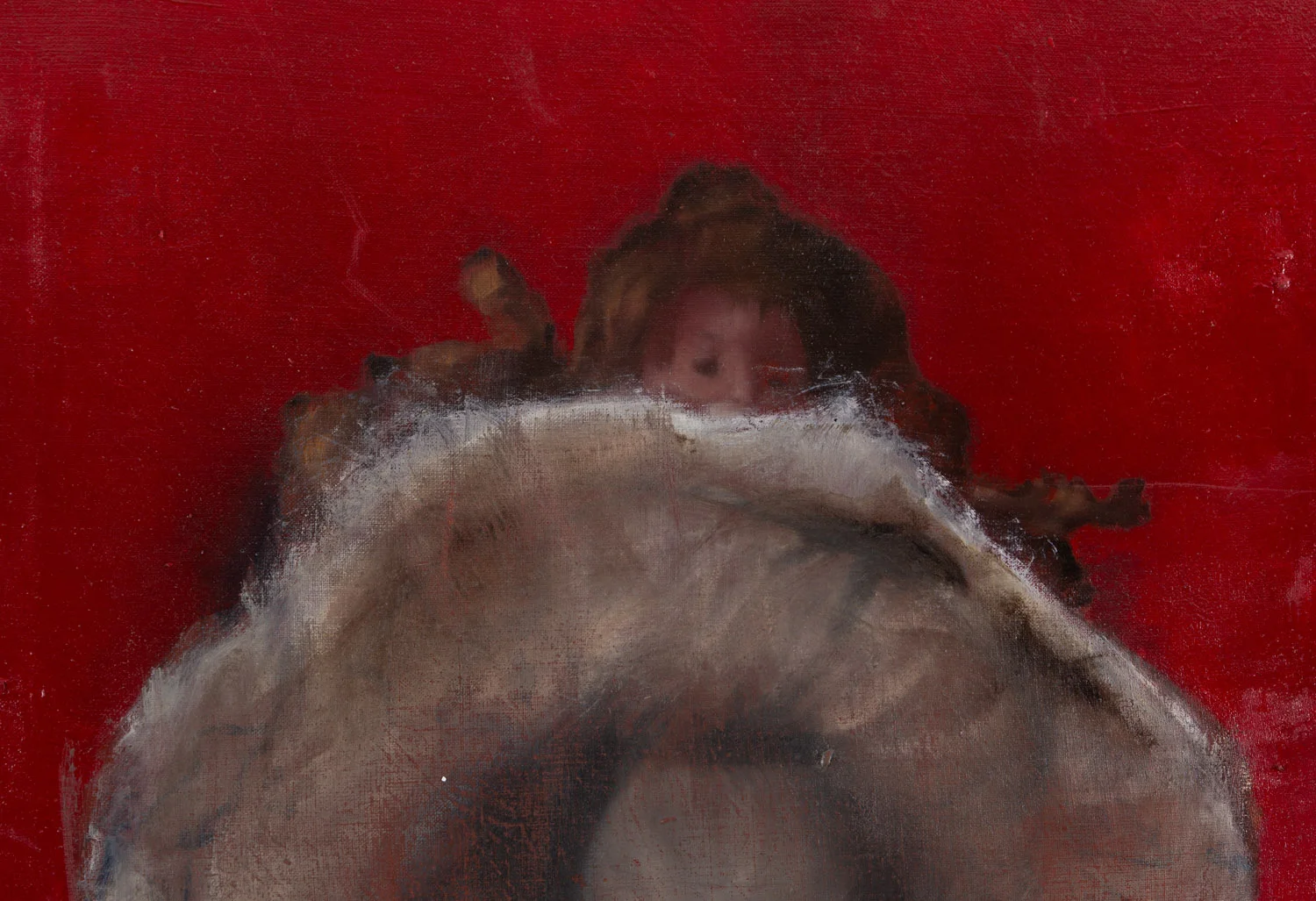
Apoznańska's paintings possess an element of suspension, uncertainty, and indeterminacy. This is further enhanced by her realistic technique, which simultaneously introduces a blurred layer that causes contours and colors to fade. Consequently, the artist places the viewer in uncertainty, unsure if the process of visible fading will last forever, remaining incomplete. The actual moment of "blurring" is the most crucial for Apoznańska in the painting process. She adds:
"At this moment, I almost lose the image I had just created, only to discern the most interesting fragments from the fog that has formed. It reminds me of digging through memories when things in our minds gain meaning only when we reach their specific details."
For Apoznańska, it's also essential to explore the artistic values of the presented objects through the prism of how they are perceived. The process of perceiving reality is conditioned by our upbringing, interests, and situational context at the moment of contact with a particular object. Thus, Apoznańska's art can be seen through the prism of how rich the multiple threads regarding a single object are, serving as a vessel for memories, emotions, and cultural associations.