Franz von Stuck - the total artist
The life of Franz Stuck is almost an archetypal story. Born the poor son of a miller, he became one of the most important artists of his time. His later extravagant lifestyle sharply contrasted with his humble beginnings, earning him the title of Malerfürst (Prince of Painters).
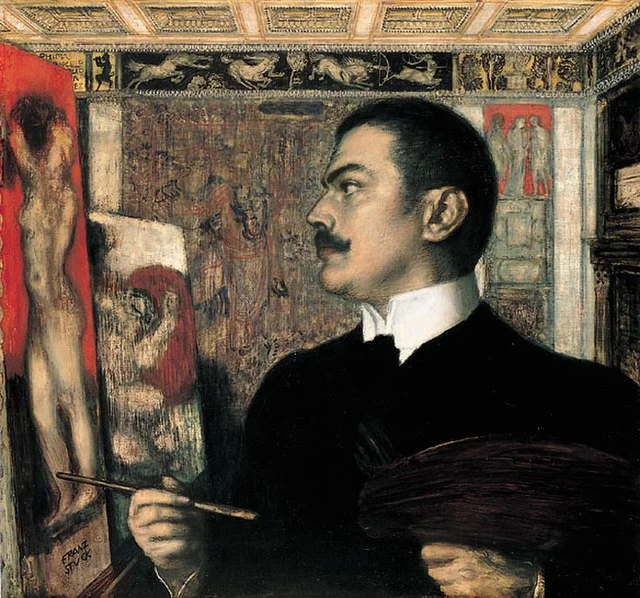
Even as a child, Stuck displayed extraordinary artistic skills, especially in drawing. Remarkably for an artist from his social background, his talents were nurtured from a young age, leading to his enrollment in the prestigious Kunstgewerbeschule in Munich. As a student at the academy from 1881 to 1885, he created humorous drawings for illustrated magazines and provided sketches for the portfolio "Allegorien und Embleme." Even these early works showed his exceptional sensitivity to the decorative aspects of art and his penchant for reinterpreting mythological themes, eventually becoming the hallmark of his art and bringing him international fame.
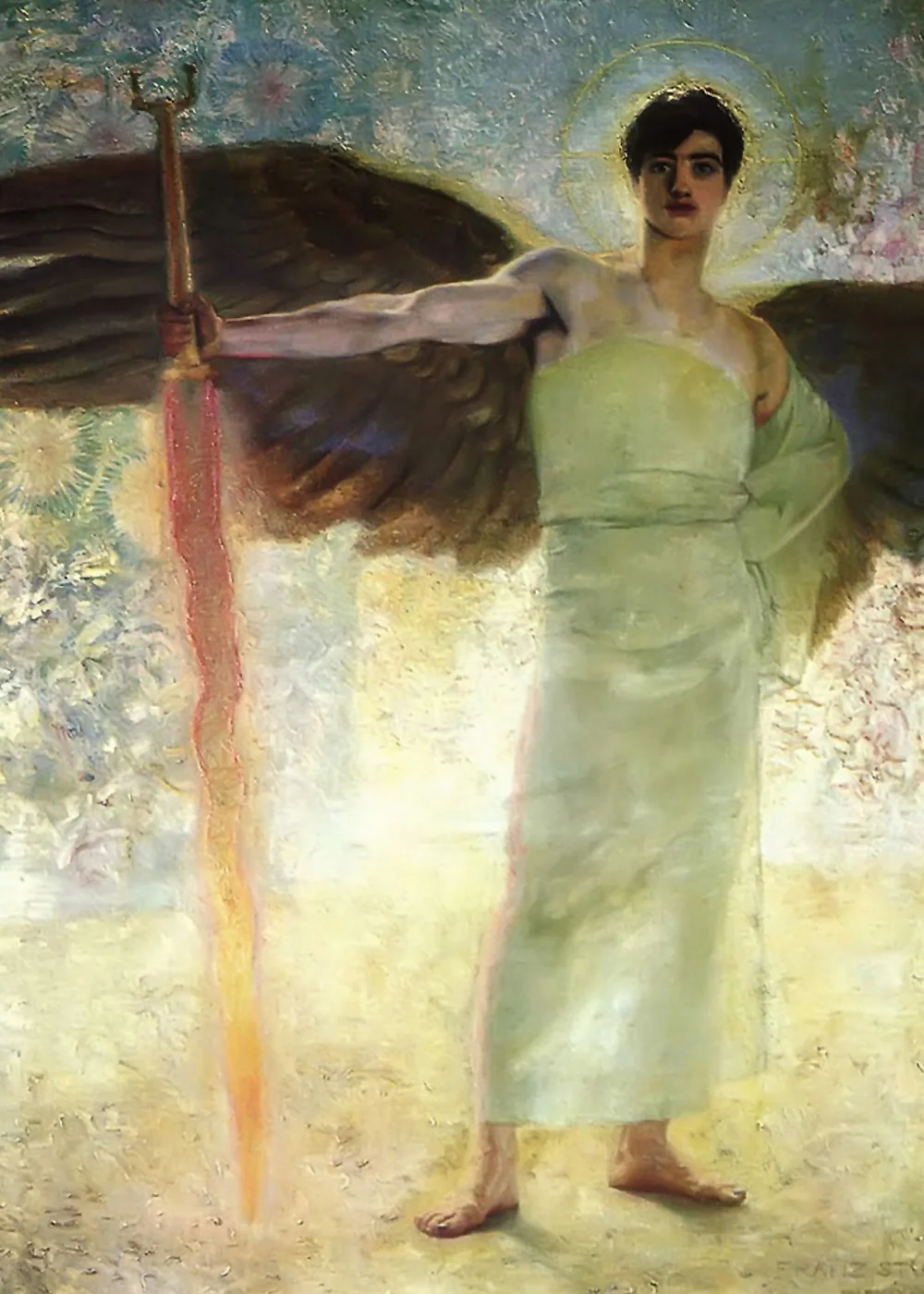
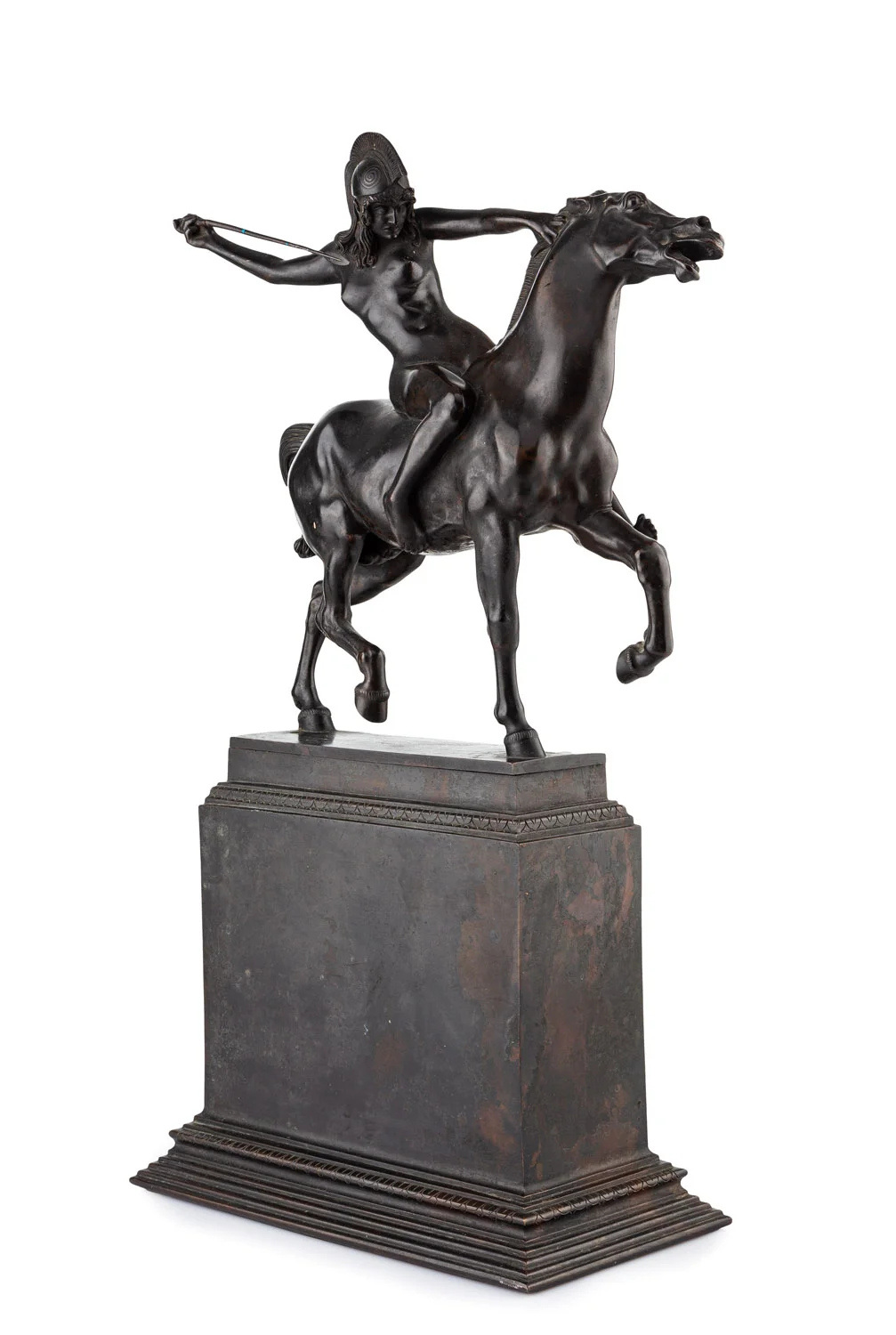
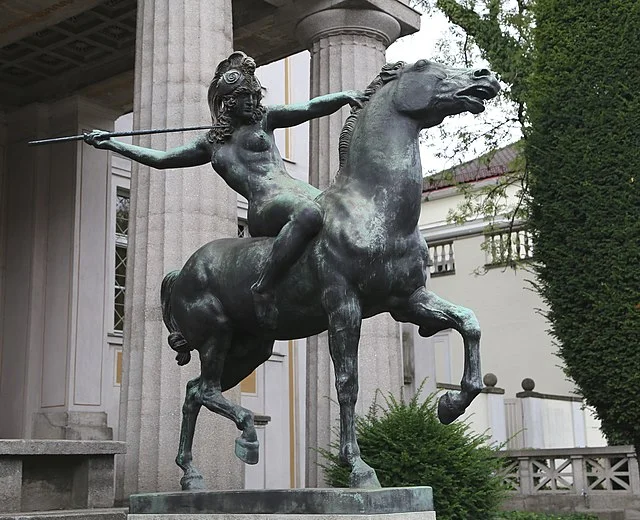
A turning point in Stuck's career came in 1889 when he was awarded a gold medal for his painting "Der Wächter des Paradieses" at the annual exhibition held in the Munich Glaspalast. The painting, an idealized life-size self-portrait, is now part of the collection of the Villa Stuck Museum in Munich. As a founding member of the Munich Secession in 1892, Stuck could exert increasing influence in official artistic circles. Stuck was the leader of a diverse group of artists – the Munich Secession, breaking away from the main local trend of "salons" due to their conservative and ossified policies (preceding the better-known Berlin and Vienna Secessions). He was not only an artistic impresario but also a craftsman and professional artist: he painted and made his own frames (which were an integral part of the composition and often preceded the paintings themselves), created illustrations for magazines (especially for "Die Jugend"), designed advertising posters, designed furniture, and personally executed significant architectural works. For most of his career, he was also a sought-after and respected teacher, placing particular emphasis on color theory. Among his students were color geniuses such as Wassily Kandinsky, Paul Klee, and Josef Albers. In 1906, he was ennobled, elevating him from the common Franz Stuck to the aristocrat Franz Ritter von Stuck. His appointment as a professor at the Munich Academy in 1895, combined with the construction of a magnificent villa on Prinzregentenstrasse in 1897-8, significantly raised his social status and affirmed his status as the "Grand Old Man of the New Art." The artist's villa was built and decorated according to Stuck's designs. It was an attempt to realize Gesamtkunstwerk – total artwork, encompassing the symbiosis of architecture, painting, and sculpture. In front of the villa stands the monumental "Amazon on Horseback," a reduction of which is offered in the April catalog of the Modern and Contemporary Sculpture.
The significance of Stuck's genius lies in his many talents – as a draftsman, painter, sculptor, architect, craftsman, and designer. The total artist used his excellent decorative sensitivity to blur the boundaries between high and applied art. Drawing on Arnold Böcklin and Max Klinger, Stuck's symbolist paintings are imbued with a longing for mythical order and ancient beauty. Shrouded in mystery, his compositions balance between heroism and hedonism. Works such as "Die Sünde" (Neue Pinakothek, Munich), "Der Krieg" (Neue Pinakothek, Munich), and "Der Kuss der Sphinx" (Museum of Fine Arts, Budapest), as well as sculptures like "Amazon" and "Centaur," are undoubtedly icons of early 20th-century art – works whose aesthetics and expressive power remain undiminished.