
Dynamics of Robert Proch's Paintings
Recognized as one of the most significant creators of street art in a broad sense, Robert Proch was a person who, thanks to the high level of his work, motivated other artists to action. Being very hard-working, he created many impressive pieces. The author gained international recognition long before his premature death (at the age of 33). He worked not only extremely efficiently but also quickly, exhibiting his works in collective and solo exhibitions in Europe and the United States.
His works began to be exhibited abroad shortly after Proch completed his studies in 2010 at the Academy of Fine Arts in Poznań. As the first artist of Polish origin, he had a solo exhibition entitled "Land without Footprints" in 2014 at the prestigious Lazarides Rathbone gallery in London. At that time, he focused his works around the theme of digitized environments and the relationships between people. The set consisted of 15 acrylic works, mainly in an abstract style. Almost simultaneously, his works could be seen at the exhibition "Polish Urban Art" at the Spree Gallery in Berlin.
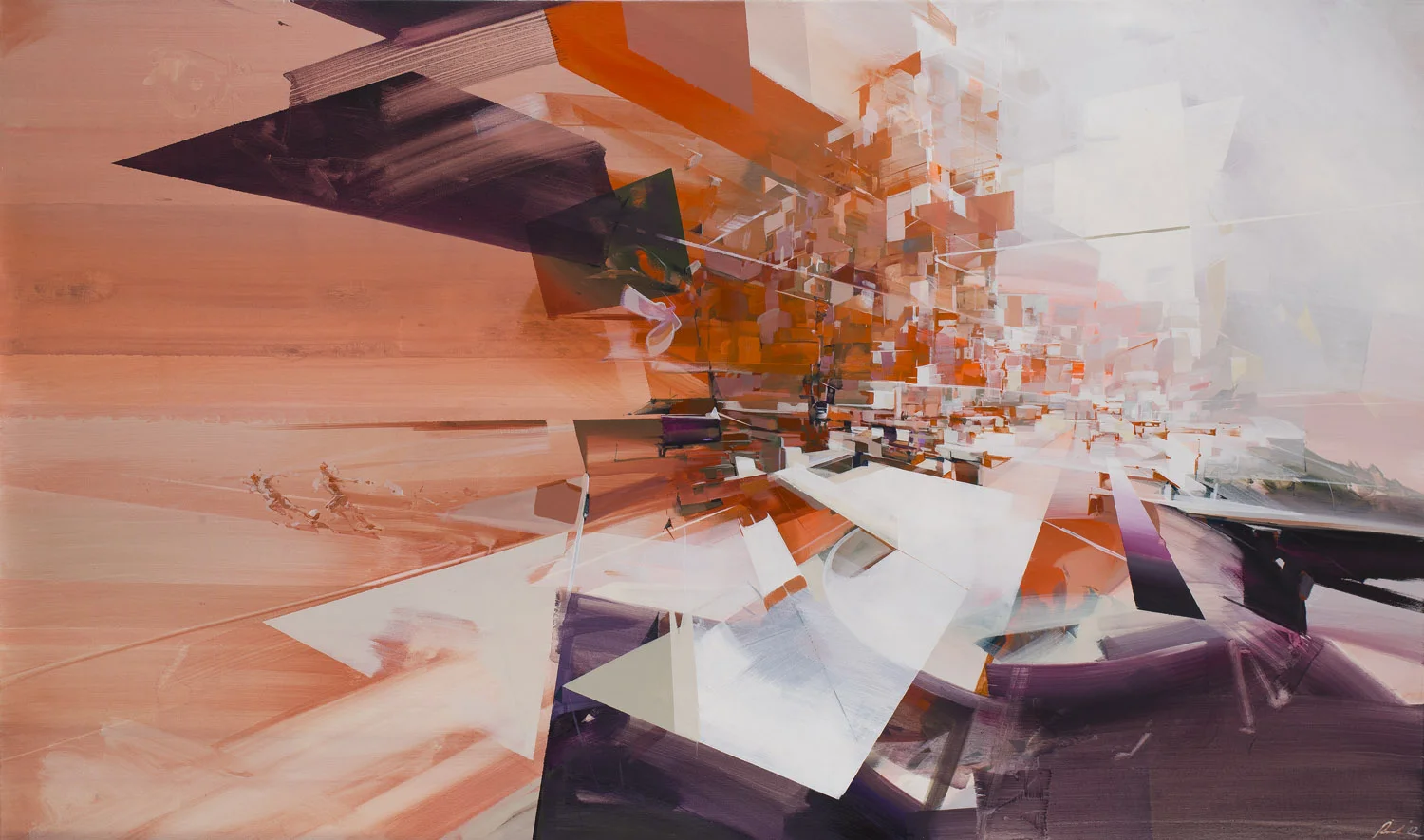
Apart from his paintings, he created many murals scattered throughout many places in Europe and the United States. He willingly collaborated with artists such as Cekas, Proembrion, Chazme, Sepe, Pener, Sainer, Beztem, and many others. He always took into account the shape of the environment and the building itself on which he was to work. The artist avoided political or historical contexts; form was key for Proch. He adhered to aesthetic discipline, cared for detail, and color harmony. The murals were supposed to fit well into the places where they were located, and people were supposed to feel good in their surroundings. The longer we look at the artist's works, the more details we notice, drawing us into the representation, which we can delve into more and more.
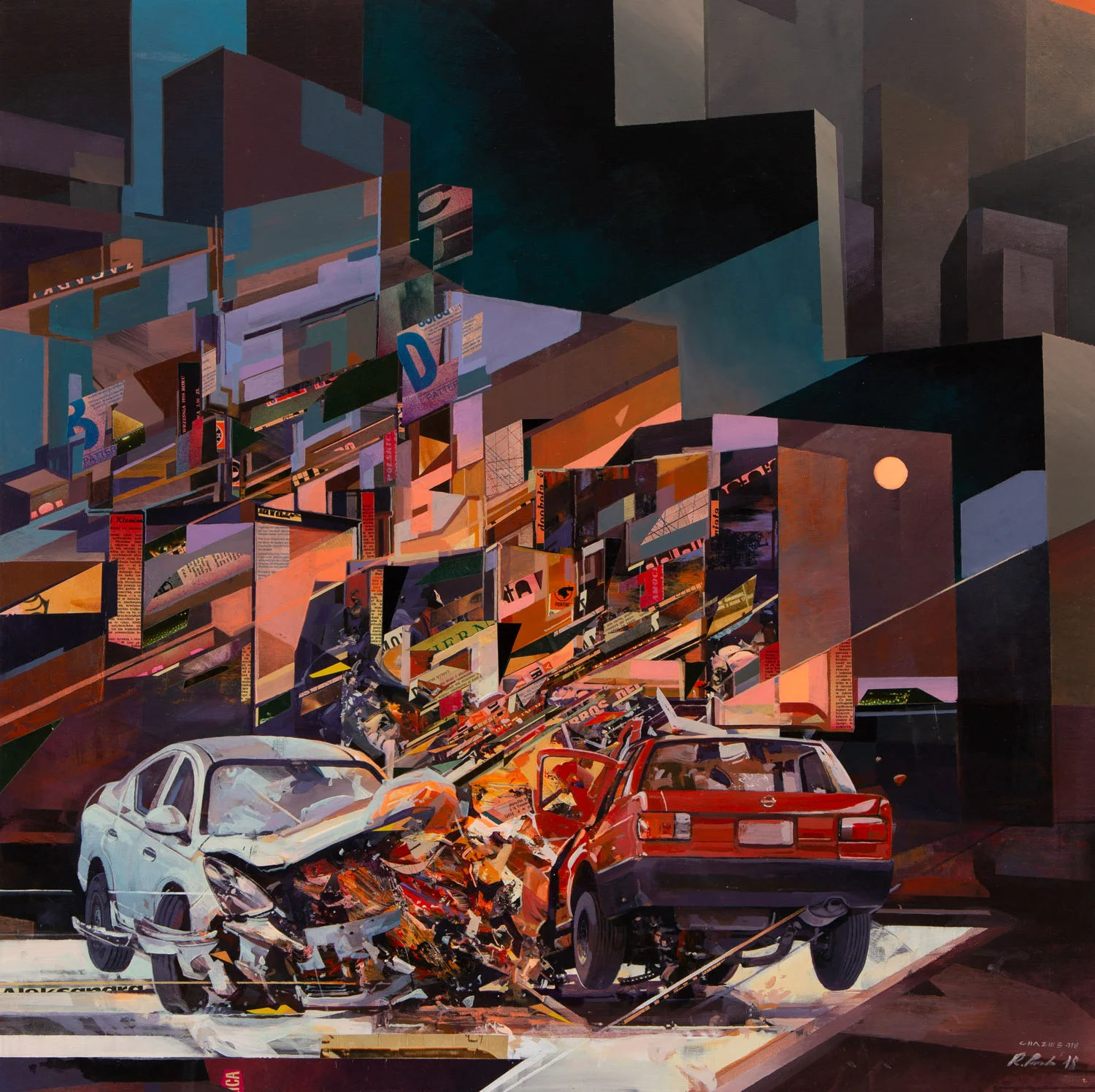
He used subdued color combinations; the colors sometimes seemed faded, which didn't dazzle but rather gave an incredible atmosphere to the places where they appeared, maintaining a gentle yet beautiful color scheme. His murals were inspiring, thought-provoking. Throughout his work, he maintained extraordinary consistency dominated by cold colors, enjoying contrasting combinations, combining, for example, blues with pinks, or purples with earthy tones. After his studies, he developed himself within abstract art; his representations seemed captured in motion, vibrating, dynamic, structurally elaborate. Over time, figuration began to come to the forefront. When asked about inspiration, he mentioned names of creators such as Francis Bacon, Claude Monet, William Turner, Caspar David Friedrich, Miles Davis, Józef Brandt, or Jerzy Duda Gracz. He sought a similar energy in his works to what he observed in the works of these artists. Bacon's figurations, in particular, were an inspiration for Proch. He sought a similar connection of bodies and movement, contrasting with static spaces, combining tranquility and brutalism. Proch's figures were often fragmented, as if an explosion had thrown them into the air; then the painter focused on the detail of parts of their bodies and clothing. He could skillfully use hyperrealism to depict the spaces in which his characters were located: temples, stairwells, rooms. In this way, he combined different, sometimes seemingly contradictory perspectives. Created in this way, contexts, in the face of explosions, movements, seem to create representations of characters on the brink of life and death, or maybe it's just a captured dream. We can see the artist's experience in the field of printmaking and animation, which is evident in Proch's compositions and the narrative he leads. It was precisely in the field of animation that he had some significant successes, although he did not create many works in this genre, but it was through designing movement that he began to think kinetically. In this way, he developed a fascination with the dynamics of the image.