
Czesław Zuber – A Multicolored tangle of thoughts
In 1940, in the Lascaux cave in France, drawings and wall paintings from the Paleolithic era were discovered. Visitors were presented with series of galloping animals-horses, bulls, aurochs, and deer-painted and drawn on the walls by prehistoric humans. Scientists immediately wondered about the purpose of these paintings. Many hypotheses arose. Was it simply art for art's sake, or a kind of daily life chronicle? Did they carry a deeper meaning, reflecting spirituality, rituals, or magical ceremonies? Looking back tens of thousands of years, we can consider how perceptions of life and dreams have changed over time. The cycles of life, thoughts, desires, and emotions swirling in the human mind were also the primary themes of glass sculptor Czesław Zuber's work.
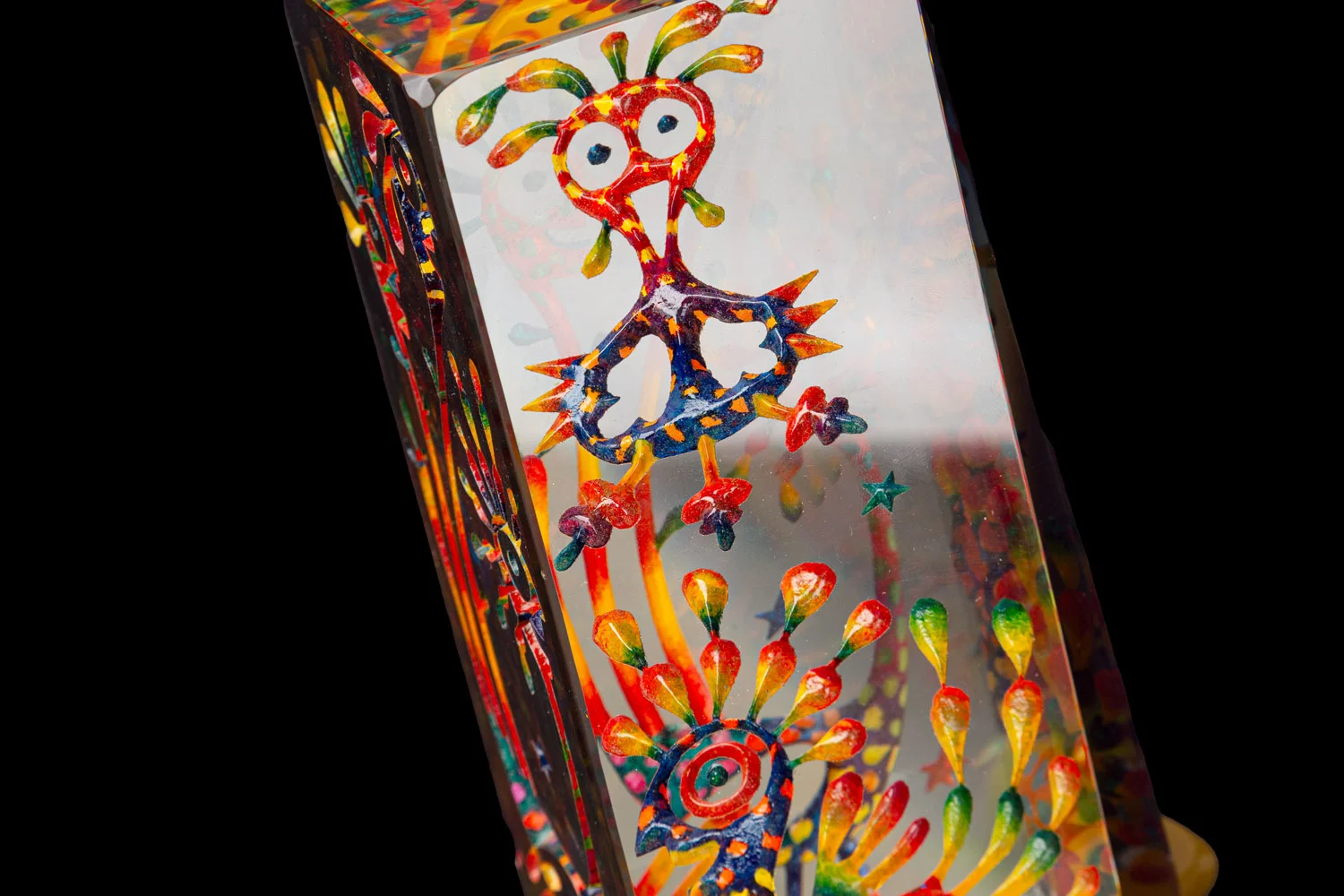
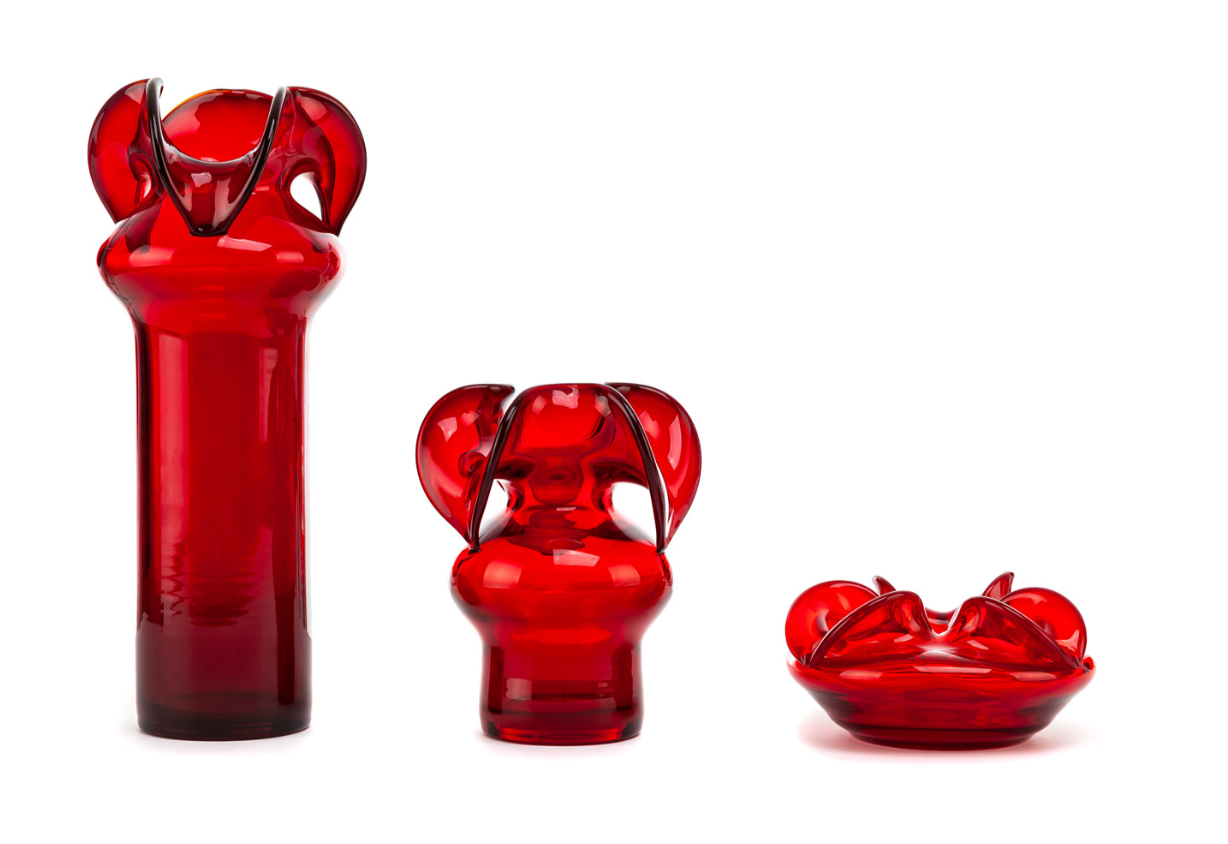
Zuber developed a distinctive and recognizable artistic style, known worldwide. His journey with glass began at the State Higher School of Fine Arts in Wrocław under the mentorship of Stanisław Dawski. In the 1970s, he worked at the "Barbara" Artistic Glassworks in Polanica-Zdrój, where he created innovative colored glass objects with dazzling hues. It was there that his famous set of glassware emerged-two vases of different heights and an ashtray with a characteristically curved rim. By the early 1980s, Zuber's talent stood out among other glass artists. This period saw his first solo exhibitions in Wrocław, Bolesławiec, Jelenia Góra, and Piła.
Following these successes, Zuber moved permanently to France, where he experimented with optical glass, creating abstract sculptural forms painted in contrasting colors, often resembling human faces or masks. His compositions became increasingly theatrical-perhaps a reflection of his past as a theater actor in groups like the "Gest" Mime Theater and the "Laboratorium" Theater. Could his glass heads, faces, and masks be echoes of that time? Czesław Zuber's style undoubtedly evolved during his time in France. Did he have the opportunity to explore the vast chambers of caves like Lascaux? We cannot confirm that, but during this period, he surely encountered Neo-Expressionism in art-particularly the German group Neue Wilde ("The New Wild Ones"). He was inspired by their brutal, aggressive style and contrasting colors. During this time, he began using a new artistic medium-massive glass blocks borrowed from industry, originally created for atomic, military, and aerospace purposes. In this transparent material, he pursued an exploration of the mysteries of the human mind.
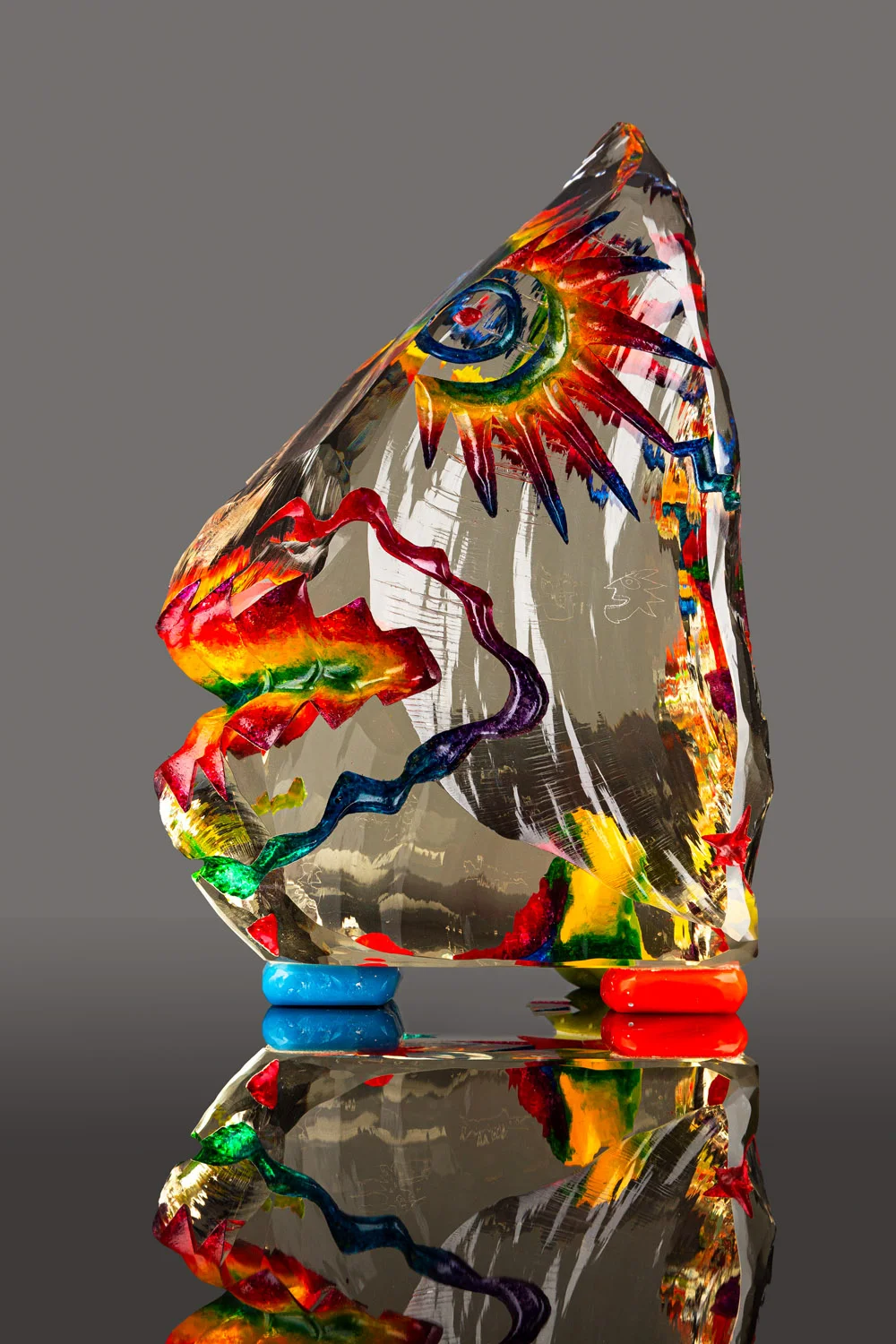
In his glass faces, he carved simplified graphic figures using a hammer, later filling them with color using brushes and enamel. His works depicted a fantastic narrative of caricatured, multicolored animals, people, machines, and patterns. The beast-like heads featured expressive mouths with protruding tongues and emphasized eyes. This deliberate technique allowed viewers to symbolically peer inside the human mind through the transparent glass medium. The result often wasn't optimistic, it was raw and uncensored-a multicolored tangle of thoughts. Czesław Zuber thus tells a universal story, revealing human thoughts, desires, and emotions. (Justyna Wierzchucka, "Czesław Zuber. Refleksy i refleksje", 2013-2014, p. 4-15).
Rarely do Zuber's sculptures appear on the market, yet the upcoming auction will offer four of his sculptural compositions, including enigmatic heads and a refined, smooth form that can be interpreted as an attempt to discipline the human mind-perhaps through contemplation or self-discovery.
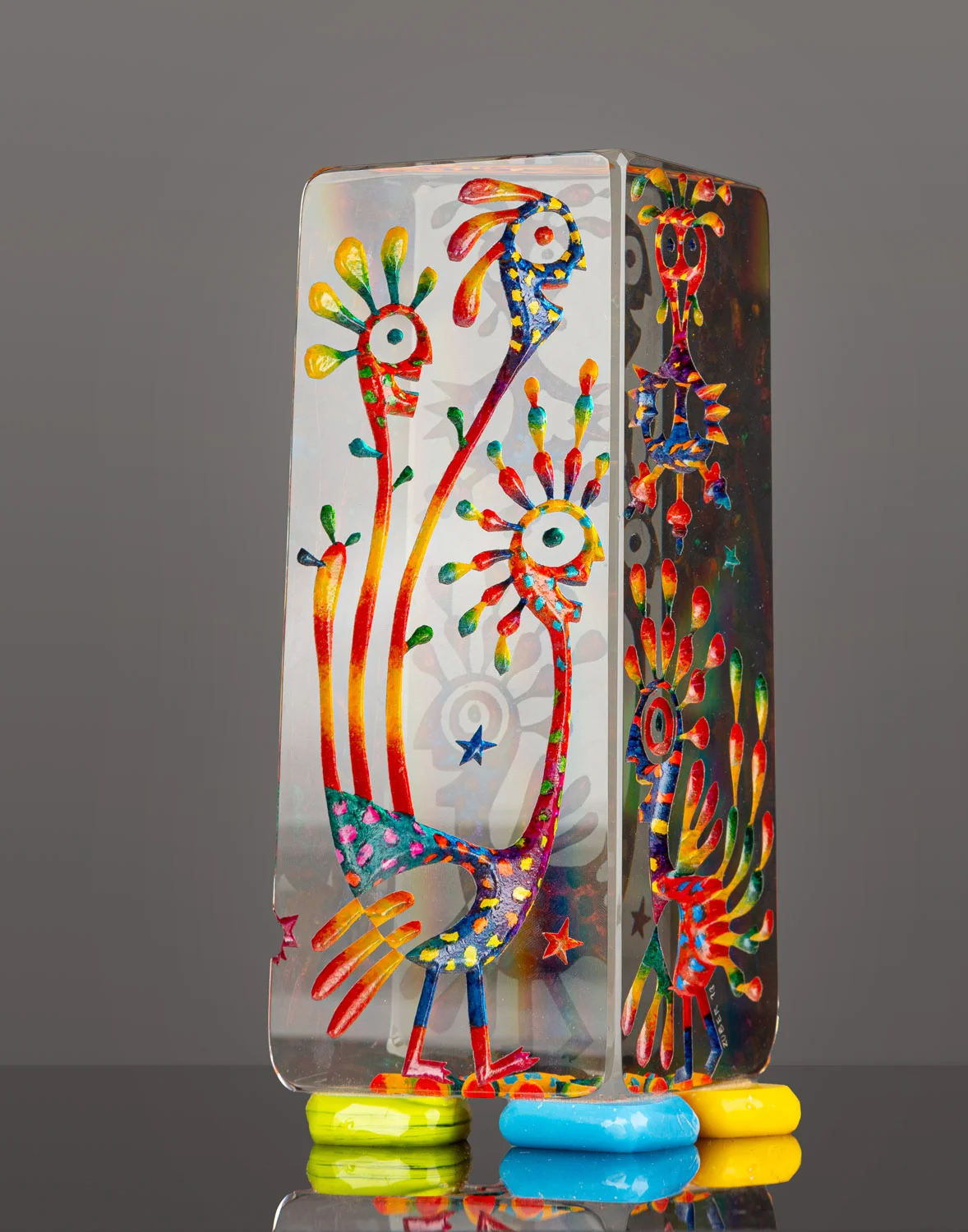
Today, we struggle to definitively interpret Paleolithic cave art, just as we find it difficult to decipher all the mysteries and desires of modern humans. Czesław Zuber takes on this challenge, using his unique artistic vision, drawn from simple graphic forms. Symbolically, he unveils the mechanisms governing the human mind, the layers of dreams, and the attempt to harness them.