
Colorful Experiment
I dreamed of color. Color that plays with form, that brings it out, complements it. And I decided to take a stand for it.
Zbigniew Horbowy
(Barbara Banaś, Polskie Projekty Polscy Projektanci. Rozmowa ze Zbigniewem Horbowym, Gdynia 2014, p. 15).
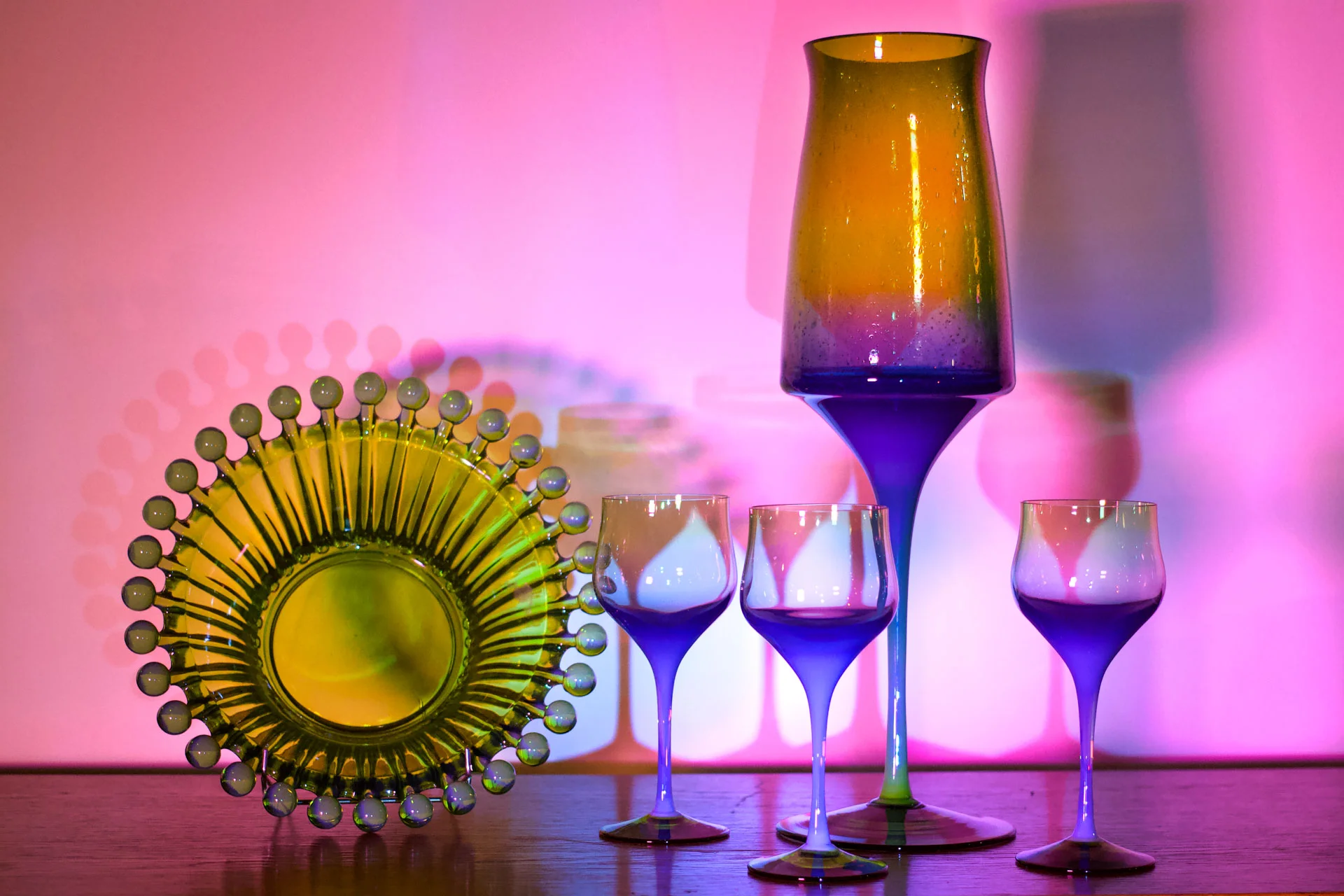
It enchants with its delicacy, transparency, and relationship with light. Glass is valued for its aesthetic qualities, color, and decoration. It is created in a lengthy process, from a glass obtained by combining silica, soda, and lime at high temperatures. The result of combining these ingredients is a fluid, hot molten glass that can be shaped in any way. Upon cooling, a colorless product free of impurities is formed. And coloring is one of the ways of decoration. Colored glass is created by adding metal oxides to the molten glass. That is why glassmakers must also be talented chemists. Experiments in creating new colors have been conducted for millennia, so it is not surprising that the way they are used indicated the importance of the creative center, may reveal its origin, historical period, glassworks, or even the name of the designer.
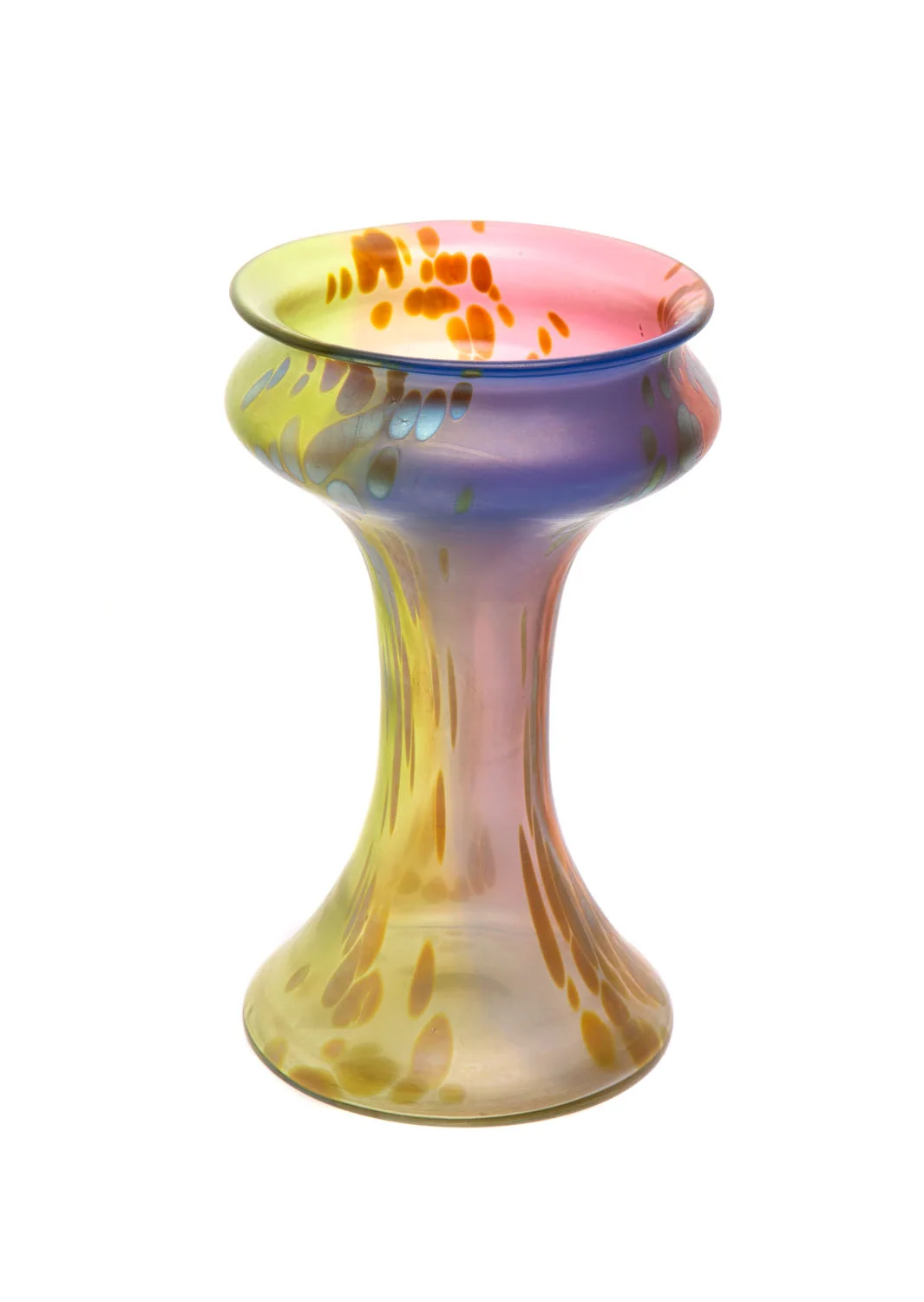
Ancient Egyptians already used trade routes to import necessary raw materials for the production of colored glass. In their culture, turquoise was one of the most popular colors, obtained by adding copper oxide to the molten glass. The Romans, who continued the experiments, produced famous dark blue glass, which was coated with a layer of transparent white glass. Objects found in excavations have an iridescent surface, that is characteristic rainbow gleam. Iridescence occurs as a result of a chemical reaction on the surface of the glass involving metal oxides from the earth in which the object rested. Inspirations from such glass can be found later, at the end of the 19th and the beginning of the 20th century, in glasses produced in the Art Nouveau style. They were supposed to resemble noble and semi-precious stones, e.g., chalcedony. This influence is visible in vases produced by the Johann Loetz-Witwe factory in Klostermühle, near Vienna.
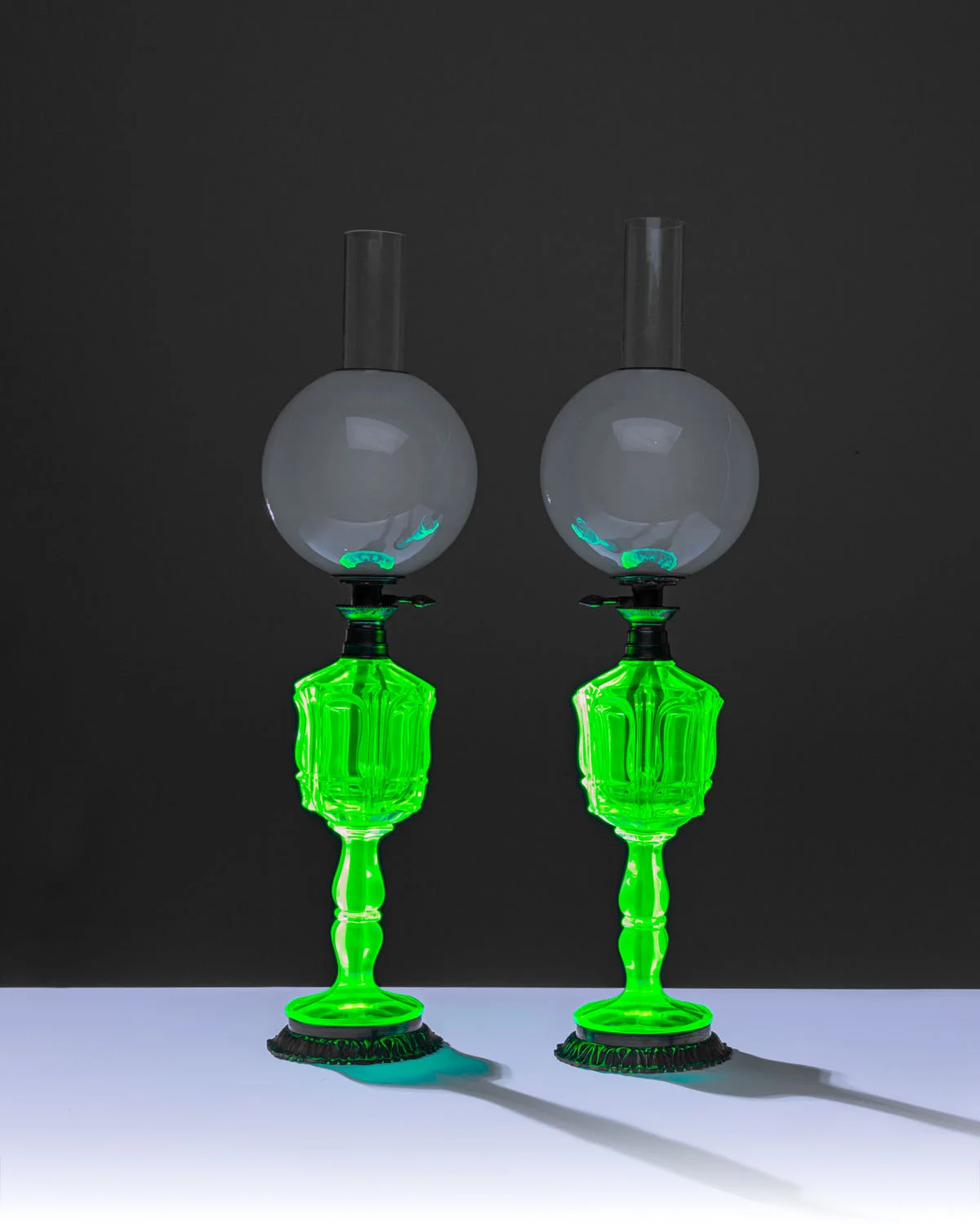
Further experiments with glass coloring in the early 19th century led to the invention of new possibilities in Czechoslovakia. Special mention should be made of fluorescent glass, created using uranium. It was an invention of Josef Riedl, who named the glass after his wife Annagrün (green-yellow) and Annagelb (yellow-green). Uranium glass usually ranges in color from yellow to green, depending on the degree of oxidation and the concentration of uranium ions. It exhibits strong fluorescence under ultraviolet light. Nowadays, glass is colored with uranium only occasionally. Older uranium glass products are found in museums and are sought after by collectors. One of the most famous companies was the French Baccarat, founded in 1764 as the Sainte-Anne Glassworks in Baccarat in Lorraine. The assortment mainly consisted of glasses in light, pastel colors in a subtle gradation, so the collection of uranium glass must have been quite an event in the art market at that time.
Currently, glass made in the "Niemen" Glassworks is enjoying growing popularity on the Polish market. Vases were colored in several colors, among which pastel pinks, blues, greens, yellows, and purples dominated. The decorations are often complemented by matte finishes of these glasses.
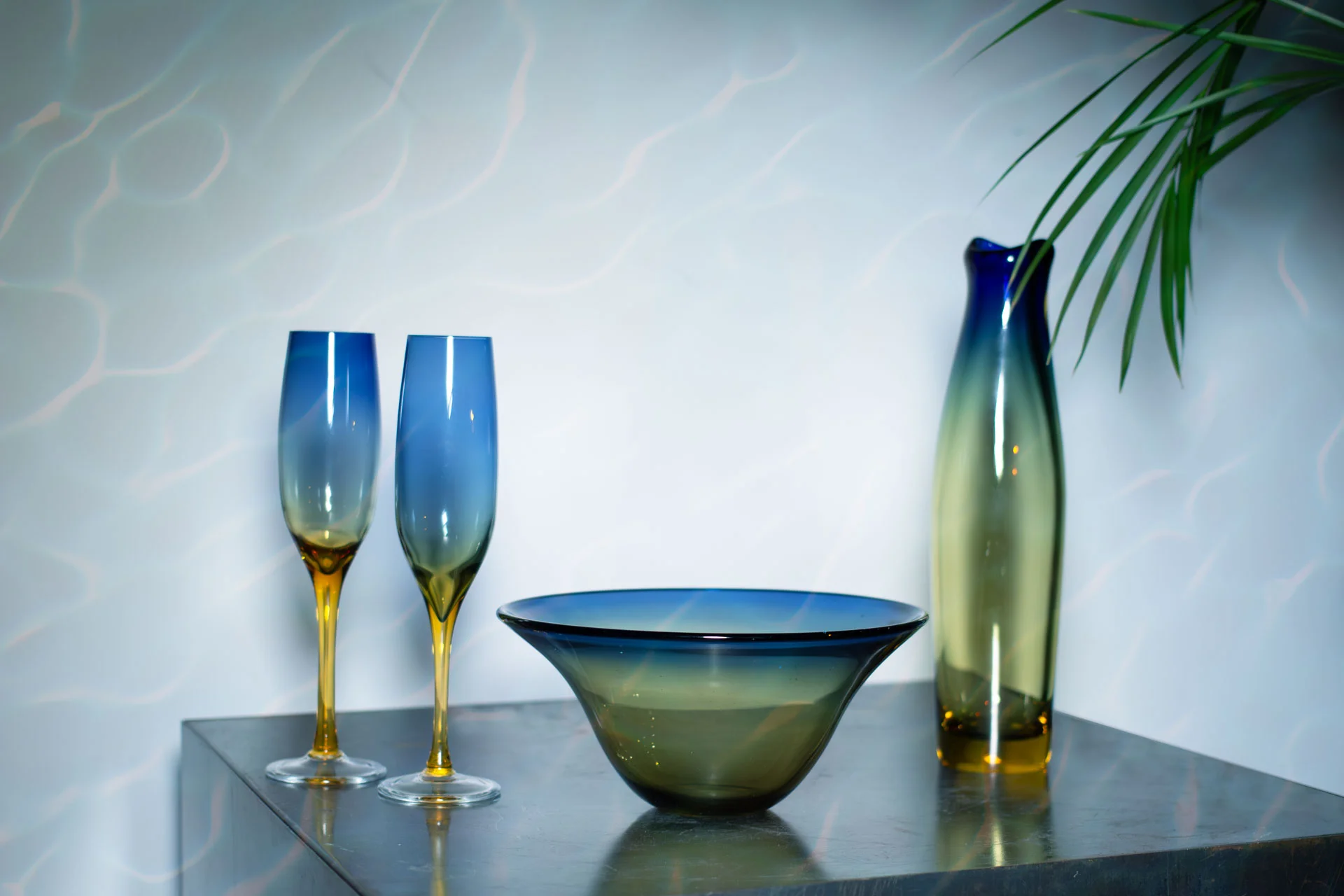
An undisputed master of colors and experiments in the field of glass on the Polish market was Zbigniew Horbowy. In the 1960s, he modernized the collection of utility glass, proposed multi-colored glasses, completely new colors, e.g., smoky glass, amethyst, or the famous color combination "Baltic" (gradient transition from dark blue to vivid yellow, inspired by the seaside landscape). Horbowy also enriched color with his own antico technique, that is, bubbled molten glass. Today, we can see antico in a wide range of colors from warm browns, through ruby reds and emeralds, to blues.
Since the second half of the 20th century, glass has become the material of an increasing number of original and bold projects. EXPO 58, the World's Fair in Brussels in 1958, was a turning point in the history of Czech, then Czechoslovak, glass. The success of avant-garde ideas turned out to be the foundation of a new approach to glass, as a result of which it took a leading place in Czech art. At the "Glass · Art · Design" auction, you will be able to bid for works by icons of Czech glass art: Rene Roubicek, Frantisek Vizner, or Jaroslav Svoboda. The works of these artists enchant with modern color combinations, the combination of layered glasses, submerging in the transparent mass of colored glass "rods," creating interesting optical transitions.