
Color, Rhythm and stylisation
The beginning of the 20th century was the time when the artistic colony in Zakopane really flourished. It was then that all of the social upper crust of Poland came to Zakopane. Zofia Stryjeńska, Rafał Malczewski, Władysław Skoczylas, and Witkacy himself worked under the Tatra Mountains. For Zakopane, the first half of the 1920s was also the time when futurists made their performances and Karol Szymanowski and Leon Chwistek visited the city.
The artists coming to the capital of the Polish Tatra Mountains were fascinated by the "Zakopane style" of Stanisław Witkiewicz, whose legacy, although he was no longer in Zakopane, had an impact on the artistic life of the city. Witkiewicz's style, both "folk" and "intellectual," was in a sense taken up and continued by the artists. They cultivated the myth of the Highlands in their work; however, using different painting means.
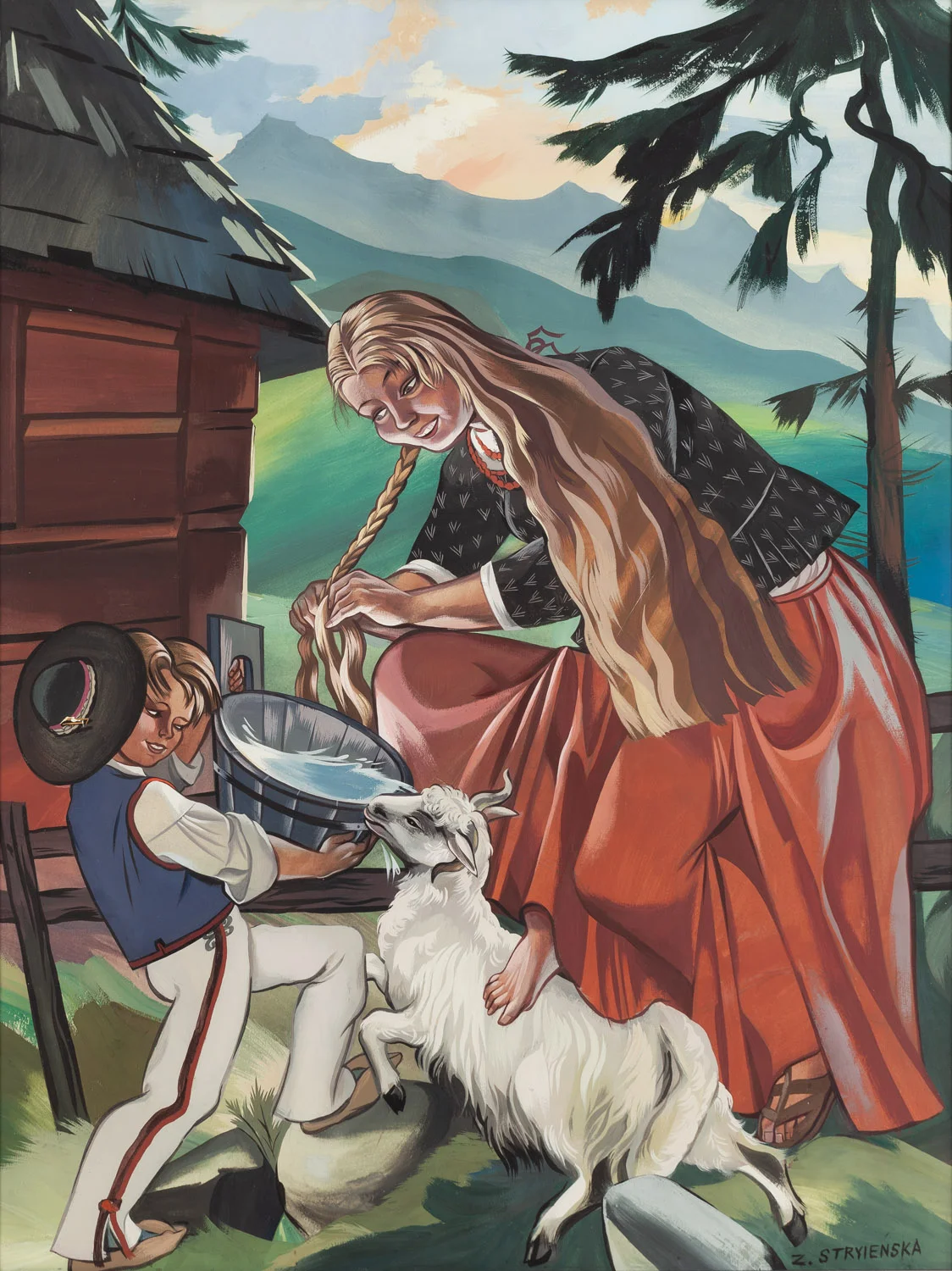
The artists drew inspiration from the culture and colorful folklore of the Podhale region, combining it with artistic experimentation in a very individual way, and sometimes with the achievements of the boldest avant-garde movements, such as cubism or futurism. These influences are clearly visible in the offer of the "Zakopane! Zakopane!" auction, works by Zofia Stryjeńska, Władysław Skoczylas, or artists from the circle of the "Zakopane School."
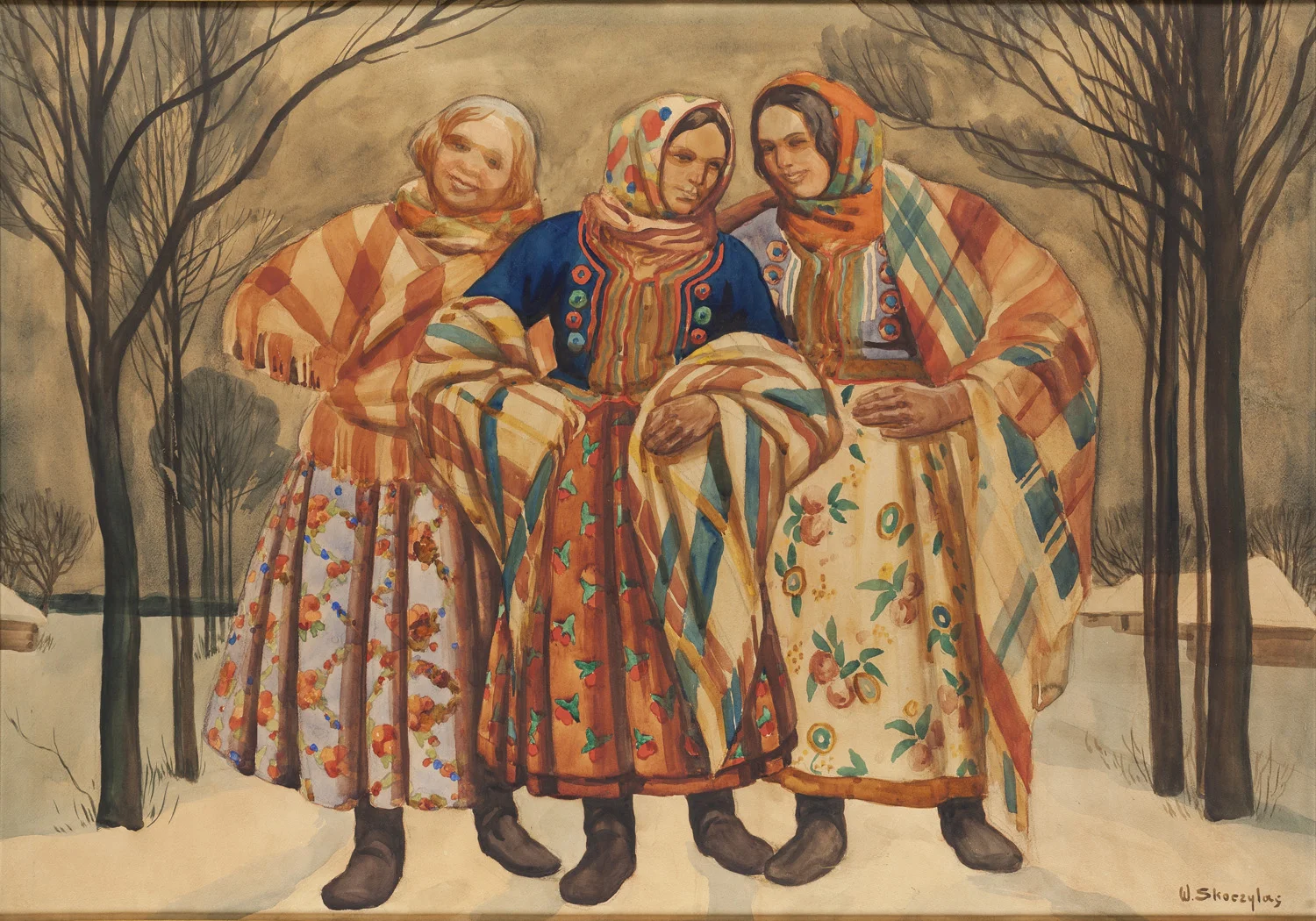
Throughout this artistic ferment, the above-mentioned creators retained their distinctiveness and brought individual elements full of originality to European visual arts. The compositions by Stryjeńska and Skoczylas are subject to far-reaching stylization and rhythmization. Artists did not just copy and reproduce folk art; they adapted and processed it for the needs of their own compositions. In the works presented in the offer: "Tatra Idyll" by Stryjeńska and "Three Highlanders on the Road" by Skoczylas, we see how the artists leaned towards decorativeness using pure color and very limited chiaroscuro, not aspiring to reflect the world in a realistic way. Being strongly rooted in tradition, the compositions feature figures of harmonious proportions, captured in graceful poses. In the works, the artists had a tendency to synthesize and rhythmize forms, as well as to develop symmetrical and simplified compositions with a dominant foreground. The works impress with their decorativeness, colorfulness, and an unorthodox approach to folklore. Both Stryjeńska and Skoczylas had a casual take on the Podhale tradition, mixing different motifs and playing with folklore patterns. These are rhythmic, colorful interpretations of folklore, perfectly fitting into the international, then modern art deco style.
It is worth mentioning that in the 1920s, Stryjeńska and Skoczylas co-founded the artistic group "Rhythm" (Polish: "Rytm"). Motifs taken from Podhale folklore played an important role in the art of many "Rhythmists," not only in terms of formal inspirations. When looking for a new national style, the artists combined tradition with modernity. The references to Polish folklore were meant to highlight national motifs, emphasize the sovereignty of the independent state.
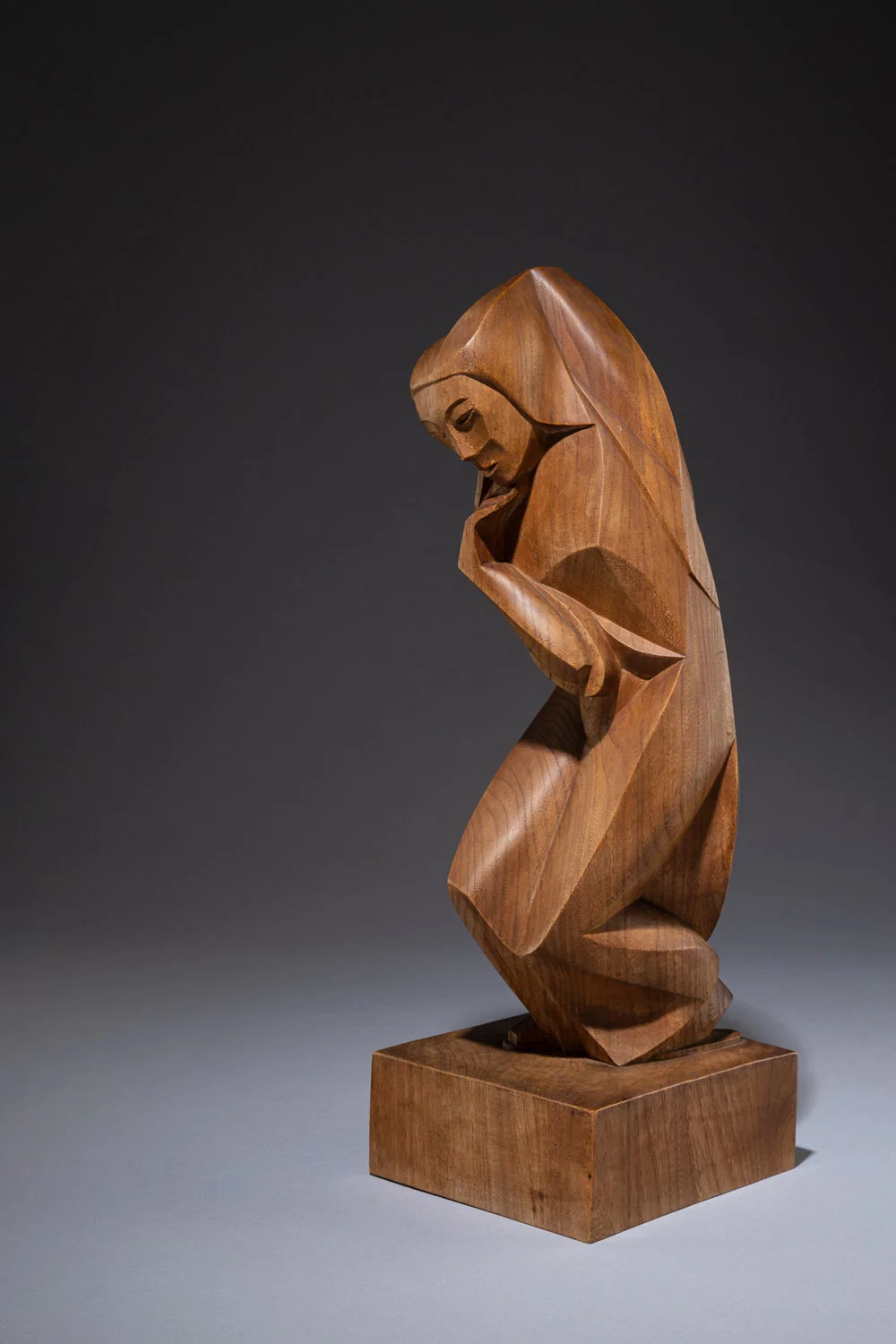
In addition to the paintings, the sculptures also weren't indifferent to the changes taking place. In the 1920s and 1930s, the Zakopane School of Wood Industry underwent dynamic development under the lead of Karol Stryjeński. Although this artistic phenomenon has not yet been duly studied by the academic history of art, it nevertheless arouses great interest among collectors, as evidenced by the ever-increasing prices of works from this circle. Many outstanding artists, often anonymous today, worked at the State School of Wood Industry at that time. The presented "Female Figure" is an extremely dynamic structure composed of seemingly separate, intertwining forms. The unknown artist from Zakopane was very well familiar with the assumptions of the avant-garde, breaking up the shapes. He retained the realism of the character at the same time. The sculptures made in the Zakopane school in 1926–36 constituted the last consistent reception of Podhale's art. They had cubist, sharp, and dynamic forms, with the subject virtually subdued to the movement. What was extremely important in the sculpture of the "Zakopane School" was the material. Both rings of mountain wych elm and precise chisel cuts are visible in the structures of the objects.
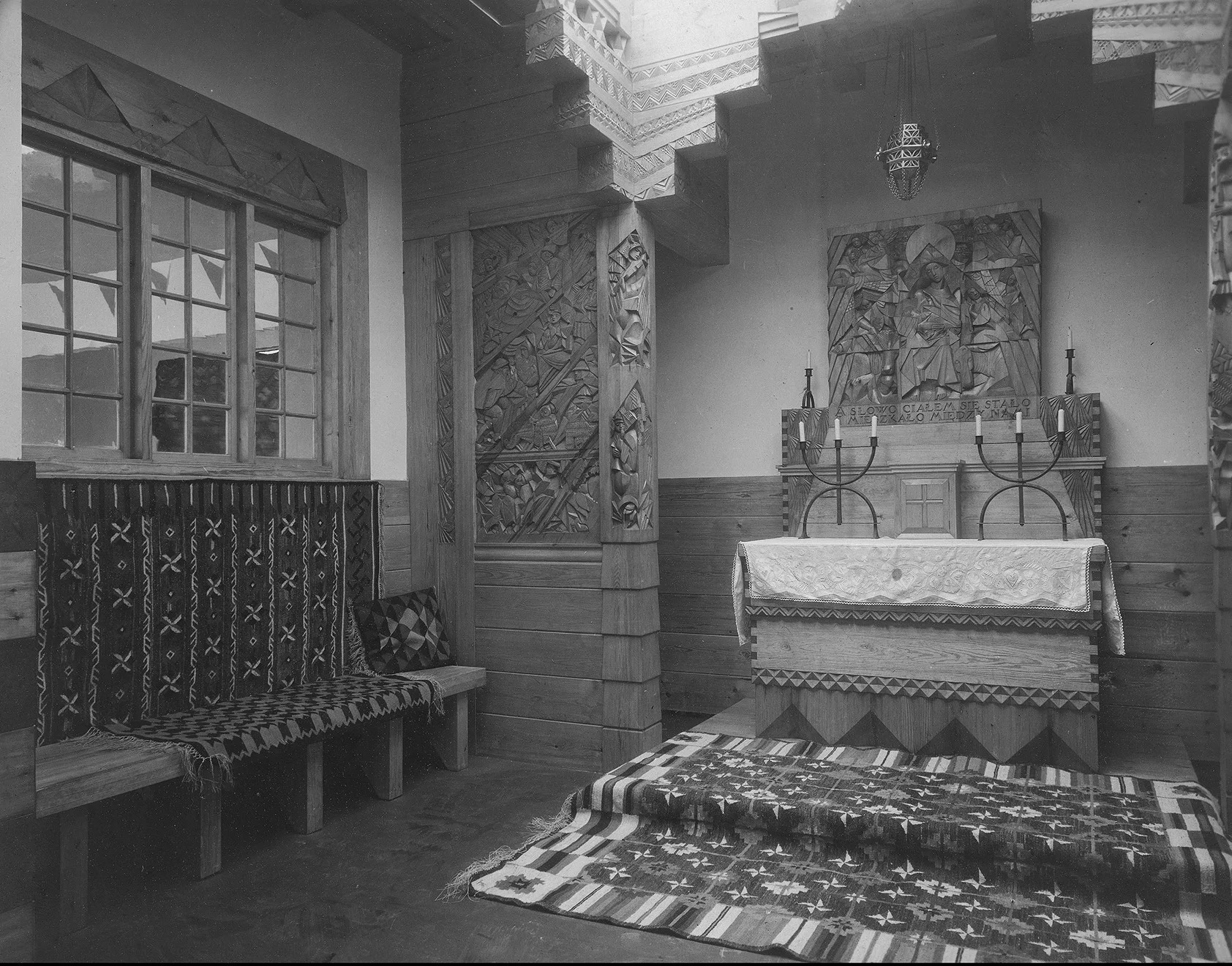
Artists centered around the "Rytm" group and the Zakopane School of Wood Industry co-designed the Polish pavilion for the International Exhibition of Modern Decorative and Industrial Arts in Paris in 1925, which achieved spectacular success in the French capital. The pavilion, created by such outstanding artists as Henryk Kuna or Jan Szczepkowski, marked the beginning of art deco dominance in Polish art history and elevated Stryjeńska to the status previously inaccessible to any woman in Polish art. The series of six panneaux collectively titled "The Ritual Year in Poland" created by Stryjeńska won four Grand Prix, a special distinction, and the Legion of Honor for the artist. In the center of the pavilion designed by Józef Czajkowski, there was a sculpture with the symptomatic title "Rhythm" by Henryk Kuna who was an artist associated with the "Rhythm" group. Other decorative elements of the interiors included, among others, wood furniture, referring to the highland art of Podhale, and the kilim carpets designed by Stryjeńska. Polish artists received two hundred and five awards in Paris. Art of the newly emerged state, represented by a style clearly inspired by folk art, but still fitting into the European context, was thus appreciated on the international scene.