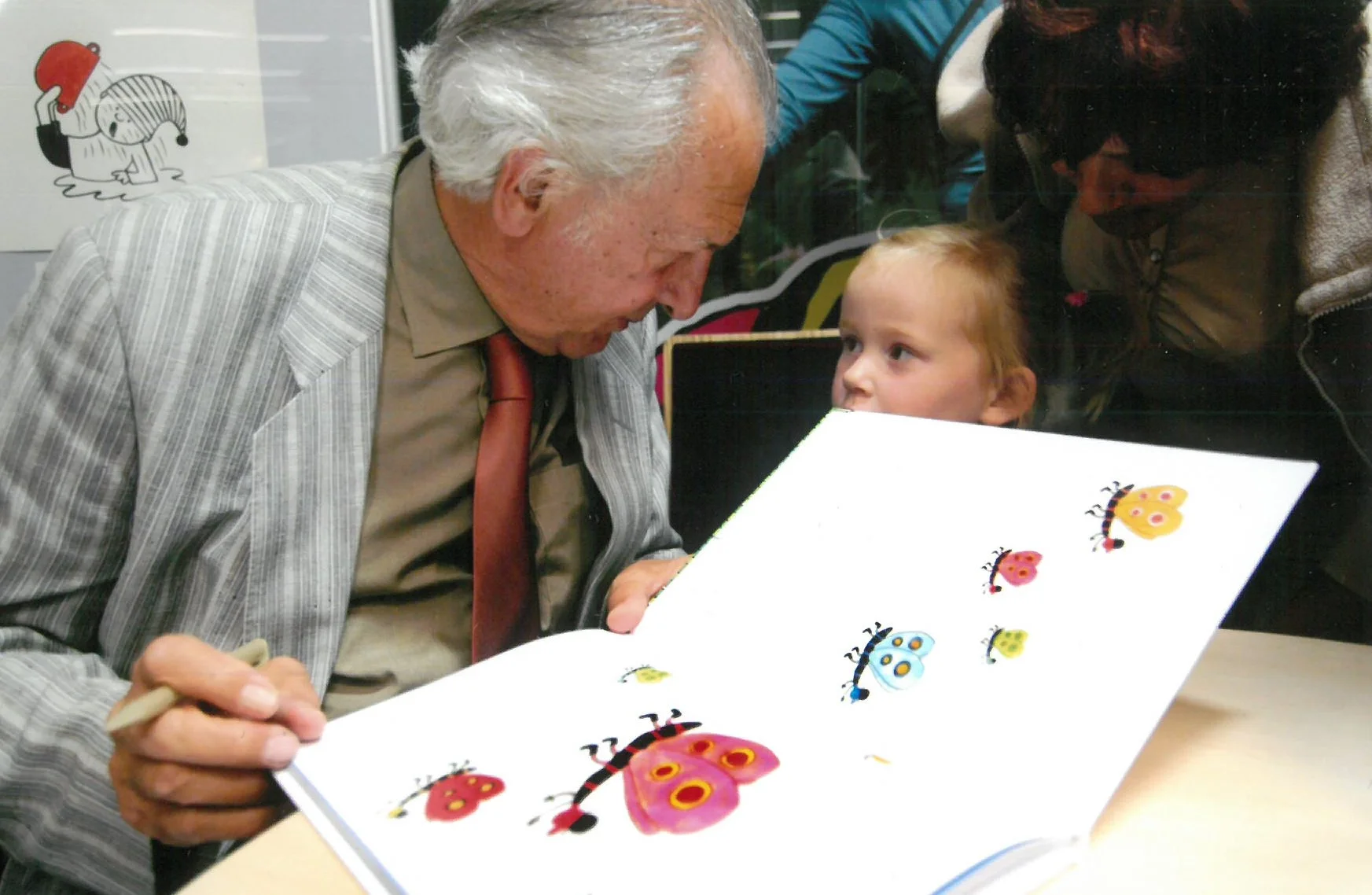
Bohdan Butenko - illustrations
A tailored book
In the 1950s, Bohdan Butenko's works were considered bold or even avant-garde. They were distinguished by a synthetic form, witty drawing, and sometimes an abstract sense of humor that awakened the endless resources of imagination. The artist was referred to as the "architect of the book" because of the overall treatment of the graphic design, all elements of which had to be coherent and well-thought-out. He once said:
"I have my theory about books - it's a whole, you make it like a sweater. When you start on one side and continue, you can't throw anything out later."
(Gazeta Wyborcza, Trójmiasto, nr. 215, 2003, p. 4)
Bohdan Butenko's drawings and illustrations dominate the book's layout, blurring the distinction between text and illustration, often reducing the proportion of images and words to comic book form. Some series, including the most recognizable stories about Kwapiszon, Gapiszon, Gucio and Caesar, were created as comic book stories. Butenko uses the tactic of selecting a fragment of a text, sometimes a sentence, other times a word or a phrase containing a comic potential that the artist can freely use and strengthen.
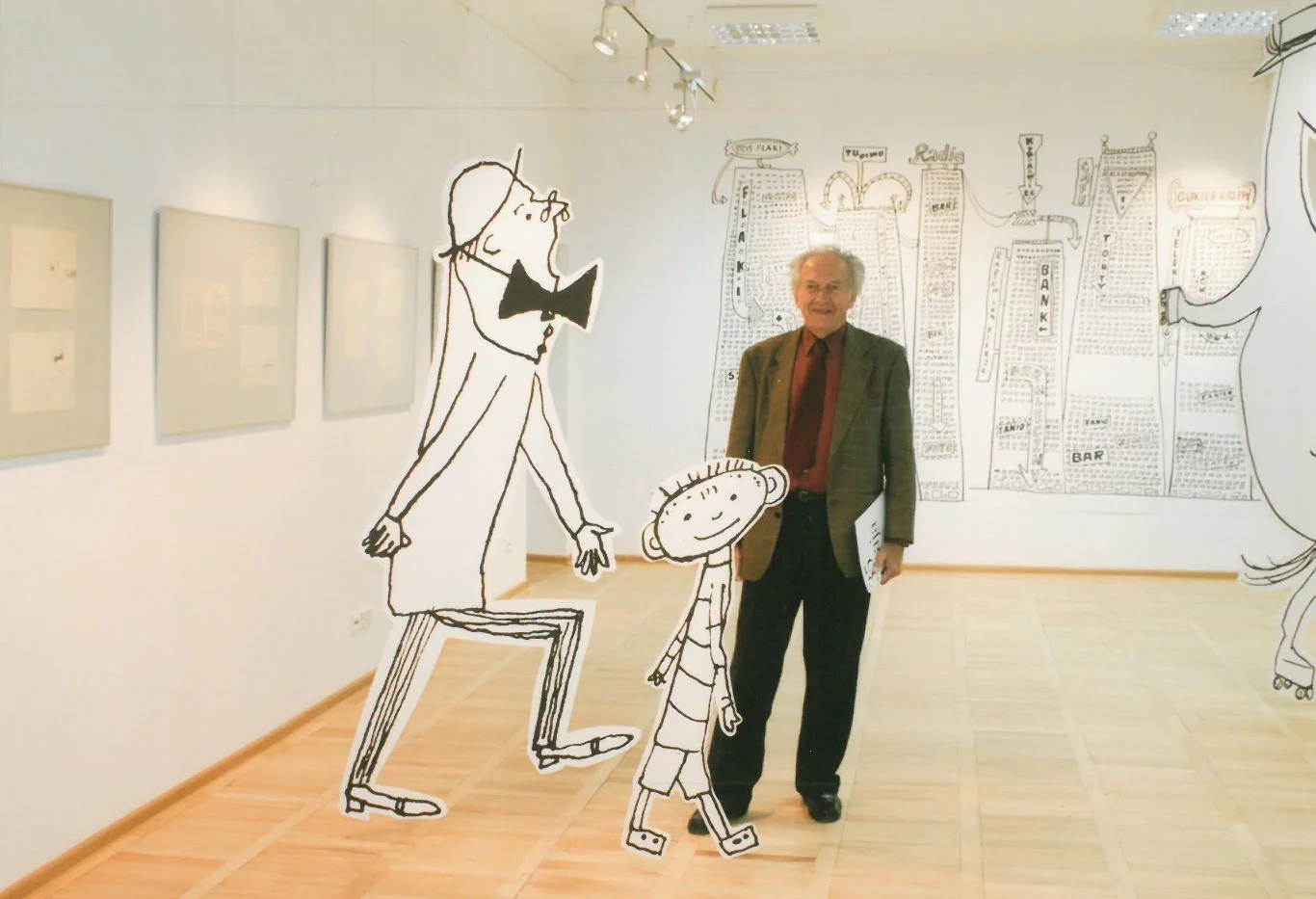
"Butenko pinxit" has been an undeniable quality certificate for over 60 years now. This is due to, inter alia, from the fact that the artist largely contributed to the emergence of the phenomenon known as the Polish School of Illustration in the international arena.
Bohdan Butenko illustrated over 200 titles, creating extremely characteristic illustrations and graphic design. Addressed to young readers, they evoke associations with children's works - the line is spontaneous, the drawing is so simplified that the anatomy sometimes comes down to a few lines or dots. Silhouettes of people and animals are built of simple geometric figures, but we have no problem recognizing the character of the figure, the specificity of the object, or the type of situation in which they find themselves. The entire repertoire of resources, enhanced by the talent of a well-educated graphic artist with a caricaturist flair, shows viewers a distanced and intelligent image of the world.
The literal character of Bohdan Butenko's visual representations is also appropriate to the way children depict things. The artist has the driving force resulting from the ability to use mental shortcuts, making play with associations the driving force of his drawings. Butenko was able to push for unconventional ideas regarding typography thanks to the technical knowledge of the project, acquired through practice in a printing house during his studies. The overall planning of the book results from the artist's idea for a book each time, striving to create a separate quality, illustration as an autonomous value accompanying the text and being a proposal for its own interpretation.
The artist collaborated with many publishing houses, in the years 1955-63 he was the artistic editor at "Nasza Księgarnia", then he was the chief graphic artist of the children's and youth literature department at the "Krajowa Agencja Wydawnicza".
He co-created the graphics for "Miś", "Świerszczyk", "Świat Młodych", "Sztandar Młodych". Butenko's works have been shown at numerous individual exhibitions in Poland and around the world. He received many prestigious awards at international competitions, including the Gold Medal at the 12th Triennial in Milan in 1960, the First Prize for the most beautiful book in the PTWK Competition in 1967, the Second Prize at the International Book Exhibition in Moscow in 1970 and the IBBY Polish Section medal in the Book of the Year Competition in 1990 and many more.