
Body and Decay, or about "Illuminated Lips" by Alina Szapocznikow
"The human body is the most sensitive; it is the only source of all joy, all pain, and all truth."
- Alina Szapocznikow
Mysterious, daring, and fully independent. Despite being faced with many unpleasant events, she made the most of her life. That was Alina Szapocznikow, one of the most radical Polish artists, whose work defies easy analysis. At the exhibition accompanying the "Modern and Contemporary Sculpture" auction, until April 13th, you can admire a rarity on the art market – "Lampe-bouche I (Illuminated Lips)."
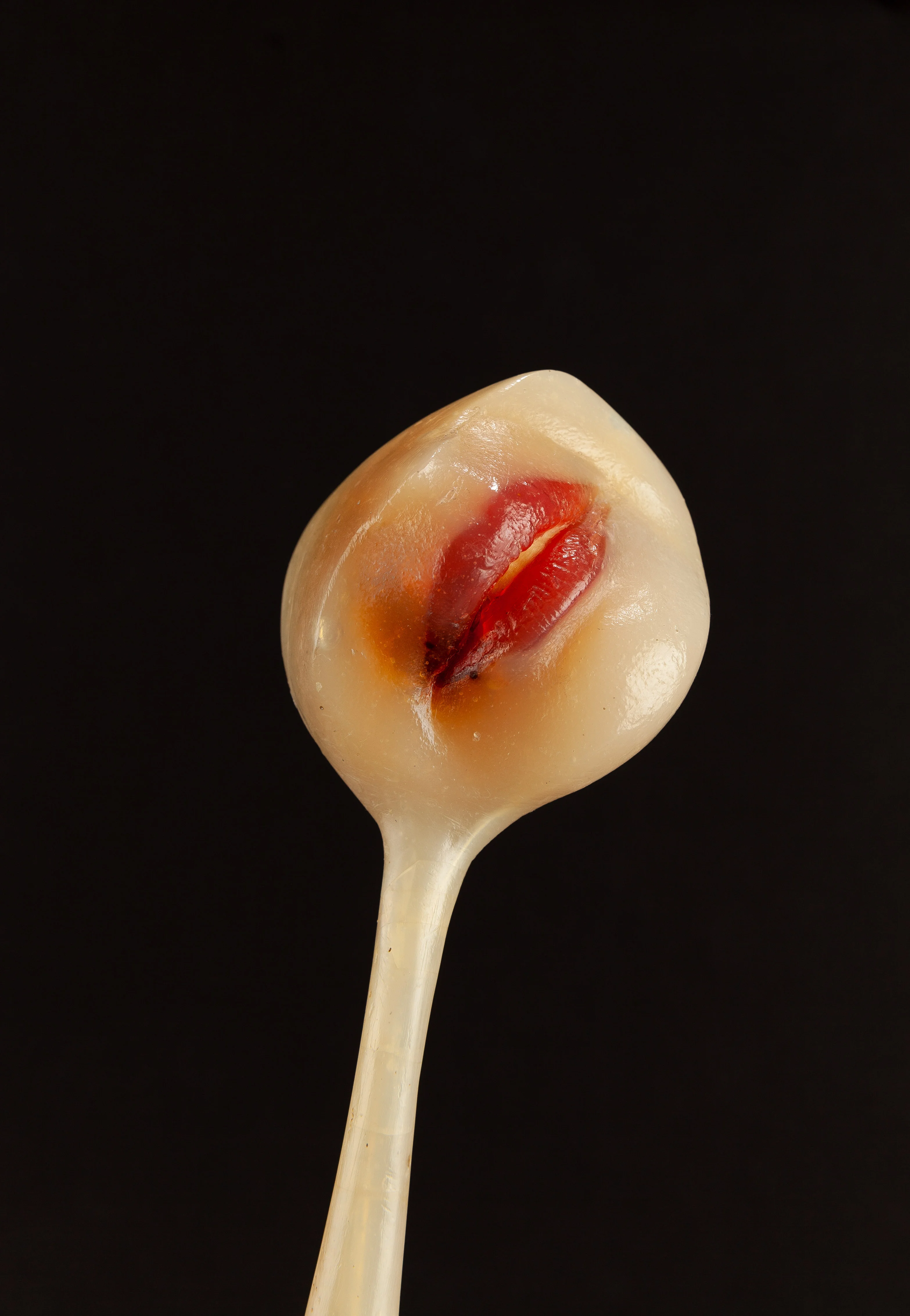
The presented work was created in 1967. The second half of the 1960s was a period of many changes, both in the artist's personal life and in her work. A few years earlier, Szapocznikow decided to return to France, where she had previously studied, and settle there permanently. That year, she married Roman Cieślewicz, one of the most important Polish graphic designers. The change of place as well as renewed and new artistic contacts brought changes to Szapocznikow's art. She began experimenting with plastic materials that allowed for casting shapes.
The first compositions resembling flowers in shape appeared in 1966; the artist placed casts of erogenous body parts-lips and breasts-on high stems. Some of them were also made of bronze. What distinguished subsequent works was the addition of an electrical installation. Placing a small light bulb inside the sculpture illuminated it with a delicate, warm light. The combination of light and semi-transparent polyester makes the surface of the composition evoke organic associations with human tissue. The key is also the place where the installation is placed, that is near the "erogenous" zone of the composition. In addition, light becomes a kind of independent factor. Its rhythm "brings to life" the object or causes the sculpture to "die."
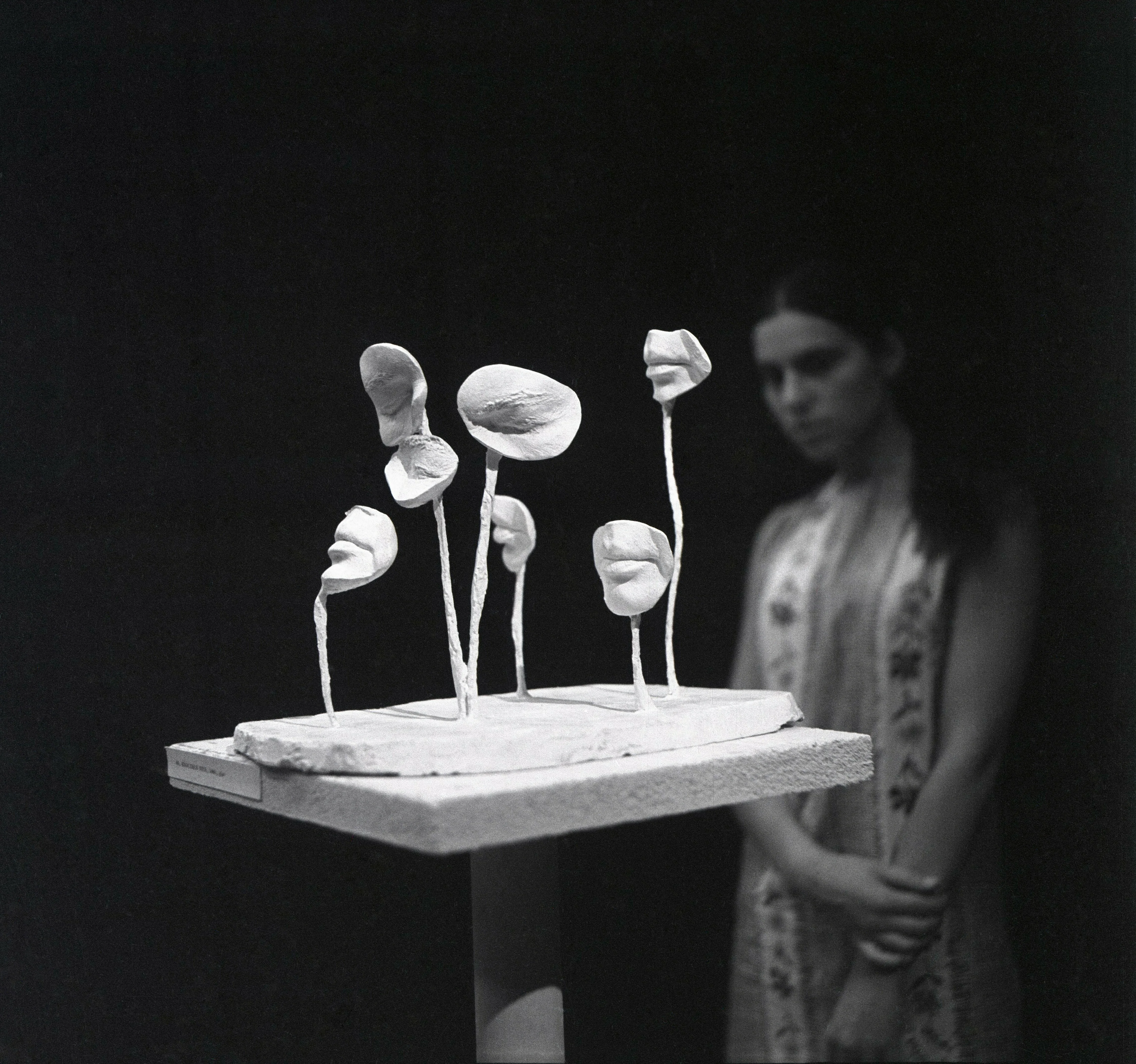
The key element of Szapocznikow's art were casts of her own body. The artist reached for the simplest gesture of capturing what is elusive. They are a kind of mirror; the artist invites us to observe and admire, and also studies the body herself.
Analyzing Szapocznikow's work in the context of her biography leads to conclusions related to both the praise of the erotic sensitivity of the body and a kind of farewell to it. The artist was admitted to an oncology hospital near Paris in 1968, but received the diagnosis a year later. Over time, autobiographical threads began to dominate her work; they were a personal record of Szapocznikow's struggles with the disease, attempts to tame and observe the destruction of her body. She underwent several surgeries that allowed her to win a few battles with the tumor. Unfortunately, she could not completely get rid of the disease and died at the age of just 47 in a French sanatorium.
The second, equally important thread of the artist's work were her wartime experiences, about which she rarely spoke. She was born into an assimilated, Jewish intelligentsia family. The artist spent her childhood in the town of Pabianice, and after the outbreak of World War II, she and her family were interned in the ghetto in Łódź. This was the beginning of her wandering through camps. Soon after, the sculptress was transported to Auschwitz and Bergen-Belsen. Although she spent only about a week or so in Auschwitz, the experiences of that time left a mark on her art. The next place she ended up was the Buchenwald-Duderstadt subcamp. She never returned to the memories and experiences of the camp in later years. However, it is easy to find echoes of those experiences in fragmentary casts, deformed human forms, or compositions reminiscent of shells.