
Anti-heroic and socio-political comics
The political and economic changes of the 1990s shaped contemporary comics in Poland. Titles published in the United States began to reach the country, bringing with them new forms of storytelling, character development, and narratives. Western characters were not as one-dimensional; they were much more complex and often ambivalent. Importantly, they addressed contemporary and significant issues, no longer just humorous forms characteristic of the 1950s or 1960s.
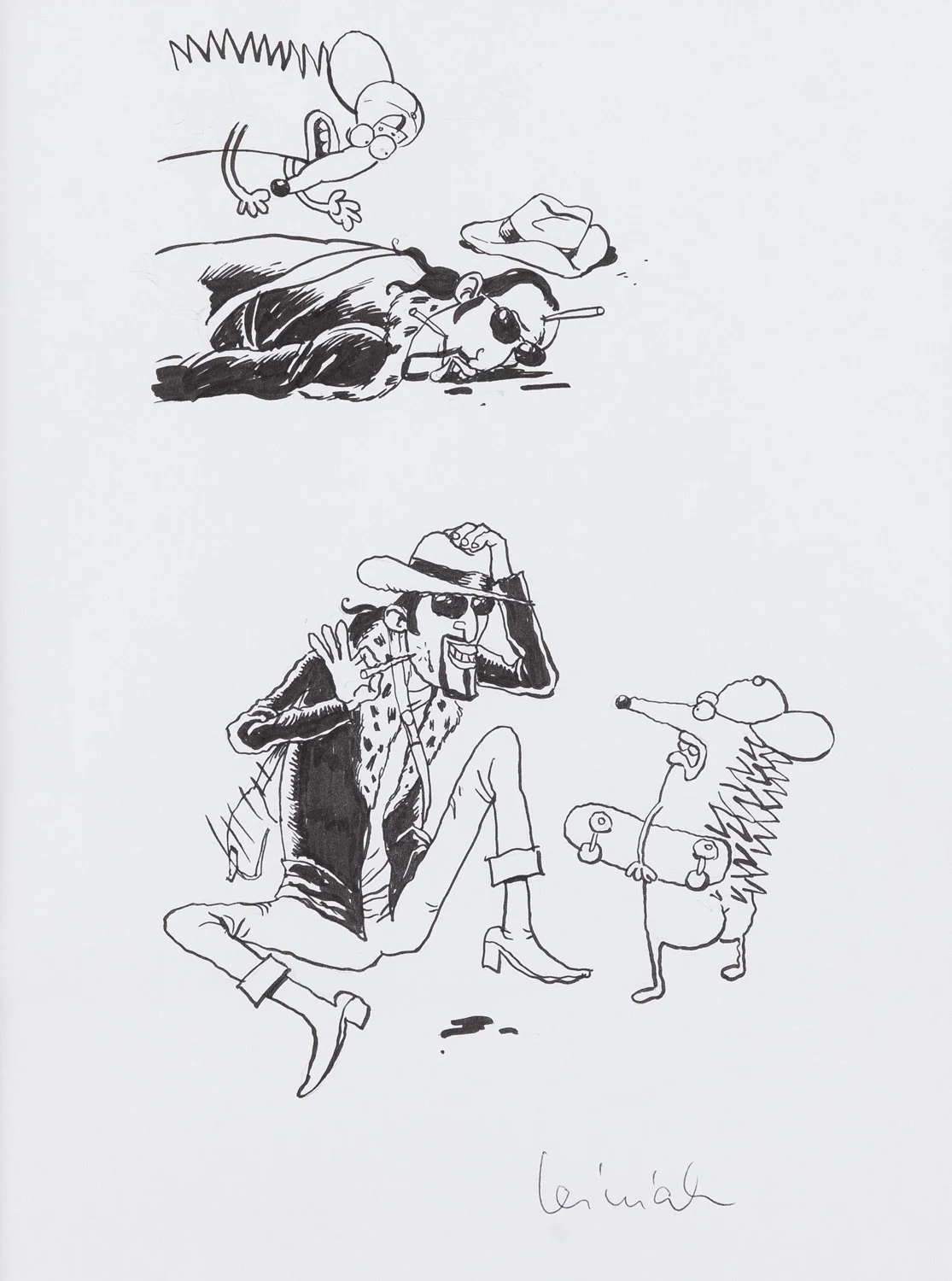
With the influx of new comic art, there was an increasing number of works challenging the superhero myth and even proposing anti-heroic characters. In modern Poland, one of the most well-known characters who rejects societal values and norms is George the Hedgehog (Jeż Jerzy), created by Rafał Skarżycki and Tomasz Leśniak. The comic does not contain moralizing elements or attempts to fix the world. Instead, the character focuses on skateboarding, alcohol, and drugs. George the Hedgehog is a resident of a typical urban block, having various adventures involving gangsters, politicians, police, the clergy, and representatives of subcultures characteristic of the 1990s. His adventures were published until the late 1990s in magazines such as "Ślizg" and "Świerszczyk" – the publications in these two titles differed significantly, with the former targeting adults and the latter children. From 2002 to 2011, ten comic albums were published, containing both original material and reprints from previous editions. "George the Hedgehog" followed a path similar to American releases: first, serialized issues, then collected albums, and finally a film adaptation.
In the 1990s and the first decade of the 21st century, parodies gained significant popularity. Many comics used the superhero convention only to mock it and prove that it did not resonate with Polish reality. An example of such an anti-hero is Ryszard Dąbrowski's Liquidator (Likwidator). This character is an aggressive anarchist and ecoterrorist who typically resorts to violence to solve problems. In his adventures, he encounters caricatured figures from the Polish public scene, with confrontations often ending in death. Initially, "Liquidator" was published in the form of zines at the author's own expense, and the comic's style originated from the punk subculture, drawing inspiration from the American underground. Dąbrowski creates a narrative that ridicules the Polish political reality, unafraid to use shocking and sacrilegious imagery.
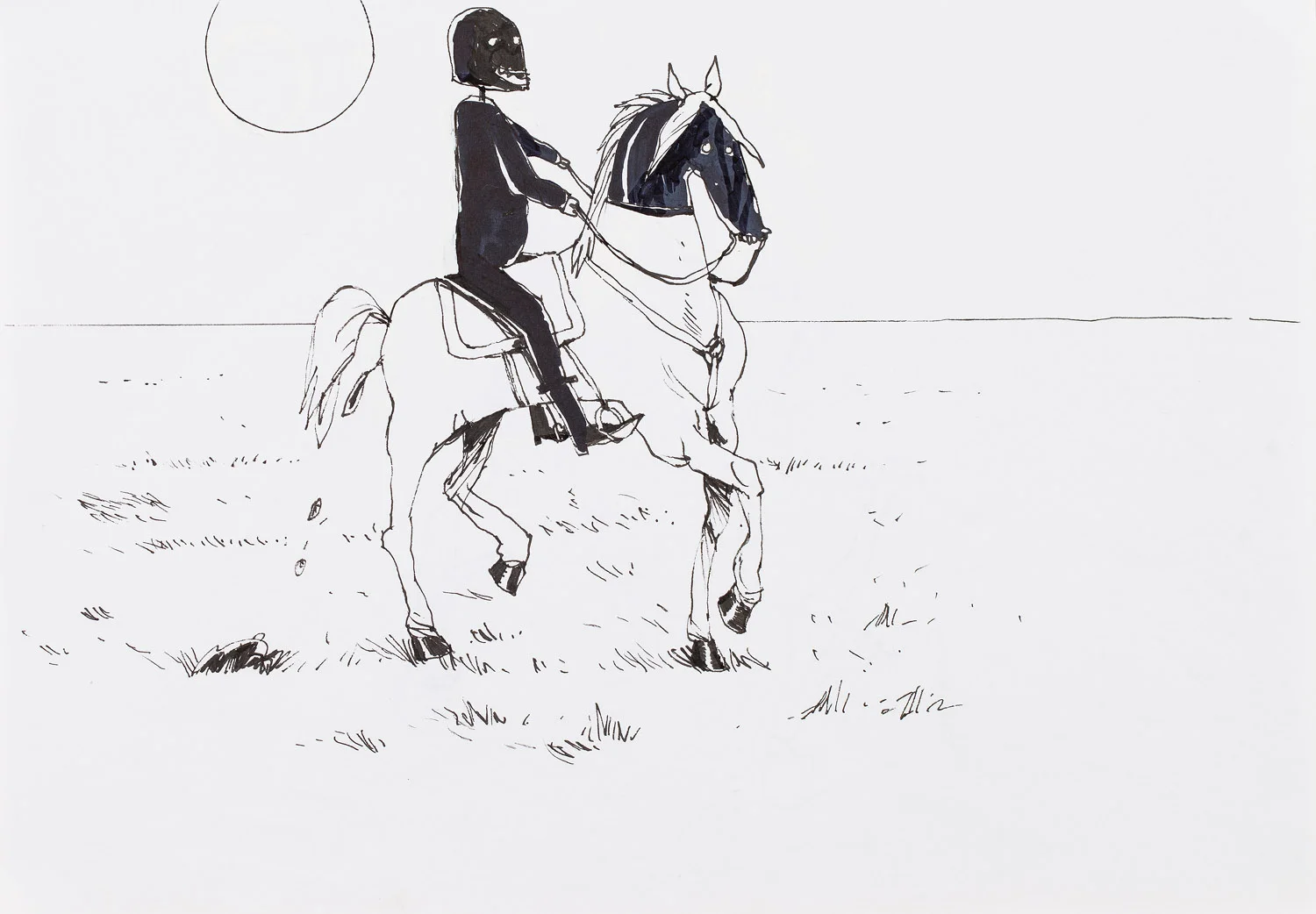
Comics about the Liquidator and George the Hedgehog gained popularity due to the originality of their main characters and the humor and distance present in the titles. Anti-heroes mock and ridicule the existing reality, utilizing familiar contexts to depict Poland and Polishness in a distorted mirror. Contemporary comics in Poland utilize the anti-heroic figure primarily to distance themselves from the propagandistic heritage of the communist period. This approach allows for social criticism and the expression of political opinions, which was nearly impossible under the previous regime. Polish comics deviate from American norms, which mainly offer readers an escape from reality. Creators from Poland seek their own artistic paths, where an essential element is incorporating storytelling into Polish reality. Contemporary comics aim to confront their own origins – affirming reality, critically addressing it, sometimes distancing themselves, and at other times building the belief that change is impossible. Thus, comics serve as a testament to transformations, a reflection of reality, an attempt at interpretation and a systematization.
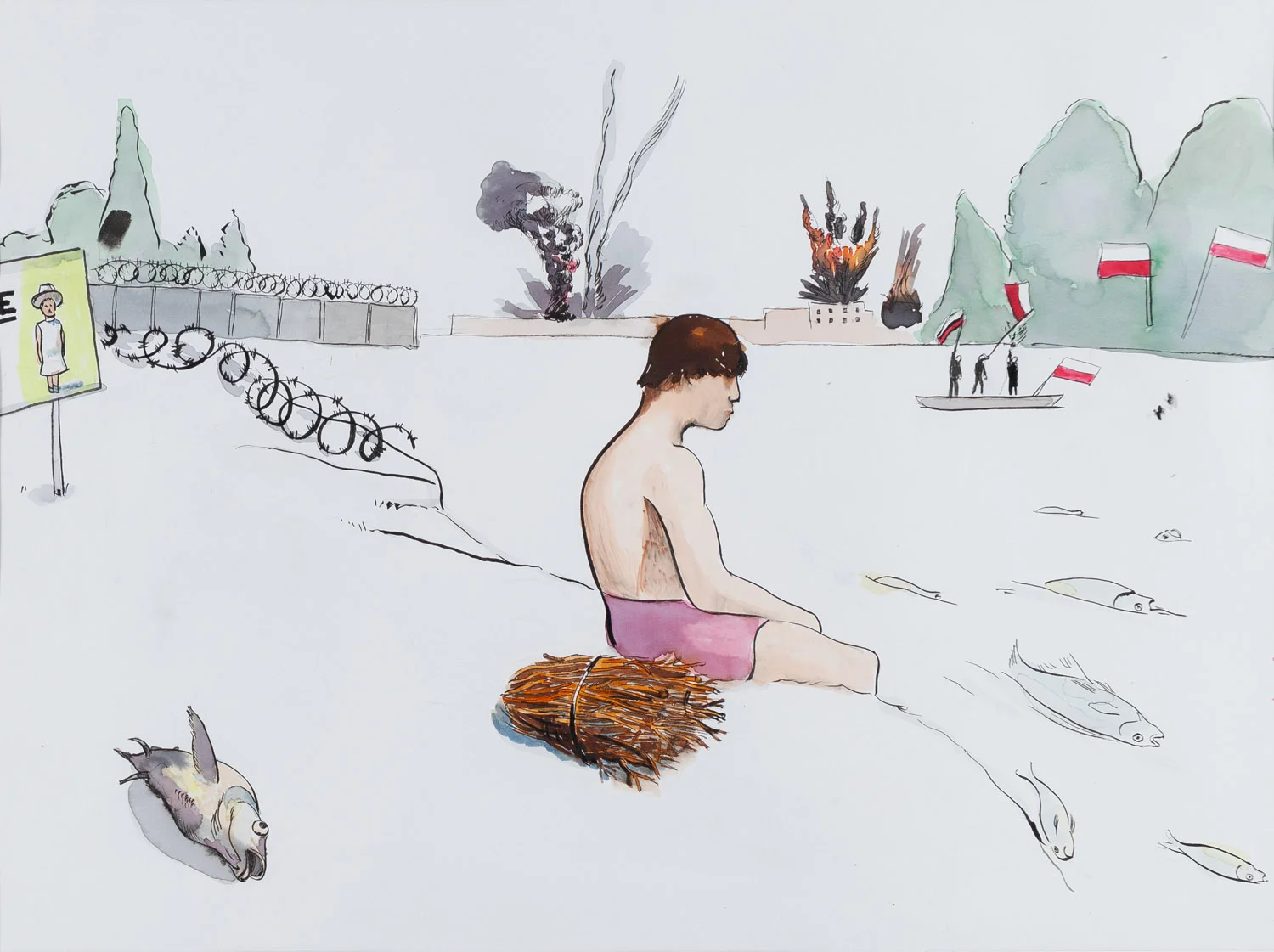
Depictions of reality from the perspective of short comic forms published in the press also tell us a lot. One representative of such creators is Bartłomiej Kiełbowicz, a visual artist and a graduate of painting at the Academy of Fine Arts in Warsaw. In addition to comics, he creates paintings, drawings, videos, murals, and installations. Kiełbowicz combines spontaneous and often destructive gestures with painstaking and precise actions that span several hours. He regularly comments on the Polish socio-political scene in his drawings. His works have been exhibited at venues such as the Ujazdowski Castle Centre for Contemporary Art, Biała Gallery in Lublin, Labirynt Gallery in Lublin, and during the Triennial of Drawing at the Museum of Contemporary Art in Wrocław. In his latest works, he expresses his opposition to the war in Ukraine and violence against refugees on the Polish-Belarusian border.
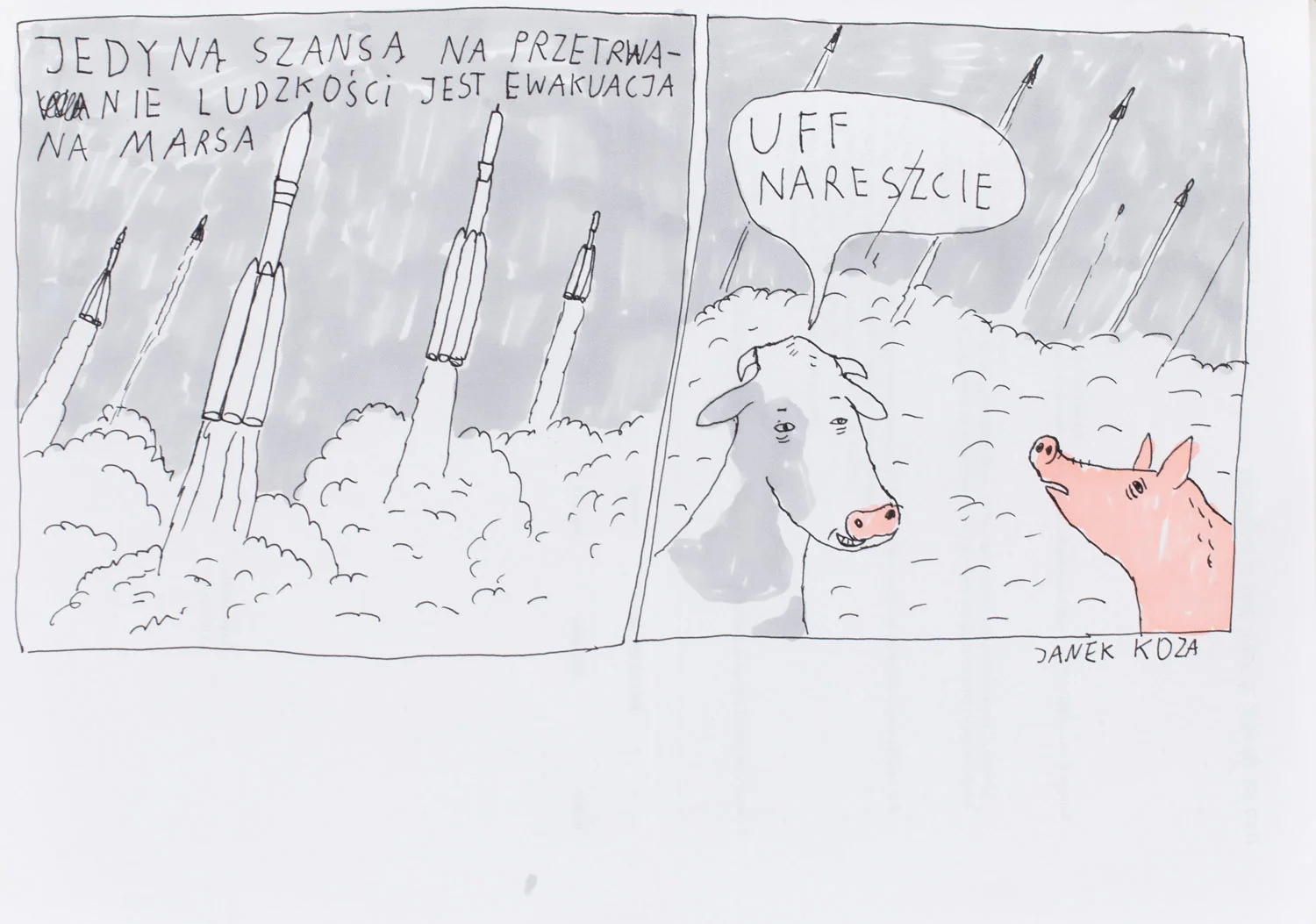
Another artist known for employing the principle of not beating around the bush in his work is Janek Koza. In his comics, he features characters with numerous flaws, tragicomic events, all skillfully captured in simplified drawings with the concise yet often clear commentary of the author. Koza's visual language is deeply rooted in Polish reality. The artist's social engagement, directed towards Poland's early capitalism, creates mocking works far from the canon of beauty.
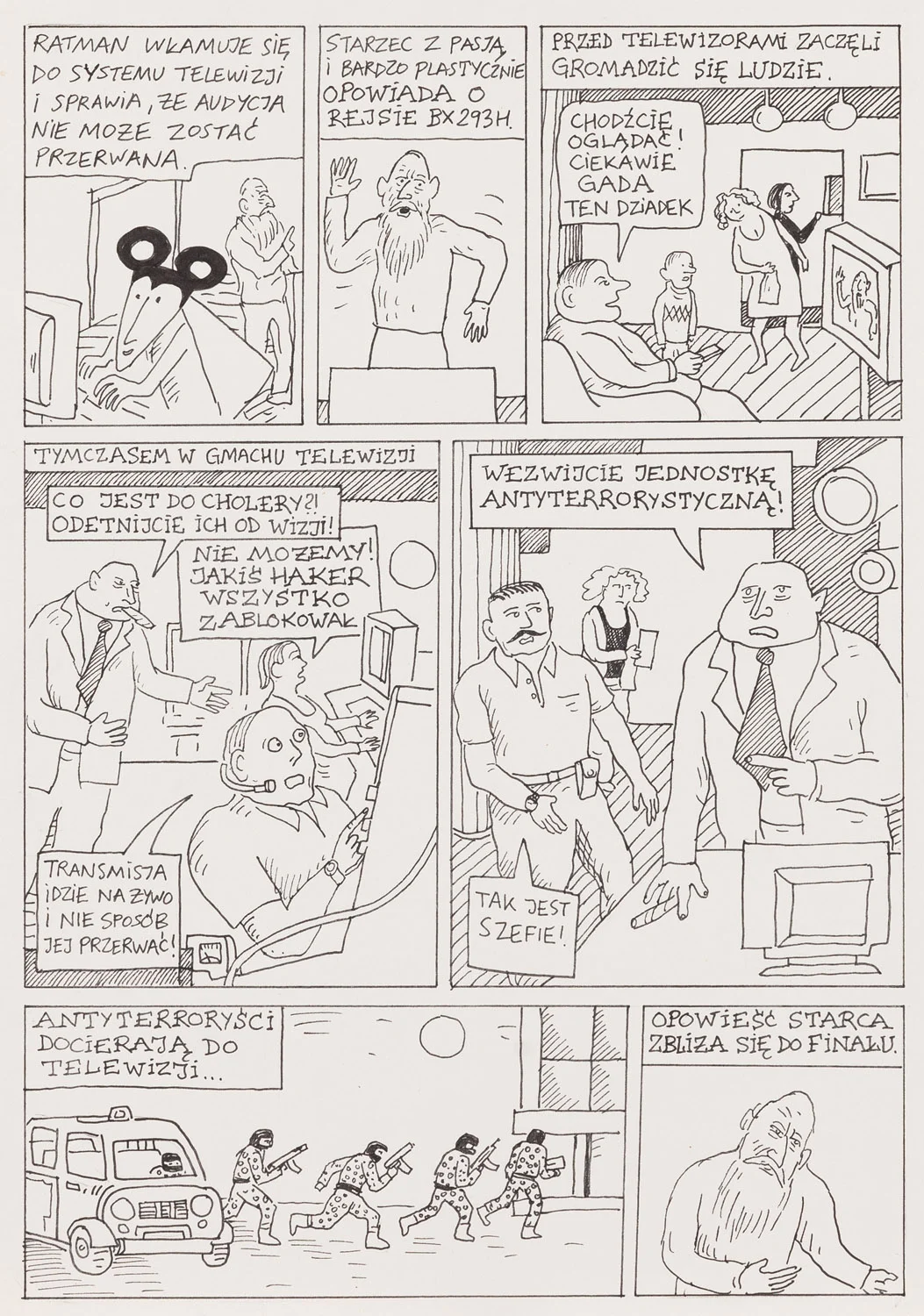
Ratman represents an interesting example of a comic that fits perfectly into the deconstruction trend of both superhero comics and satirical comics. It's a piece that certainly stands out in the world of comics. In its strips and albums, you can find numerous references to other works of culture, both considered "high" and those popular in mass culture. The adventures of the main character and the appearing heroes often serve as pastiche or parody of well-known works, literary and comic book characters, and even real people. This unique mix of inspirations creates an unparalleled atmosphere in the comic. The creator, Tomasz Niewiadomski, injects absurd humor, surreal elements, and ironic commentary on our surrounding reality. The stories are often nonsensical, leading the reader through labyrinths of absurdities and unexpected plot twists. Ratman comes in two different forms: as a series of strips published in various periodicals and later collected into compendiums and as albums containing longer, more elaborate stories. This diversity of formats ensures that every comic fan will find something to enjoy, and the humor and creativity of the creators draw readers into Ratman's world, which is full of surprises and absurdity.