
A painter, a musician, a dreamer
Alfred Lenica's personal life was as colorful as his art. One could say that this is a ready-made scenario for a film. A film that was full of twists and turns as well as comical situations. One can say about Lenica, who was lovingly referred to as Fredzio or grandfather by his loved ones, that the artist spent the first half of his life playing the violin in opera and bars and the second half painting among his kids and grandkids. The artist combined his two passions: music and painting. At the same time, he was a hopeless idealist and dreamer. Tadeusz Konwicki, Lenica's son-in-law, referred to him as "the eternal avant-garde grandfather, the naive progressive grandfather, and the grandfather-man of God."
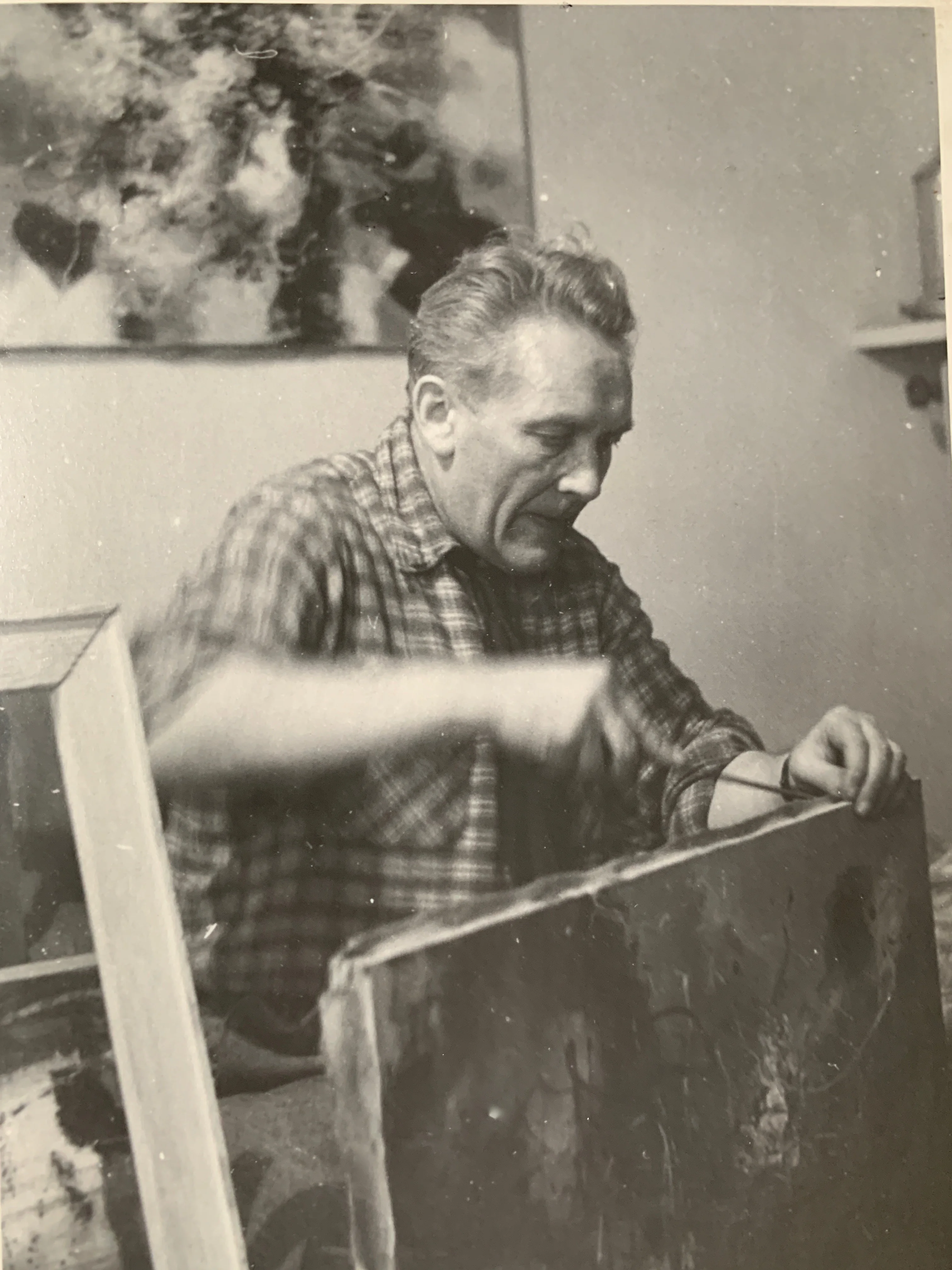
Lenica came from a working-class family. His mother was unemployed, while his father worked hard in the factory from the age of eight. After work, his father drank a lot and made arguments. When he was sober, he used to draw animals for little Fredzio. In this way, he instilled a love for art in the boy. Sadly, there weren't many of these calm moments full of drawing. His father's alcoholism was getting worse, to the point where he was eventually taken to a mental hospital. Lenica mentioned that his father showed him drawings by "other lunatics." Those lunatics were probably famous painters. Alfred was only ten years old when his father died. A few years after his father's death, Alfred's only sister, Łucja, also passed away. Despite poor living conditions, Lenica was able to learn to play the violin professionally with the help of his mother's unwavering love and his own persistence. It helped him earn his first income. He played at weddings, among others.
It can be said of Alfred Lenica that he "had more luck than sense." Fate was often generous with him. One day, at the store "Men's Accessories," he met Janina Kubowicz, whose father Piotr was a painter. Lenica thus "hit the jackpot." This lovely and wise girl, who was introduced to him in a shop, quickly became his wife. He gained a wonderful life companion and a teacher at the same time, as his father-in-law would give him painting lessons.
Mrs. Janina Lenica had the patience of an angel for Fredzio. He was well known for caring only about his art. There were numerous anecdotes shared within the Lenica family that amply demonstrated Lenica and his wife's distinct views on life. One of the stories is about the relocation of their family from Poznań. One day, the Germans arrived. They yelled and threatened them and ordered them to leave. Fredzio packed a couple of stretcher bars and a box of paint, went outside the house, and politely got on the provided bus. He sat and waited, lost in thoughts. After a while, a window opened, the painter's wife leaned forward and yelled indignantly:
- Fredek! What about the kids, what about the stuff, what about the bags?
"Oh, I forgot," replied thinkful Lenica.
From Poznań, the Lenica family was sent to Mielec. The painter's wife had to sell her fur coat so the family would have money to rent the apartment. At that time, the Lenica family already had two children: Danuta and Jan. They were very poor. Later, they moved to Krakow. Alfred got a job as a musician at the restaurant. There, fate smiled on him again. When entertaining guests at the restaurant, he met Jerzy Kujawski who would also play there and amateurly deal with painting. They were connected by their jobs and shared passions. Kujawski was a great supporter of novelties in painting and was happy to present them to Alfred. He was the one who opened his eyes to art. Most importantly, he introduced him to young avant-garde artists in Krakow like Tadeusz Kantor and Maria Jarema.
Meeting these outstanding representatives of art had a decisive impact on Lenica's life. When the war ended, Lenica was a mature, over-forty-year-old man, an excellent musician, and still an unfulfilled painter. Then, influenced by the Krakow avant-garde, he made the decision to focus solely on his passion for painting. After the war, he immediately returned to Poznań. On the contrary, his friend Jerzy Kujawski lived in Paris after the war. He established contacts with the Parisian avant-garde and, above all, André Breton.
Lenica also wasted no time, he was active in the 4F+R group, which combined the achievements of the global avant-garde with the social role of art, painting a lot, and experimenting. He also started using his own painting methods, such as pouring paint onto the canvas (this technique was similar to Jackson Pollock's, but not exactly the same). At about the same time, he revealed his nature as a "naive progressive." Lenica became involved in the activities of the Communist Party of Poland. Being a member of the working class himself, he had already been interested in the proletariat. During that time, he painted several paintings depicting the lives of the lower class of society. He made such works as "Young Bierut among Workers," "Admission to Party," and "Red Poster." He also attempted to combine formal experiments with ideologically charged subjects for his own use, as seen in the 1953 piece "We Lose Daily Pays." At the same time, he hosted conspirators in his home, kept dissident publications, and gave shelter to people released from prison. He was playing with fire, that's for sure.
After his son Janek brought such a paper to school and showed it to the teacher, he ultimately stopped his activity. Lenica was fortunate once more because the situation was calmed down and Fredzio's communist links were broken up until social realism dominated in Poland.
Another interesting thing about the artist is the fact that Lenica was a legendarily bad driver. The first ride in a brand-new car ended in a crash. He had more car adventures. Jokingly, the painter's son-in-law claimed that his wife went prematurely gray because of Lenica's terrifying driving skills. It was a result of Fredzio driving his car all the way from Geneva to Warsaw... in first gear! Lenica was incorrigible in this respect. His daughter's requests and threats were useless. It was only in Poland that she managed to force her father to start in second gear.
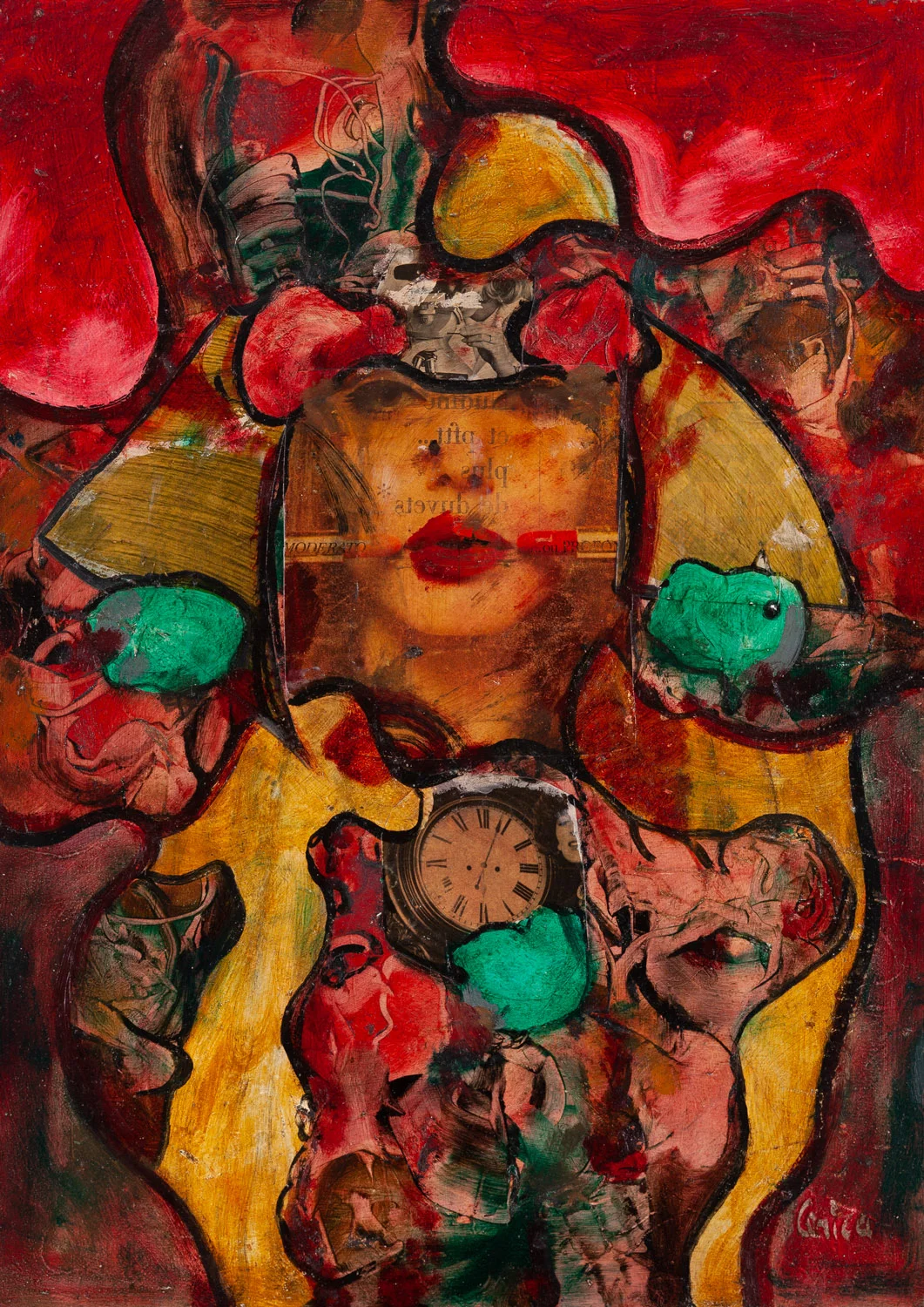
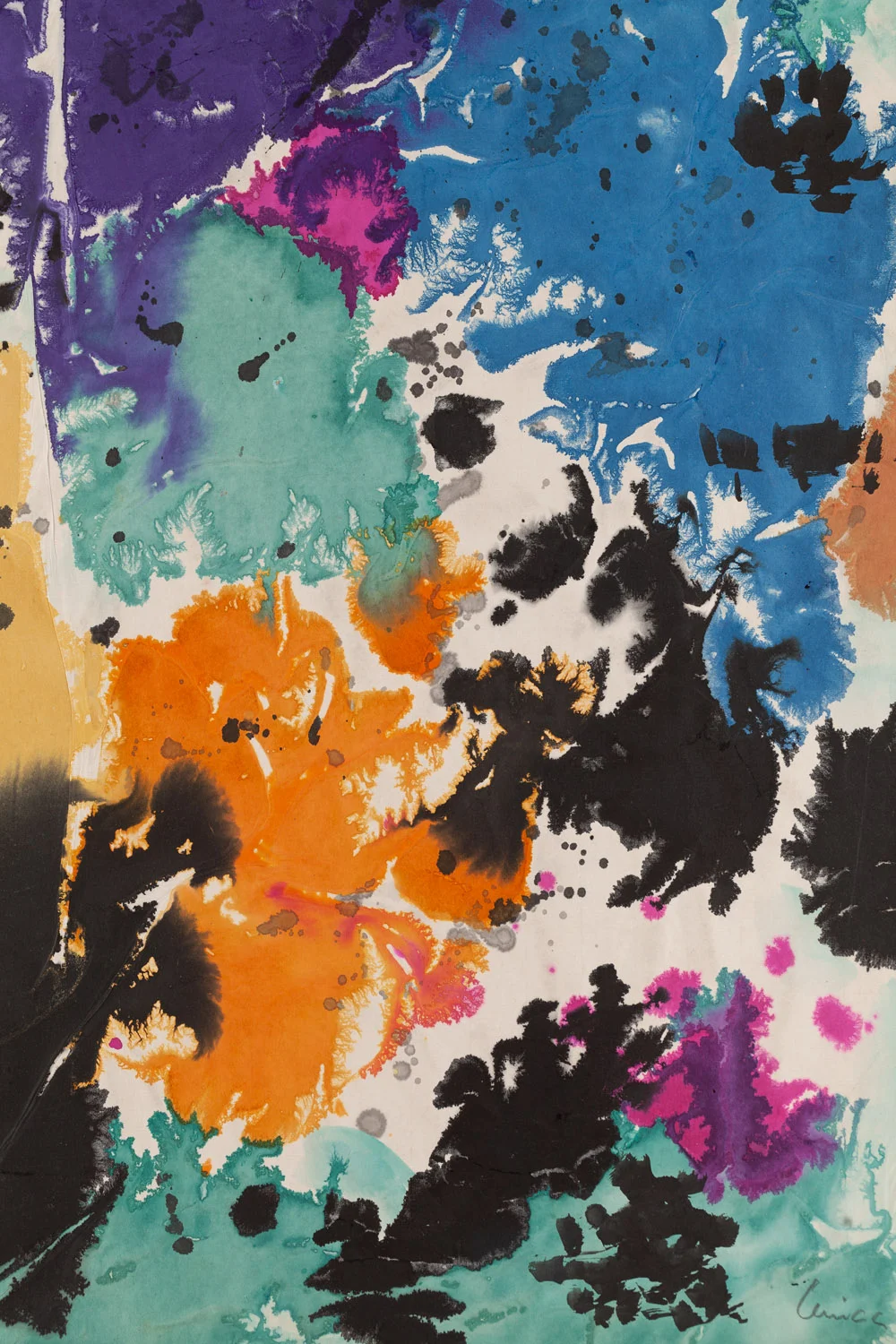
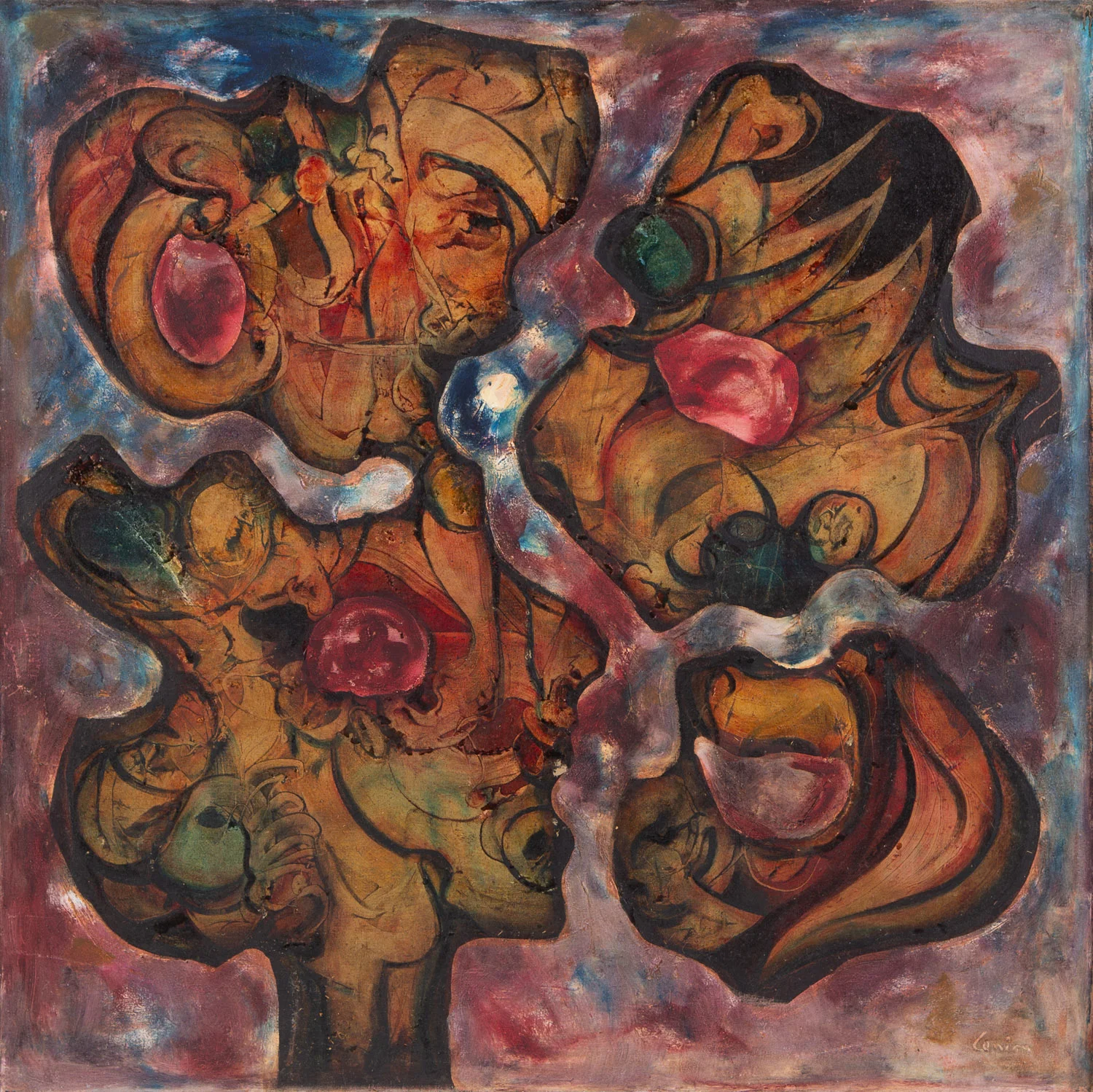
Even though Lenica's car trips did not go well, his artistic life literally took on color. The artist became sought-after, and he could boast of many prestigious exhibitions. His canvases were filled with vibrant, dynamic forms that were characterized by vitality and lushness. The world depicted in Lenica's painting was frequently referred to as "biological" because of its vitality, linked to a lively, animated matter captured during some enigmatic transformation.
During numerous vernissages in Europe and America, the artist personally met many famous painters. He got lucky again. At a time when a statistical Pole dreamed of a trip to Giżycko, and thought that a visit to Czechoslovakia was quite exotic, Lenica spent several months in Chile in 1972! In addition, his guide to this country was Roberto Matt, a world-renowned surrealist painter.
Alfred Lenica was an ambiguous figure; his life abounded in twists and turns. It's a good thing that his views on art were simple. In one of the interviews, he explained: "Pretty painting is wrong. Interesting painting is good." No wonder Konwicki called him "a nice butterfly which plays around with art with no responsibility under our understanding gaze." However, after the exhibition in Zachęta in 1974, Konwicki changed his mind. He wrote that he was humbled by the man whose life erupted at the end like a volcano with a fountain of colors, flares, and stars. This was Alfred Lenica's painting from that period. Three years after this unforgettable vernissage, which his son-in-law so greatly enjoyed, the elderly man passed away.