A few words about the Krakow Group
The Krakow Group activity should be divided into two stages - the First Krakow Group (1932-1937) and the Second Krakow Group (from 1957). The radical nature of the first formation was continued by post-war artists, which made its phenomenon one of the most interesting in Polish art.
The pre-war Krakow Group, the so-called first Krakow Group was a formation of a loose nature. Its members did not have an artistic program that they officially implemented - but they had similar political views that brought them closer to each other and united them in the common goal of creating socially engaged art (although not all of them implemented this postulate). Its creation was a reaction to the global financial crisis and the related wave of unemployment and poverty. It was a time when the divisions and social inequalities in the Second Polish Republic – which already were catastrophically great - became even more acute and visible. The Krakow Group consisted of young artists who believed that they could change reality and find a place for themselves in it. They wanted to co-organize a world that would not be characterized and divided by whether someone's poor or rich, and would be governed by the principle of equal opportunities for all. It was the gaze of young, radical artists, whose work was later described as "the last Polish pre-war avant-garde". Their art was an attempt at a constructive social revolution. Due to the eclectic nature of the group, when writing and discussing its character, the primary focus should be on the individual members and their works.
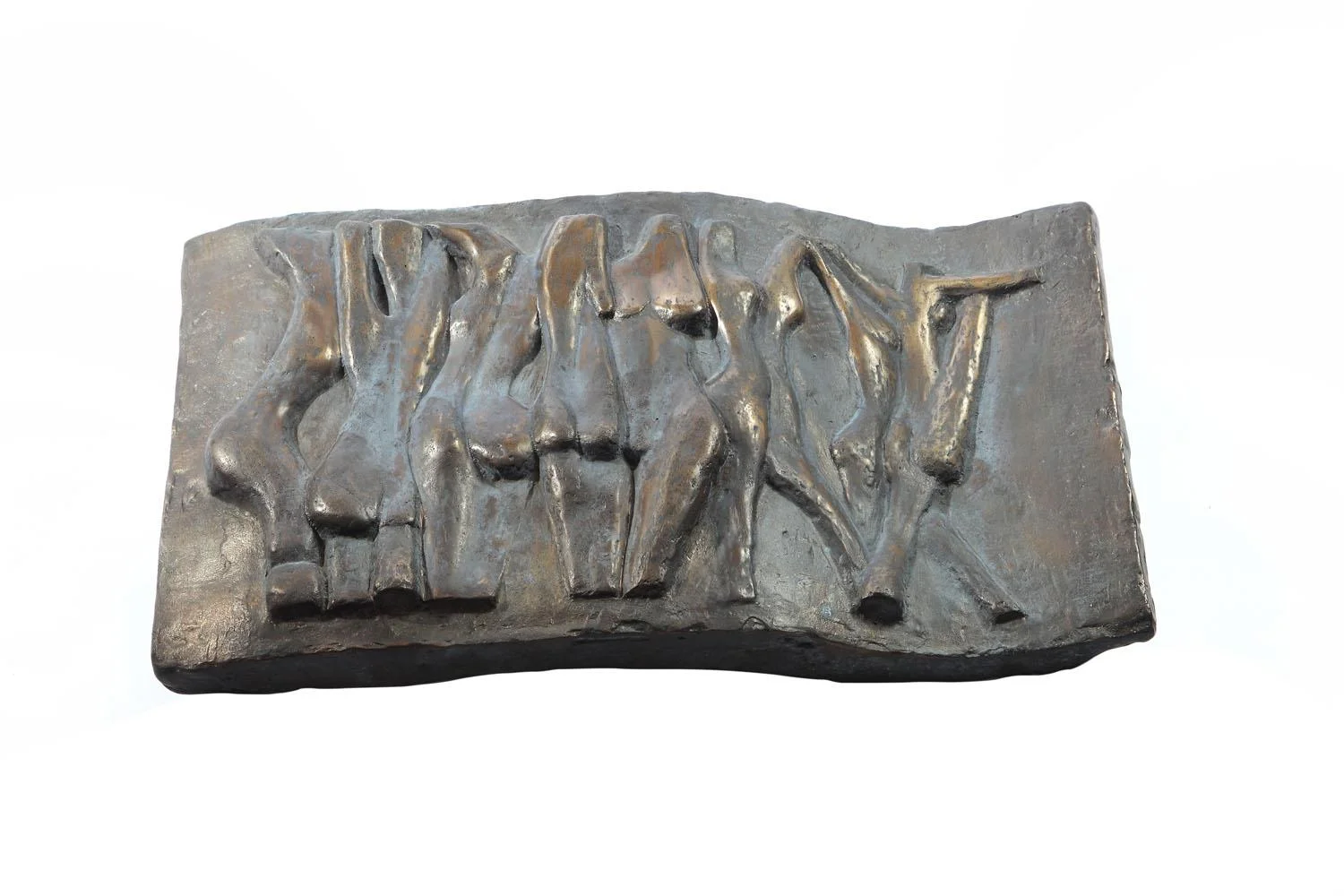
A particular attention should be paid to the sculpture by Henryk Wiciński, co-founder of the Krakow Group and collaborator of the experimental Cricot theater. The work "Tyrewnowane" was written in 1937. The artist presented female nudes, the arrangement of which and simplified shapes created an almost abstract composition. In addition to Wiciński, the group included, Leopold Lewicki, Adam Marczyński and Jonasz Stern, whose works are also presented in the auction offer.
The establishment of the Second Krakow Group was to some extent a continuation of the pre-war tradition of the group, and its formation is associated with several exhibitions and other artistic groups. The Cricot 2 Theater, is always worth mentioning while on the subject of the Krakow Group, it was founded by Tadeusz Kantor and Maria Jaremianka. The 2nd Kraków Group was established in 1957 as a statutory association which at the time of its establishment had twenty members. In 1965, the group consisted of 36 artists. As Marek Rostworowski wrote during the 9th exhibition of the group:
"[...] some of the members of the Group have already established themselves as classics of Polish modernity - artists who in 1948 represented a common, very dynamic front, and today represent various, their own, closed concepts".
(Marek Rostworowski, 9th exhibition of the Krakow Group, Kultura, 1968 No. 50 p. 10)
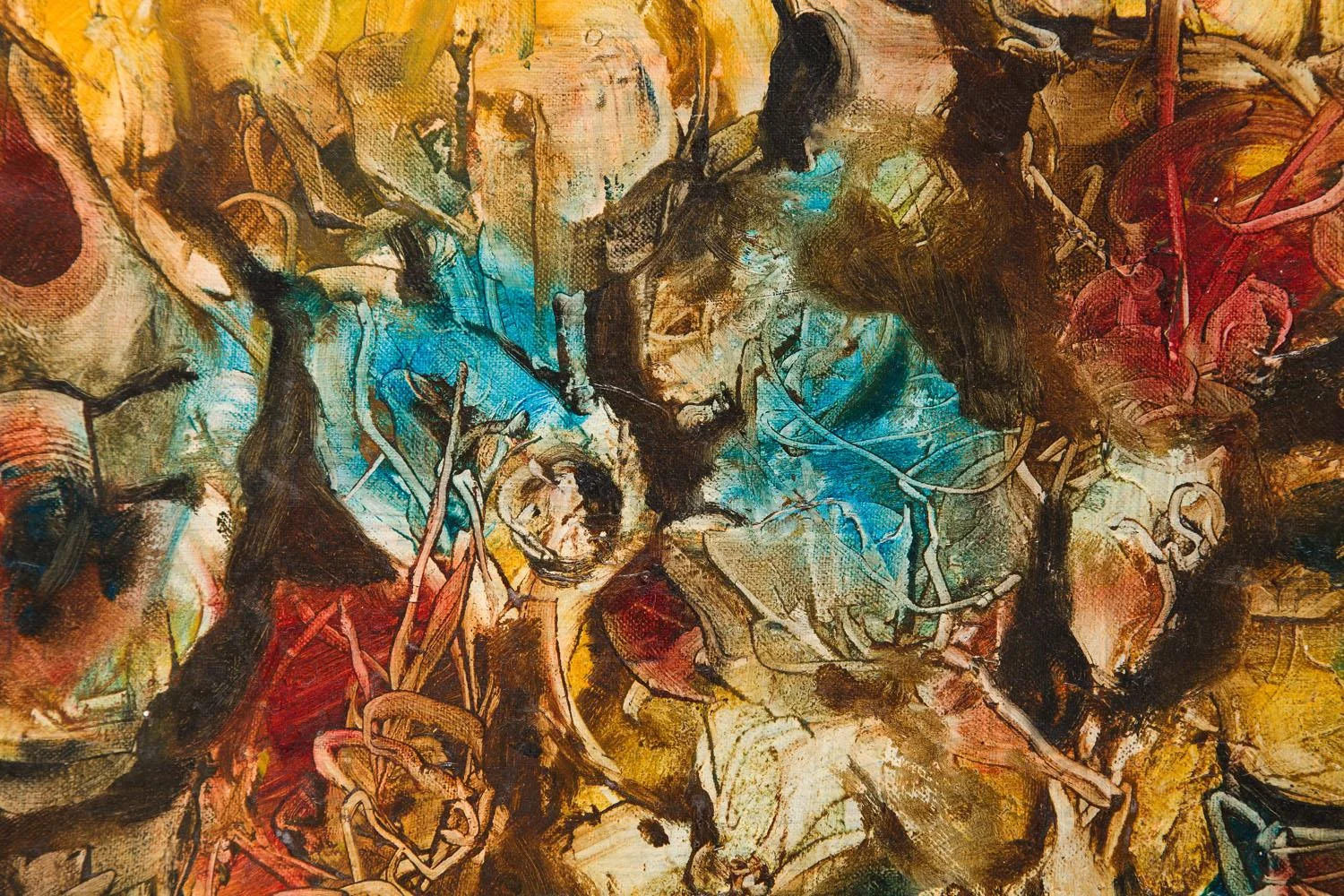
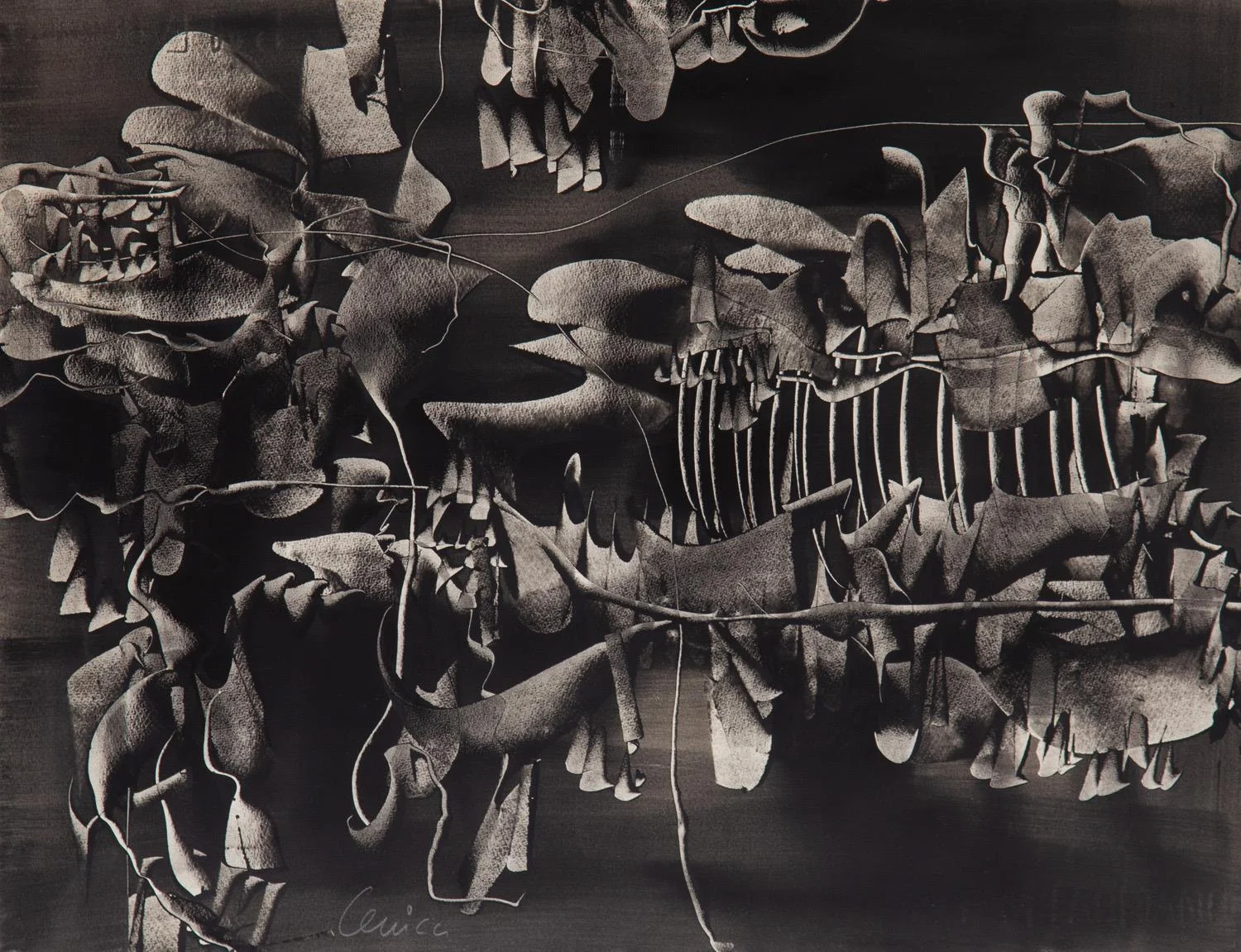
One of the described members who was looking for his own way of expression was Alfred Lenica. While in Cracow, he made friends with the painter Jerzy Kujawski and, thanks to him, he became interested in surrealism, and joined the movement of the Krakow avant-garde movement centred around Tadeusz Kantor. He met, among others Tadeusz Brzozowski, Maria Jarema and Kazimierz Mikulski, who made the 40-year-old violinist realize that painting is what he really should do in life. The relationship with the community of cracovian artists was so strong that it resulted in Lenica being invited to participate in the First Exhibition of Modern Art in Krakow in December 1948, and later, in 1965, the artist was admitted to the Cracow Group. The auction offer includes three works by the artist, including two from the 1970s. Lenica's work is distinguished by an innovative approach to painting techniques. The painter covered his canvases with many layers of paint. The lightest, most luminous colour was the substrate and the first layer. Then he covered it with browns and blacks. Then, with self-made tools, he scratched the canvases with razor blades, therefore uncovering its deeper layers. Although the process appears to be extremely expressive, it was performed in a very balanced manner.