
19th Century Brooches – A Wealth of Motives and Inspirations
At the turn of the 18th and 19th centuries, gold brooches set with diamonds were exceptionally popular among the members of the wealthiest elites. During the Victorian era, in the 1830s and 1840s, large stone brooches set in ornamental framings began to be made. “Safety-pin brooches "gained popularity in the 1890s, and at the turn of the 19th and 20th centuries, they were seen as ideal adornments to low-cut evening dresses.
At the turn of the 18th and 19th centuries, some of the most frequently used patterns were stars, crescents, sun rays, and Napoleonic wars-inspired trophies. Among the other motives used by the contemporary jewellers' makers were flowers and bay leaf springs. During the Victorian era, in the 1830s and 1840s, large stone brooches set in ornamental framings began to be made. Typical back then were brooches with charms that could be worn as pendants. Products in the shape of plant twigs with a flower attached to a spring in their middle were well-liked. Jewellery objects were the shapes of animals and birds, and at the end of the 1860s, insect-shaped brooches – reminding of butterflies, wasps, dragonflies, or bees – gained popularity.
In the 40s, enamelled oval badges imitating paintings also became en vouge. They were inspired by the medieval and renaissance eras. The Victorian admiration of travel was reflected in the souvenir brooches that were produced in Italy.
Cameos were considered one of the most typical brooches of the second half of the 19th century. Made from stones or shells, they usually depicted female heads inspired by antiquity. This type of ornament showed the images of mythological creatures, satyrs, and also Roman emperors.
The 1880s and 1890s brought a revived interest in the 18th-century court jewellery. It was a return of brooches with star motifs and those decorated with sun rays. The same decorative motifs were placed on, for example, combs and tiaras. They took more subtle forms than their 18th-century counterparts. Diamonds, pearls, opals, or moonstones were usually used in the decorating of the sets. Bows and hearts were among some of the other well-appreciated motifs.
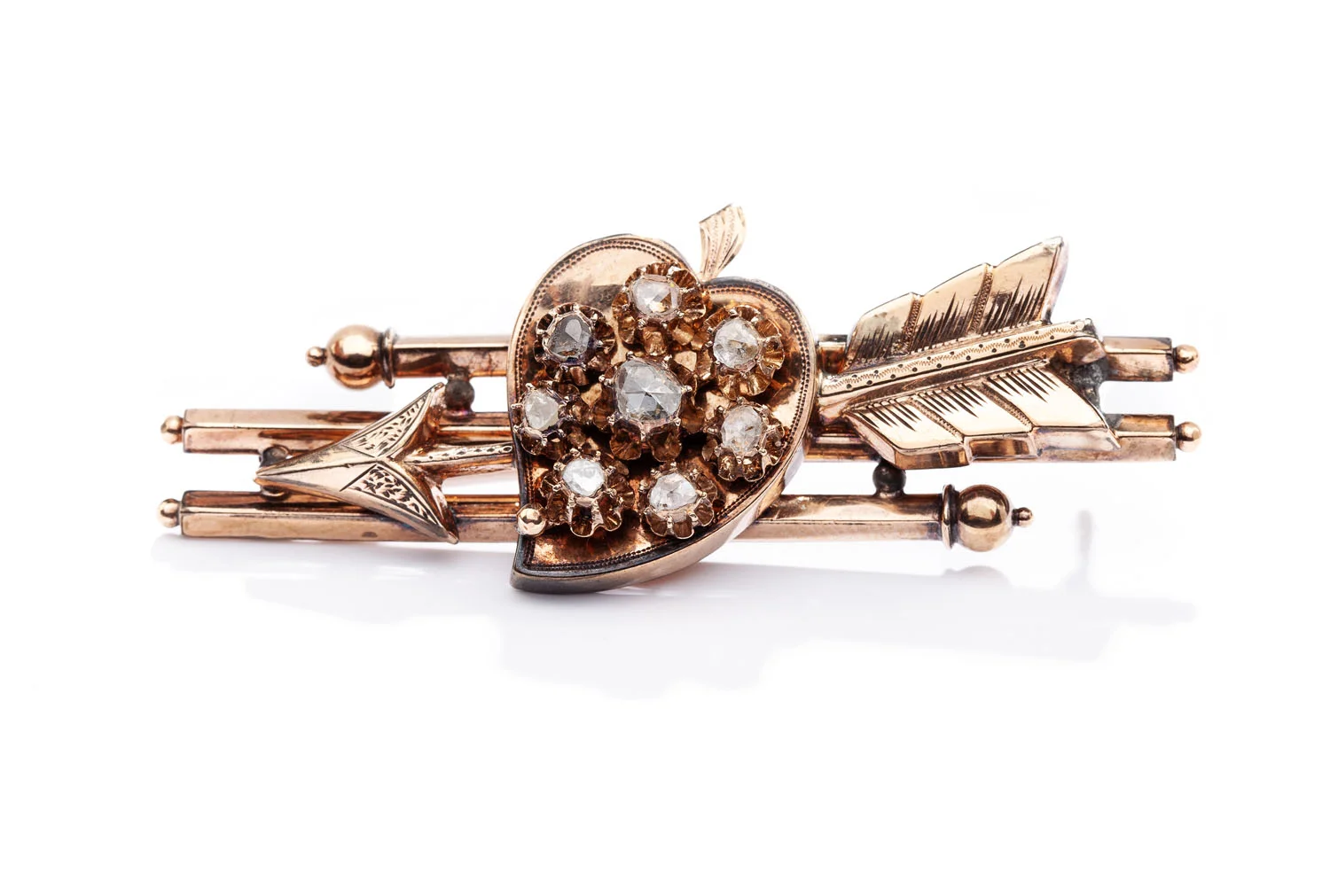
“Safety-pin brooches "gained popularity in the 1890s. Usually, they took the form of a horizontal gold strip decorated with expensive stones or a central motif, such as flowers, birds, or clover leaves. At that time, engraving names, sentences, or dates commemorating significant anniversaries were also fashionable.
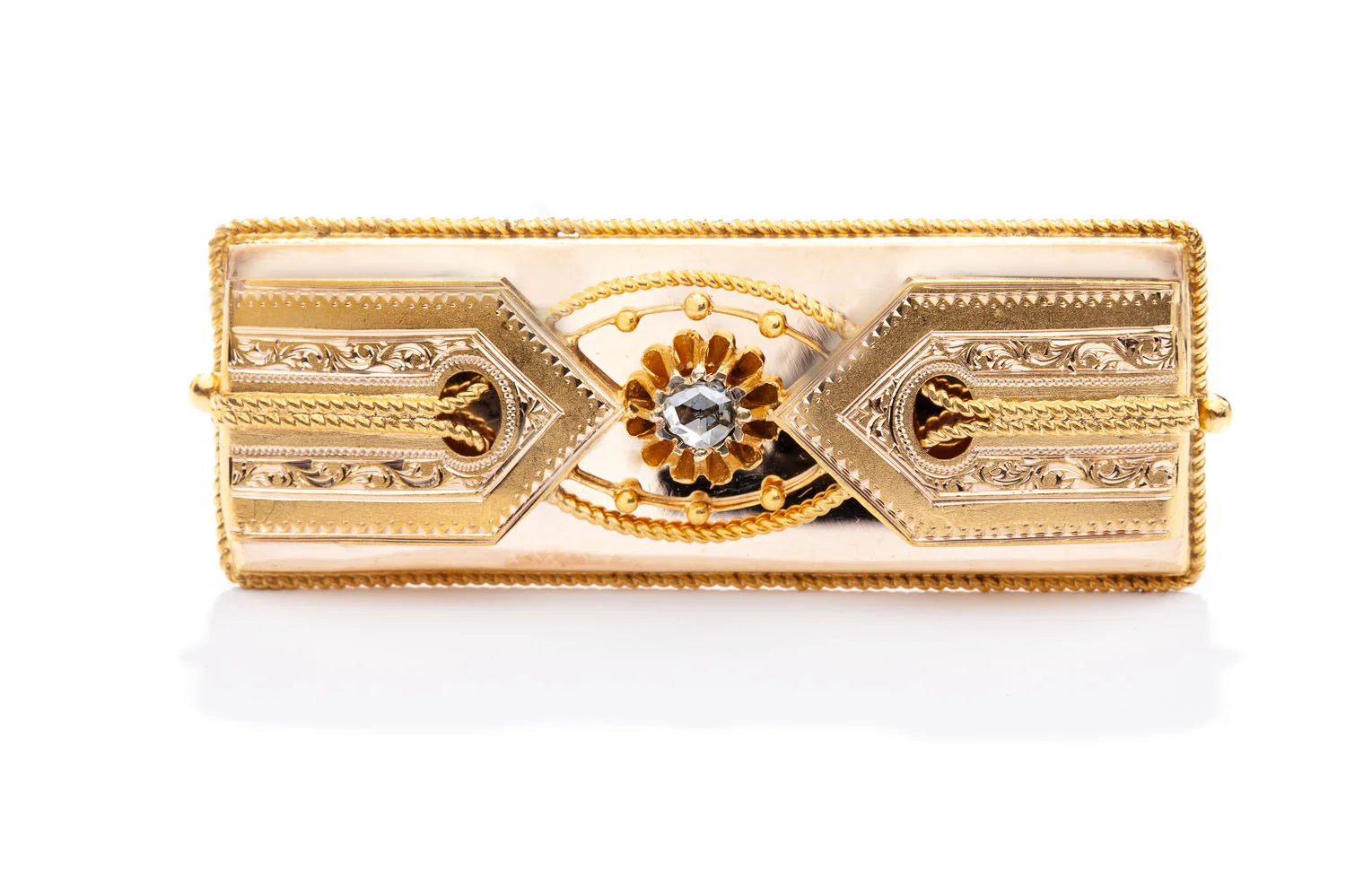
At the turn of the 19th and 20th centuries, brooches continued to be fashionable. They were considered to be an ideal adornment for low-cut evening dresses.