
10 things you didn't know about Anna Güntner
Julia Gorlewska
Until recently, art history was primarily a story about men's works. One of the leading ideas of the DESA Unicum auction house is to delve into and bring to light the histories of female artists who have thus far existed outside the main artistic discourse. In past years, our channels have been dominated by content on artists such as Mela Muter and Erna Rosenstein. This time, we are pleased to present 10 facts about the contemporary Polish painter Anna Güntner.
1. She was born in the 1930s in Poznań and completed her painting studies at the Academy of Fine Arts in Kraków under the direction of Zbigniew Pronaszko.
2. Güntner received many awards and scholarships, including those from the French government and the Kosciuszko Foundation, which allowed her to travel extensively and develop artistically in esteemed international institutions.
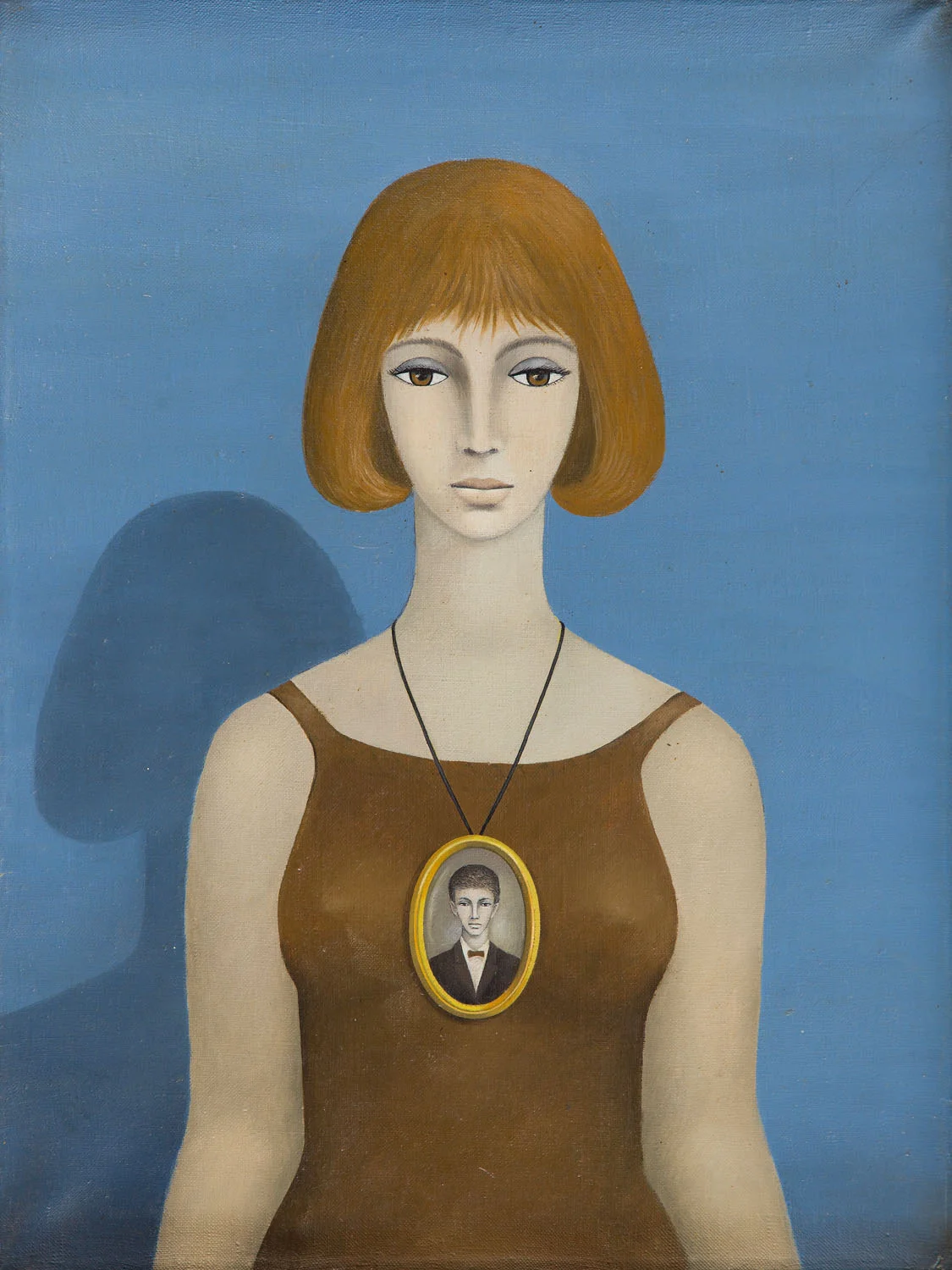
3. Her metaphorical paintings are rooted in the tradition of surrealism. She painted flat, mainly landscape depictions, often featuring women with alabaster complexions and dreamy, slightly ironic gazes.
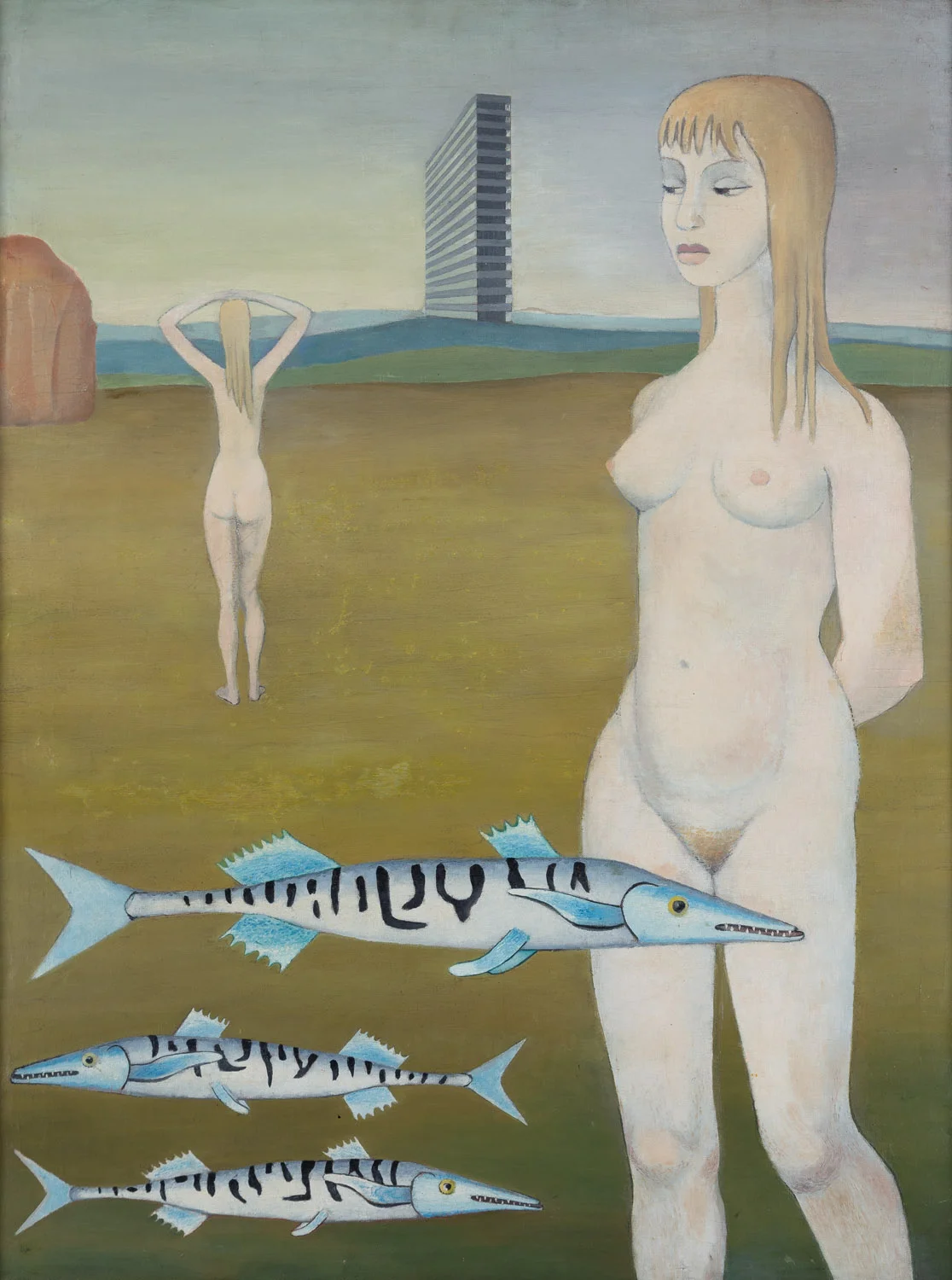
4. Güntner's paintings are a compilation of personal emotions and experiences, along with direct references to the legacy of old masters. Most of her compositions refer to the style of early Renaissance artists such as Jan van Eyck, Piero della Francesca, and Hieronymus Bosch. This "Renaissance quality" is evident not only in the depiction of figures but also in the way she constructs landscape spaces using northern European aerial perspective (through the gradation of color temperatures in successive planes). For instance, in the painting "Conversation with Mr. Montefeltro," she included a figure from a Piero della Francesca painting, From this artist's diptych, she cut out the portrait of the duke in a collage style and replaced his wife with a nude young blonde. The presented painting is a subtle nod to Paul Delvaux's "Place of Isolation."
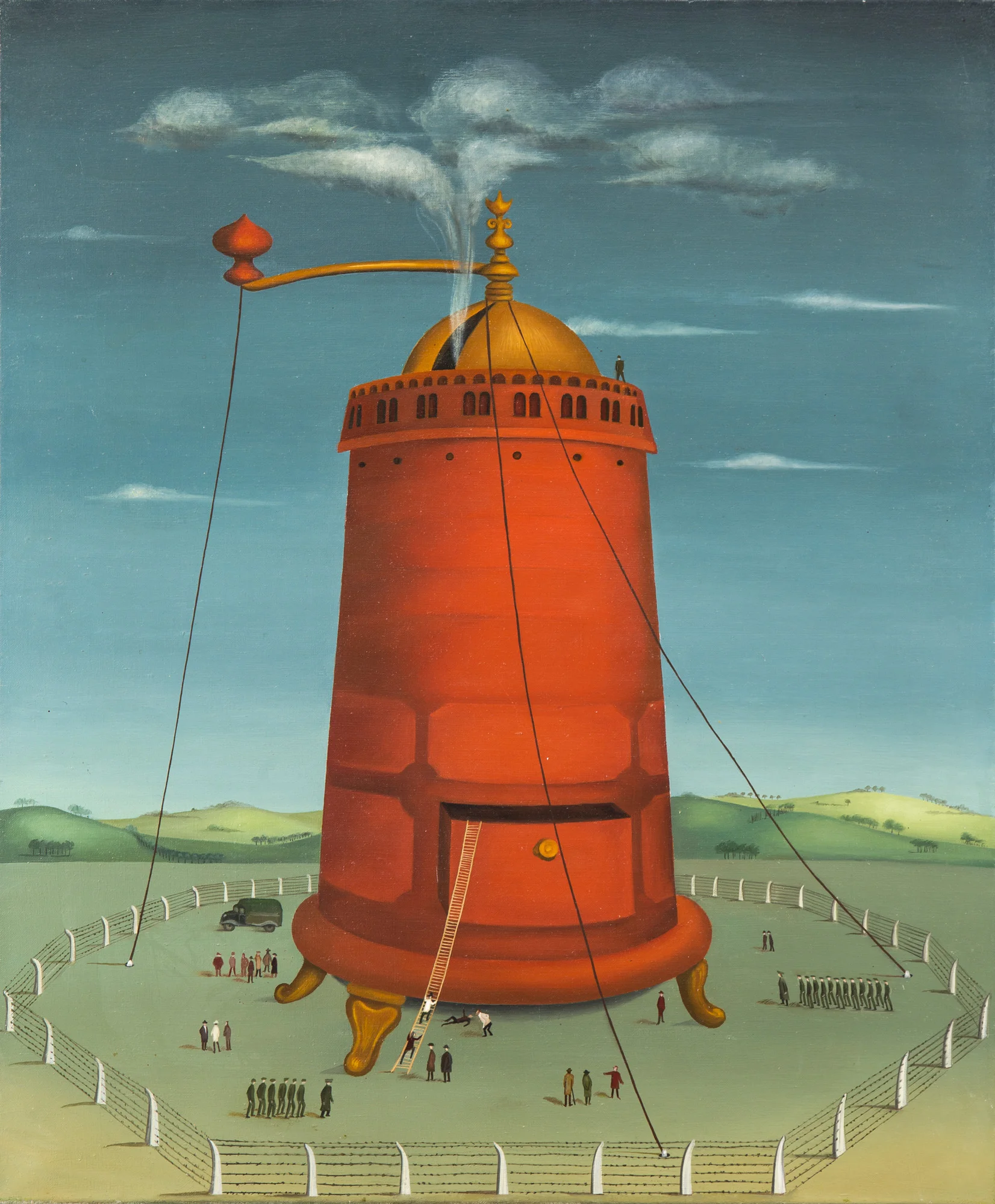
5. Besides romantic and erotic dilemmas, she is also known for depictions of machines, such as "Secret Object" from 1965. This reflects her personal fear of the rapidly advancing technology gradually replacing human actions.
6. Anna Güntner's symbol-rich works have captured the hearts of buyers worldwide. Last year at Sotheby's, her piece "Engagement" sold for a record £76,200 at the "Women Artists" auction. The previous record was set in July 2021 at Shapiro Auctions in the US. Her works also achieved impressive results at Swedish auction houses Bukowski's and Stockholms Auktionsverk. It is worth noting that due to her limited output of only 150 oil paintings, her presence in the market is rare.
7. When she was creating, new artistic trends like Tachisme, Pop Art, and Conceptualism were beginning to dominate. Defying these trends, Güntner remained true to her original style, and her works quickly gained recognition among collectors.
8. The most prolific period of her career was the 1960s and 1970s, but she mysteriously stopped creating art in the 1980s.
9. Several of her paintings appeared in TV films and feature films such as "Jowita" (dir. Janusz Morgenstern, 1965) and "Anatomy of Love" (dir. Roman Załuski, 1972).
10. Anna Güntner's works can be found in the collections of the National Museum in Kraków, Warsaw, Poznań, and Szczecin, the Museum of Art in Łódź, the Stockholm Museum, the Bundy Museum of History and Art in New York, as well as in private collections in Japan, the USA, and Italy.