
Mystical Hutsul Land
The fascination with the Hutsul land had already begun in the first half of the 19th century. However, it didn't reach its peak until around 1900, when artists began to rediscover the wild and remote region of the Eastern Carpathians in pursuit of a world unspoiled by civilization. Captivated by the beauty of the natural landscape as well as the picturesqueness of its inhabitants, painters embarked on a journey into the unknown. There were a number of more and less known creators, among whom the so-called "Hutsuls" came to the fore.
The interest in folklore is undoubtedly linked to the intelligentsia's fascination with the peasantry, referred to as "peasant-mania," which emerged at the turn of the 19th and 20th centuries. It was then that artists, tired of the hustle and bustle of metropolises and cities, began to turn to the countryside and assimilate with the rural community. This phenomenon was particularly noticeable among the Krakow artists, who chose the nearby village of Bronowice as their mecca. It was there where Włodzimierz Tetmajer lived and it was there, in Rydlówka, where the iconic "Wedding" described in Wyspiański's drama took place. In fact, it all started with the so-called "five peasant-maniacs," an informal quasi-group of young painters, who began to explore the village under the influence of their spiritual leader, Witold Pruszkowski. Włodzimierz Tetmajer, who was most closely connected to Bronowice, undoubtedly received the most attention out of these "five." His paintings often featured fantastic motifs as well as folk and religious customs.
In the context of folklore inspirations, one should look at a much more distant, less accessible, and equally interesting region. This mythologization of local peasants, which was prevalent in the culture at the turn of the century, was even more evident in Hutsul motifs. Because of its untamed nature, the Hutsul region gave artists the impression that it was a somewhat exotic land. It sparked and enlivened their imaginations. For this reason, the gloomy boat of Charon moves with the Prut's current, the Christmas crib is visited by the Hutsul shepherds, and a scene of pulling a drowned man out of the river takes the form of a lament over the body of Christ.
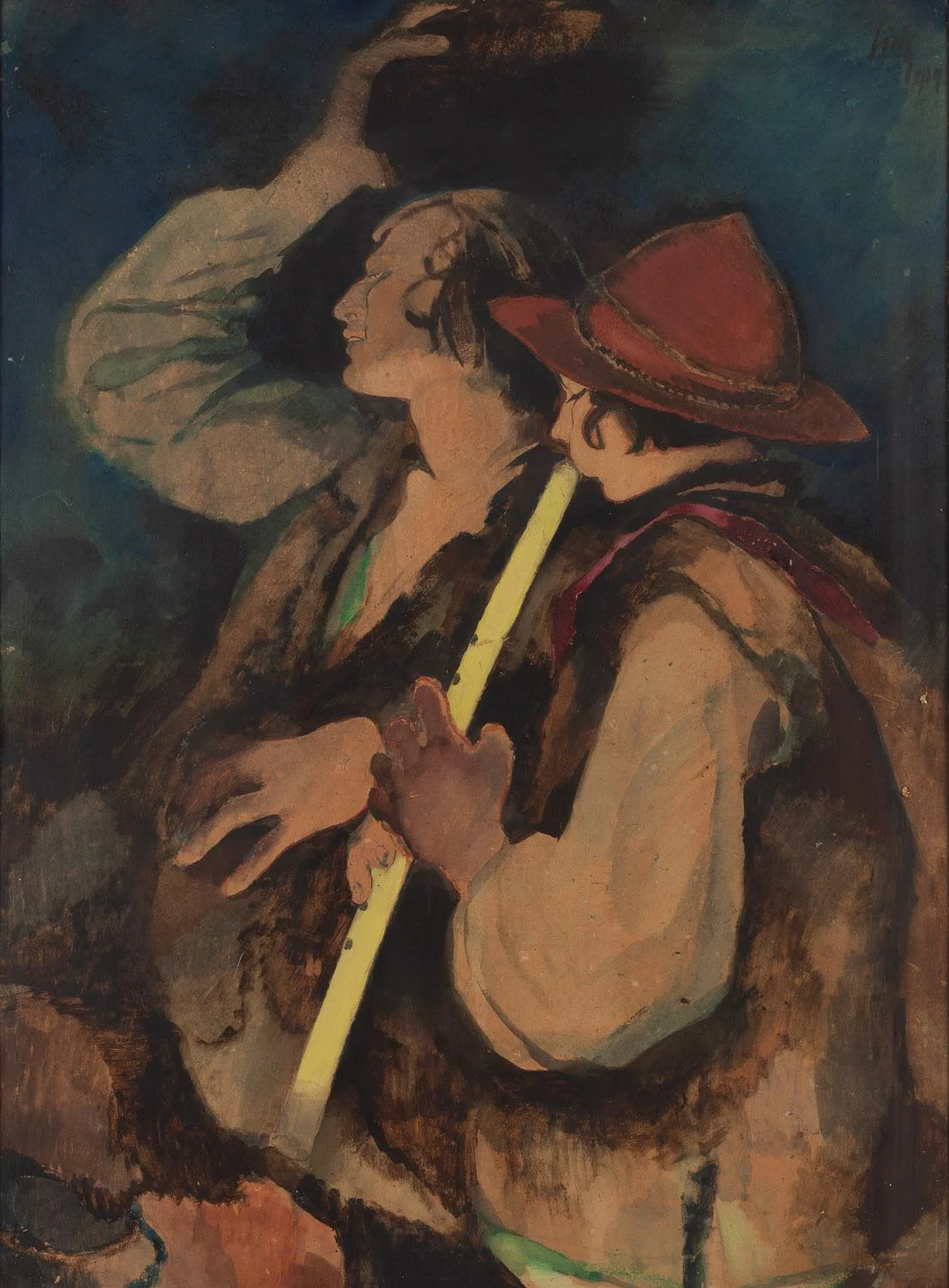
In the context of these artistic groups with their characteristic "numeric" names, we come across the above-mentioned three "Hutsuls." The Hutsul region's three most renowned painters and illustrators-Władysław Jarocki, Fryderyk Pautsch, and Kazimierz Sichulski-come to our minds. Teodor Axentowicz also should be mentioned among the artists closely related to this region and its aesthetics. They all became capable visual reporters of Eastern reality, which they depicted in a way that was both authentic and fantastic. There are numerous thematic groups that can be identified in the "Hutsuls'" paintings. The landscape and the human are almost always in harmony in these compositions. Very frequently, it is challenging to tell apart this complex relationship between staffage and landscape, which become almost equal.
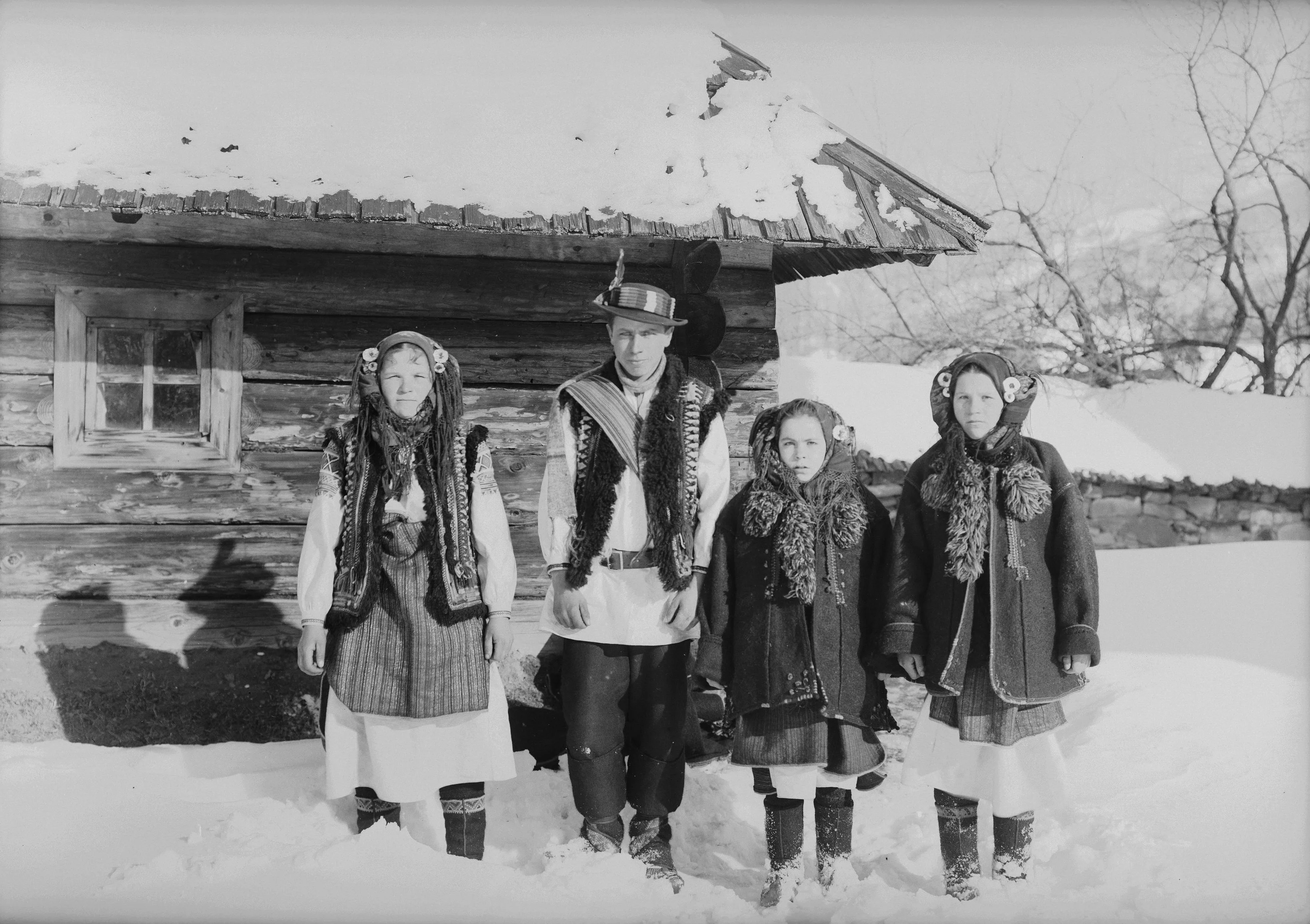
"Images of Hutsuls in traditional costumes took an important place in the Hutsul art by the three artists from Lviv. Depending on their individual preferences and interests, the three artists either focused on the meticulous depiction of the regional costumes' details worn by the Hutsuls, or on expressing the Carpathian highlanders' internal experiences and moods."
- Agnieszka Jankowska-Marzec, Między etnografią a sztuką. Mitologizacja Hucułów i Huculszczyzny w kulturze polskiej XIX i XX wieku, Krakow 2013, p. 218
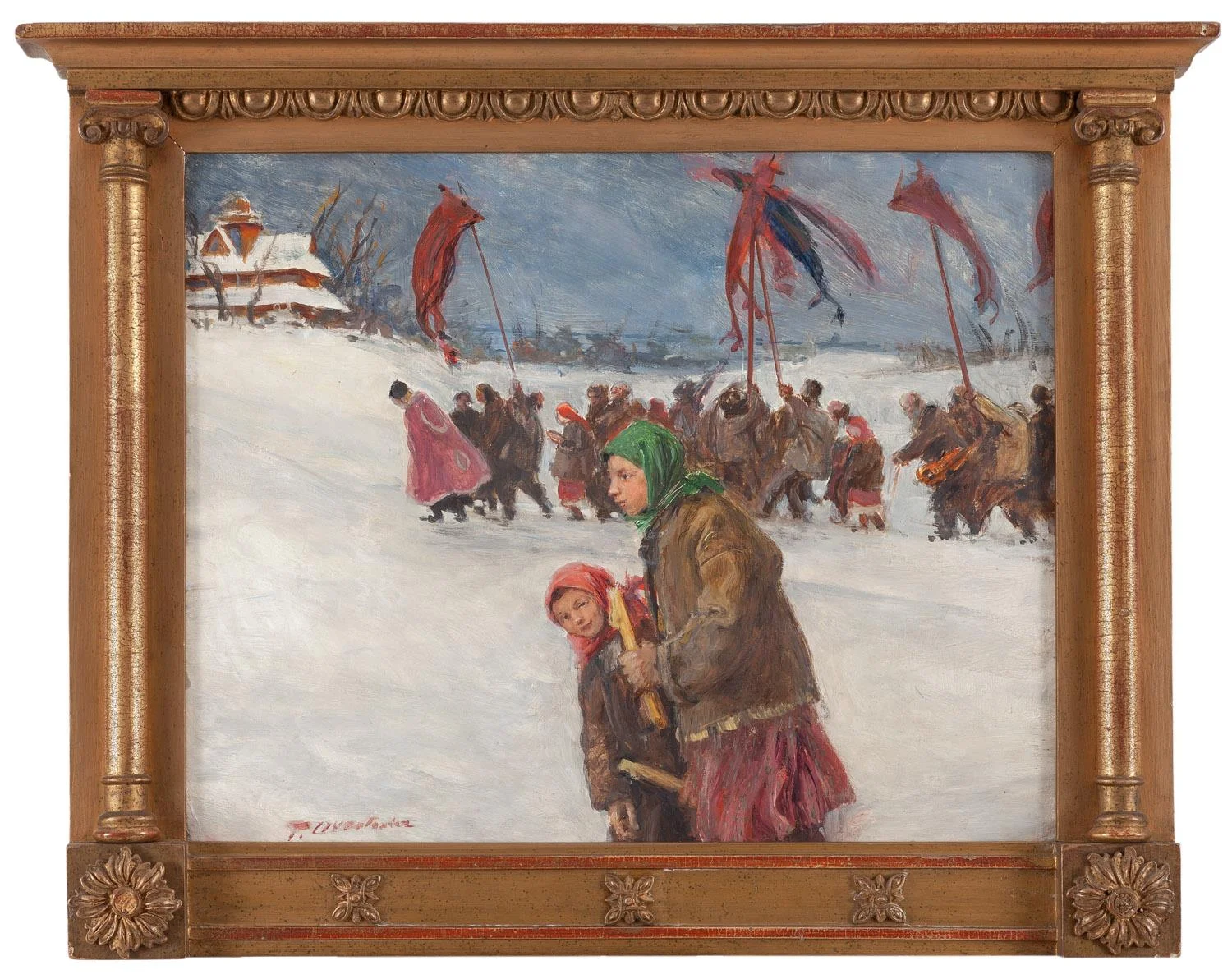
Enthusiastically depicted holidays and religious rites that even take on almost a mystical character are one of the most significant thematic groups. The two most common motifs are the Epiphany Feast and Candlemas. Both of these festivities are present in the paintings of Axentowicz, who excellently rendered the atmospheric landscape. The viewer sees a colorful parade heading towards an Orthodox church against the backdrop of the wintery landscape. Individual characters, who often make eye contact with the recipient, are frequently abstracted from the anonymous crowd. Władysław Jarocki had a different perspective on this theme. The artist captured a few Hutsul women carrying wooden buckets with holy water on the bank of the river in a close-up perspective. Along with such depictions, we can also recognize vagabonds wandering through the Carpathian valleys, raftsmen floating wood, or country girls captured while working in the farmhouse. Their silhouettes provided a great opportunity to analyze the regional folk costumes. The Hutsul region inspired many artists-not only painters but also printmakers, photographers, and even artistic craftsmen. Both the subject matter and the form created by the admirers of Carpathian reality revealed its mystical dimension.