
Canon of Opposition
Dorota Monkiewicz
In 1984, a jubilee conference of the esteemed Association of Art Historians titled "Polish Art after 1945" took place. During this groundbreaking event, the previously established consensus on the canon of Polish post-war art was vehemently challenged. Fueled by the political emotions triggered by the "Solidarity" revolution and the subsequent imposition of martial law, art historians, critics, and artists found themselves grappling with a question that had long been left unaddressed: Can art be ideological? Can it react to reality here and now?
After the ignominious experiences of socialist realism – art created on the communist party orders – artists in the mid-1950s deemed that abstract, autotelic art, concerned with the very status of the artwork, guaranteed creative freedom and independence from the authorities. However, the 1984 conference concluded that, in this way, avant-garde artists had inadvertently aligned themselves with the propaganda of the communist state, which, especially in the 1970s under the leadership of Edward Gierek, sought to present itself as modern and liberal. In the art world, the Gruppa artists initiated a revolution with their expressive painting style, attempting to speak not only about the horrors of martial law (see Jarosław Modzelewski, "Storming Dolphins, " 1981; Ryszard Woźniak, "Patagonian Nation Before the Main Tribune, " 1983; Paweł Kowalewski, "Me Shot by Indians, " 1982) but also about censored topics from Poland's recent history. This included Włodzimierz Pawlak's painting "Stanisław Ignacy Witkiewicz Slashing His Veins after the German Invasion of Poland" and Paweł Kowalewski's "Mon Cheri Bolsheviq."
In the 1980s, there was a second and third circulation of independent culture. Historians of art did not pay much attention to the third, even though Jacek Kryszkowski closed them off in a room where they deliberated and hid the key. On one hand, the system of exhibitions and the work of artists within "church-related" art flourished, symbolized by figures like Tadeusz Boruta and Jan Rylke. Many modernist classics from the older generation participated in this movement. On the other hand, there were groups associated with the third way – anti-communist, but also anti-church, or at least indifferent in this regard. Examples include Łódź Kaliska with Jacek Kryszkowski, the LUXUS Group in Wrocław, and participants in the alternative scene in Gdańsk (including Grzegorz Klaman, Jacek Staniszewski, Sławomir Witkowski).
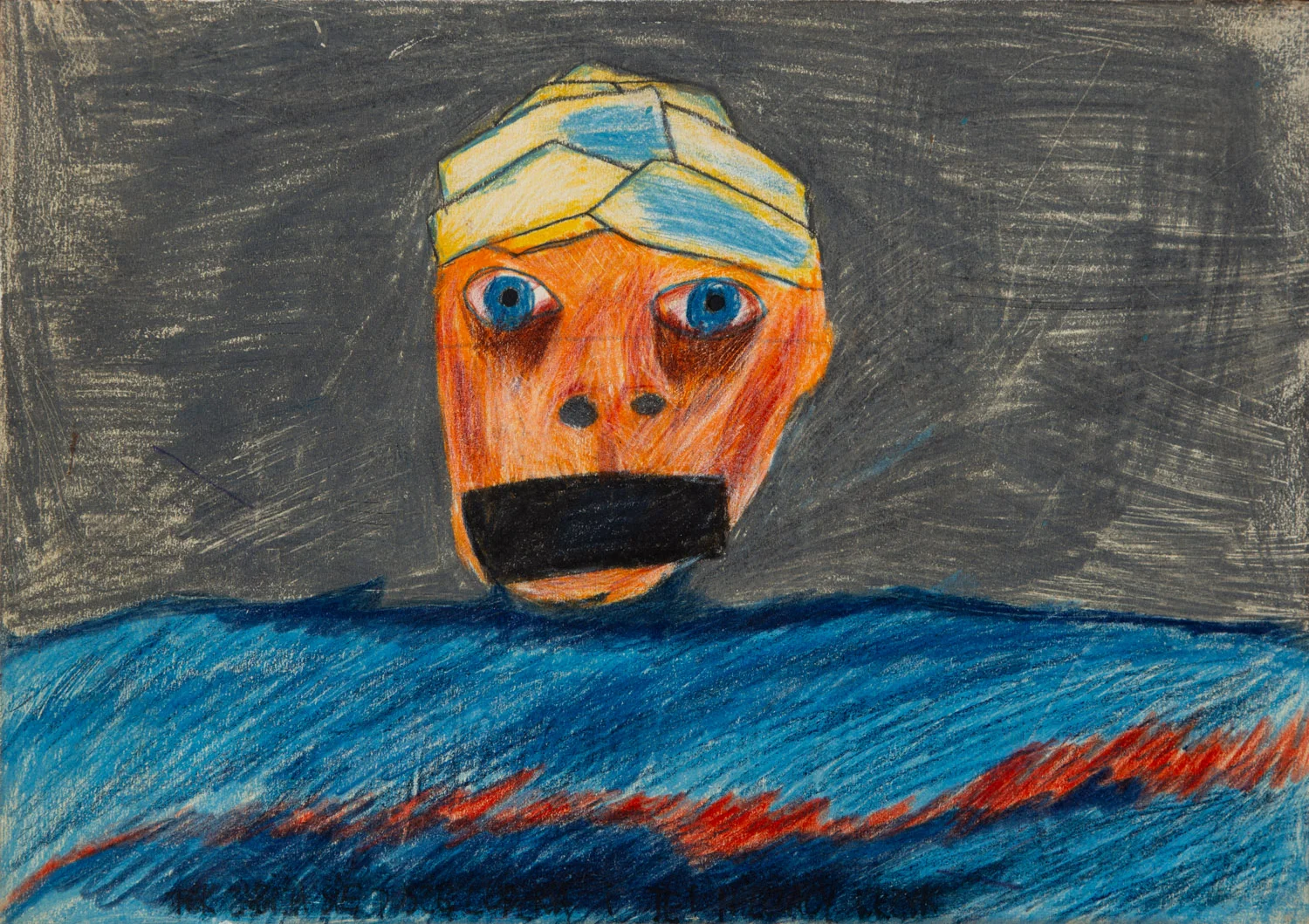
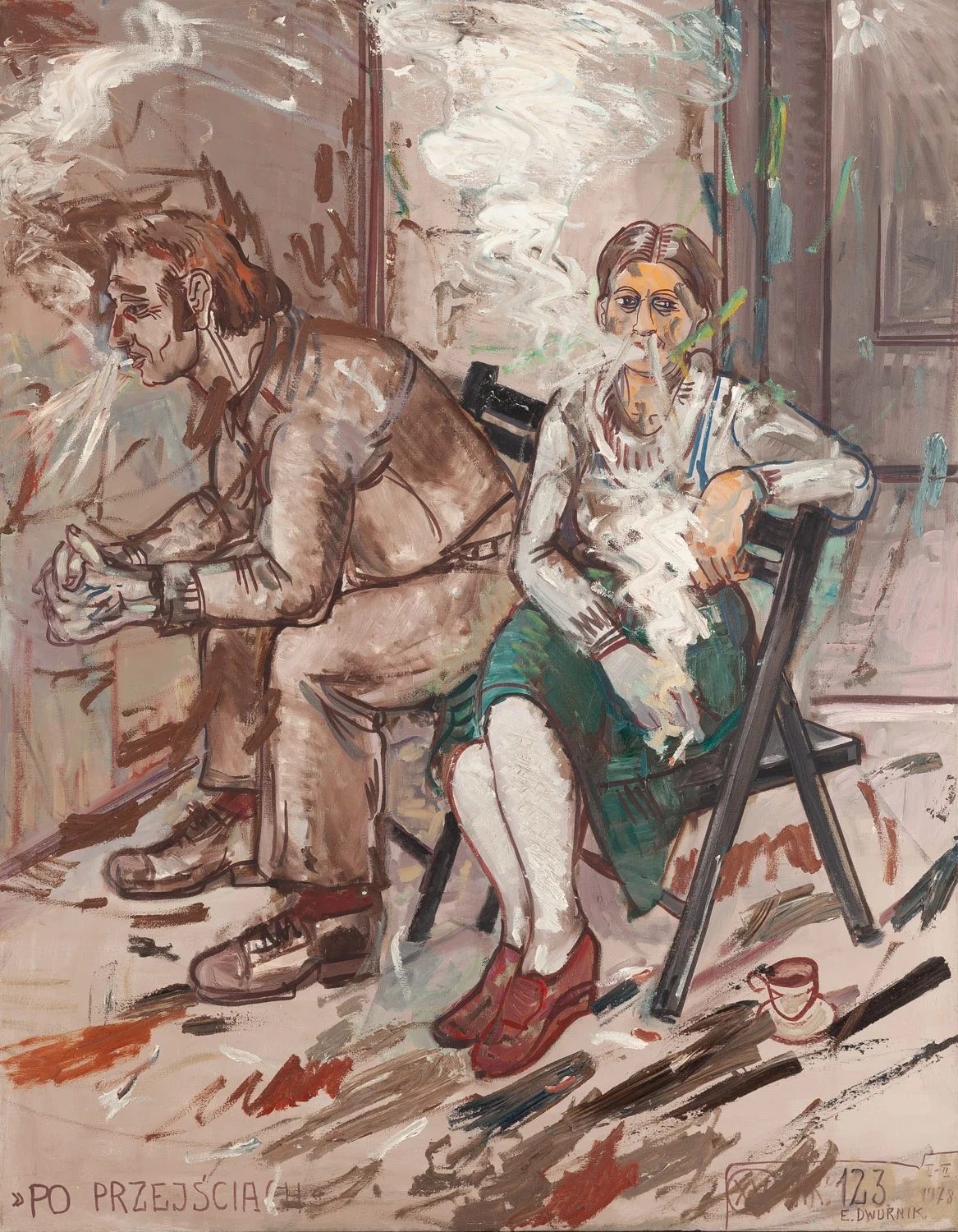
The artists of the Group drew inspiration from the work of Andrzej Wróblewski but also had predecessors in the "new figuration" trend of the mid-1960s. Every direction that sought to portray reality instead of an abstract pattern carried critical political potential. The late 1960s in Poland were marked by dramatic events – an anti-Semitic campaign, the suppression of student protests at universities, and finally, the massacre of workers in Gdańsk in December 1970. In response to these events, Wiesław Szamborski created paintings like "Tragic Events" and "Cruel Events" from 1968-69. In the 1970s, Jerzy "Jurry" Zieliński also filled his paintings with political metaphors, as seen in the composition with sewn mouths, "XXX" (1974), invariably associated with the censorship of the time. In Warsaw, the "new figuration" movement was pursued by Marek Sapetto and Wiesław Szamborski, while in Kraków, the "Wprost" Group, consisting of Maciej Bieniasz, Zbylut Grzywacz, Leszek Sobocki, and Jacek Waltoś, who created in this style. "Wprost" opposed the avant-garde but also the colorful Kraków style, addressing contemporary social issues in their works. A complete novelty in the universal art world were the religious themes in the work of Maciej Bieniasz, a deeply religious and practicing Catholic. By delving into the iconography of biblical times, he sought to evoke metaphysical values and the sacred in painting. Given the inherently atheistic nature of the communist state, which promoted aggressive atheism, this was a political stance. Zbylut Grzywacz, on the other hand, depicted harsh scenes from life in the degraded totalitarian country of People's Poland in his paintings. His subjects included queues – a humiliating struggle for survival and people deprived of the right to individuality ("The Queue Still Continues, " 1972-73). Edward Dwurnik also illustrated the moral and civilizational degradation of society in the times of the Polish People's Republic with his cycle "Athletes" and Jerzy Duda-Gracz in "Motifs and Portraits of Poles."
After the political change in 1989, around the mid-1990s, radical critical art emerged. Inspired by Michel Foucault's biopolitics concepts, it perceives political power as an institution controlling human bodies. Public debate inspired by critical art addresses issues of cultural gender, equality of diverse sexual identities, body illnesses like AIDS, and, on the other hand, consumerism, the new image-based media culture, and the loss of all humanistic values in the pursuit of material goods. In the biopolitical context, there is a conflict with the triumphing institution of the Catholic Church after 1989. This theme resonates strongly in the works of Robert Rumas and Grzegorz Klaman. In the 1990s, artists such as Katarzyna Kozyra, Artur Żmijewski, and to some extent Paweł Althamer grappled with the obscenity of the human body.
In the following decade, after the emergence of a new generation of artists for whom the Polish People's Republic was a time of romanticized childhood, the political nature of Polish art changed direction. In 2002, the first issue of the left-wing magazine "Krytyka Polityczna" was released; in 2004, Poland joined the European Union. Only then did artists subject to critical review and scrutiny the consequences of the political transformation that occurred after 1989. In the projects of creators addressing social issues, discussions revolved around unemployment, job destruction, worker exploitation, social exclusion, and, finally, leaving culture and art to their fate. Achievements of the communist era are reevaluated: socialist-modernist architecture, Polish conceptualism of the 1970s, left-wing support for Edward Gierek, and his subsequent contestation by the KwieKulik duo. There is a return to the work of other dissenters from that period – Anastazy Wiśniewski and Leszek Przyjemski (Nonexistent Acquiescent "Yes" Gallery) and Andrzej Partum. After a decade of experience with the parliamentary system, artists who keenly observe this system emerge in the 21st century (see Marcin Maciejowski's paintings). This is entirely justified because in the 21st century, the fate of artists and cultural institutions in Poland changes with every change in the ruling coalition, influencing the artistic message. Not unrelated to the changes on the political scene, alongside "left-wing" art, which positively values open democratic society, minority rights, and an ecological lifestyle, "right-wing" art emerges. It aligns itself with conservative, national, Catholic values, and, particularly, a specific interpretation of historical politics.